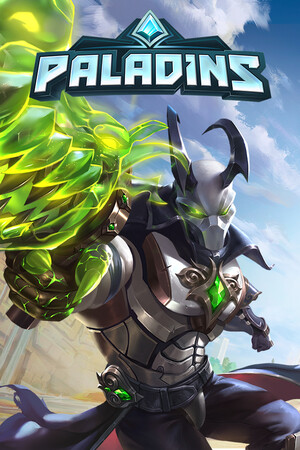
Paladins®
Free to PlayFree-to-play hero shooter with a deeper build system than its reputation suggests - if you can look past the Overwatch comparisons, there's a card-loadout meta worth learning.
GamerScout Verdict
8.3/10Best for players who want hero-shooter action with a genuine build layer and don't mind grinding to unlock the full Champion roster.
Compare Prices(1 stores)
Every store in this table quotes us in euros, so the EUR figure is the price the seller actually set, not our arithmetic — which is why EUR is also the currency we rank in. We only list an offer here when the store gives us its price in euros, so nothing in this table is a number we invented.
Pick USD, PLN, GBP, CAD or AUD in the header and we convert from EUR at the European Central Bank reference rate — converted amounts are prefixed with ~. Your bank or the store may apply a different rate at checkout. We never hide offers based on where you are: everyone sees this whole table.
We may earn a commission when you buy games through links on this page — at no extra cost to you. It never affects our rankings or verdicts.
Price History
Screenshots & Media
About Paladins®
I went into Paladins expecting a shallow knock-off and came out with a spreadsheet of loadout builds for three different Champions. The Overwatch comparisons have followed this game since its early access days in 2016, and they are not entirely unfair on the surface - 5v5 objective shooting, colorful heroes, ability ultimates. But that framing does the game a disservice, because the systems underneath are meaningfully different and, in one key area, more interesting. The card-loadout system is where Paladins separates itself from every other hero shooter on the market. Before each match, you equip a loadout of five cards specific to your chosen Champion, distributing points across them up to a fixed total of 15. Cards modify ability cooldowns, add health regeneration, enhance damage output, or add entirely new behavioral effects to abilities. On top of that, you pick one of three Talents per Champion - a high-impact modifier that can fundamentally redirect a Champion's role. A Support Champion like Jenos running damage-focused cards with the right Talent stops playing like a healer and starts playing like an assassin. A Front Line like Fernando built around mobility cards can operate as a flanker. This is the kind of role subversion that most class-based shooters actively prevent, and Paladins leans into it. The in-match Item Shop adds another reactive layer: buying Cauterize to cut enemy healing or Wrecker to shred through shield-heavy compositions means every match has a small mid-game economy decision loop that keeps the strategy brain engaged. The four classes - Front Line, Damage, Flank, and Support - cover familiar ground, but the roster of 59 Champions (with a rotating free selection plus eight unlocked by default) gives newcomers enough room to find their footing without feeling overwhelmed. New players start with accessible picks like Viktor, a straightforward assault-rifle Damage dealer, while the depth ceiling for Champions like Mal'Damba or Io is genuinely high. The three core modes - Siege, Onslaught, and Team Deathmatch - are well-understood archetypes, with Siege being the primary competitive format. Once you hit level 15, the Competitive Siege lobby introduces draft-style Champion bans, which is where the loadout theorycrafting and counter-pick knowledge actually gets tested. The weaknesses are real and worth flagging. Matchmaking quality has been a persistent community complaint, with rank distribution feeling inconsistent at lower MMR brackets. Balance patches can swing individual Champions hard in either direction, so a loadout that felt polished one patch can feel underpowered the next. The cosmetic shop is present and aggressive, though it is worth noting that all gameplay elements - Champions, cards, modes - are accessible without spending money, and in-match credits earned through play handle the reactive item purchases. The game has also attracted criticism for slowing its pace of meaningful content updates in some periods, leaning on skins over systemic changes. These are not fatal flaws, but they are the honest cost of entry. For anyone asking whether the barrier to entry is too high: it is not. The auto-purchase option for in-match items handles the economy layer for players not ready to micro-manage it, and practice modes with AI opponents let you stress-test a new Champion's kit without feeding the enemy team. The tutorial respects your time. My practical recommendation is to pick one Champion from each class, build a loadout around the default Talent first, and only branch out once you understand what the cards are actually doing. Paladins rewards the players who read the tooltips.

Strategy & simulation
Tags
System Requirements
Minimum
- Processor
- Core 2 Duo 2.4 GHz or Athlon X2 2.7 GHz
- Memory
- 4 GB RAM
- Graphics
- Nvidia GeForce 8800 GT
- Storage
- 30 GB available space
- Sound Card
- DirectX compatible sound card
Recommended
- Processor
- Intel Core i5-750, 2.67 GHz / AMD Phenom II X4 965, 3.4 GHz
- Memory
- 6 GB RAM
- Graphics
- Nvidia GeForce GTX 660 or ATI Radeon HD 7950
- Network
- Br…
DLC & Add-ons for Paladins®6
Expansions, DLC packs and add-on content for this game. Click any item to see store offers.
Keep exploring
Community Discussion
Be the first to comment on Paladins®.
Reviews & Ratings
Game Info
- Developer
- Evil Mojo Games
- Publisher
- Hi-Rez Studios
- Release Date
- May 8, 2018