
Tropico 5 - Mad World
Ruling a Caribbean island across four centuries sounds grander than it plays, but for city-builder fans who want a light political simulation with genuine replay hooks, Tropico 5 still delivers more than its Metacritic 75 suggests.
GamerScout Verdict
Best for solo sandbox fans who enjoy faction juggling and export optimization; avoid if multiplayer co-op is your primary draw.
Compare Prices(4 stores)
Every store in this table quotes us in euros, so the EUR figure is the price the seller actually set, not our arithmetic — which is why EUR is also the currency we rank in. We only list an offer here when the store gives us its price in euros, so nothing in this table is a number we invented.
Pick USD, PLN, GBP, CAD or AUD in the header and we convert from EUR at the European Central Bank reference rate — converted amounts are prefixed with ~. Your bank or the store may apply a different rate at checkout. We never hide offers based on where you are: everyone sees this whole table.
We may earn a commission when you buy games through links on this page — at no extra cost to you. It never affects our rankings or verdicts.
Price History
Screenshots & Media
About Tropico 5 - Mad World
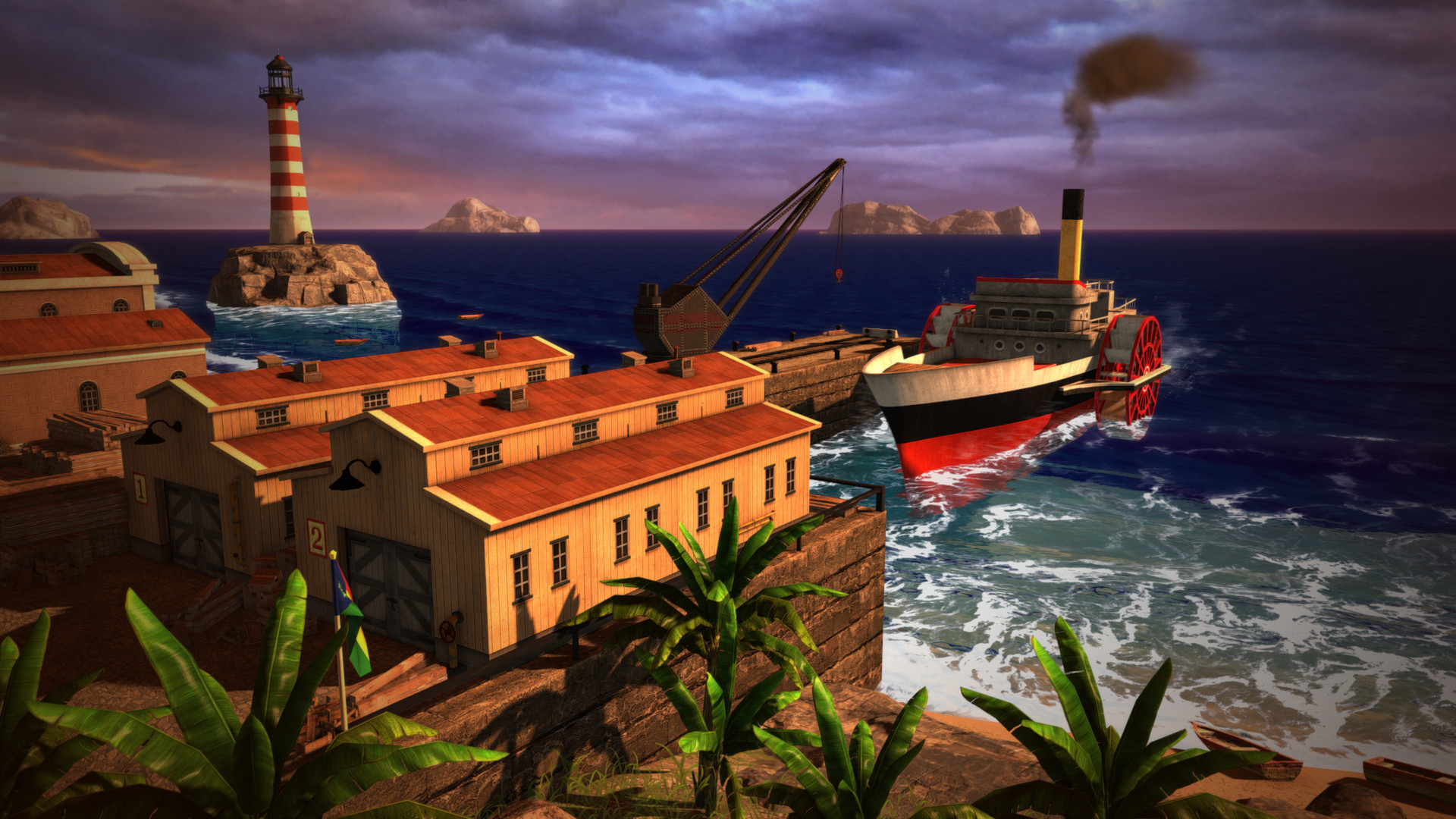
I have spent more hours than I care to admit balancing faction meters in city-builders, and Tropico 5 scratches that itch in a way that is immediately legible but slow to reveal its full hand. You start as El Presidente during the colonial era, answering to a Crown that wants taxes and obedience, while your citizens slowly develop revolutionary opinions about that arrangement. The loop of managing factions - loyalists, religious groups, industrialists, environmentalists - against the hard economic realities of a small island economy is the core that has always made this series work, and it holds up here. What Tropico 5 layers on top of that foundation is a dynasty system, where family members can be assigned as ambassadors, commanding generals, or building managers, each passively improving the operations under their watch. The Swiss bank account mechanic adds a quiet corrupt-ruler angle: siphon a cut from building revenues into your personal fund, then spend it to bail yourself out of a political crisis or level up a dynasty member's stat bonuses. None of this is revolutionary, but the interlocking systems give a strategy player enough levers to feel genuinely in control. The era progression is the game's most divisive design choice. You advance through four distinct periods - Colonial, World Wars, Cold War, and Modern - each unlocking new buildings and presenting new external pressures like the Great Depression or Cold War superpower politics. For a sim-minded player, this is a satisfying structure that forces you to adapt your economic build order every few hours. For players who want to settle into a groove and optimize, the mandatory transitions can feel like the game keeps resetting the table before you have finished eating. The campaign pacing drew legitimate criticism at launch for being sluggish, and that critique is not unfounded. Sandbox mode is where the game breathes, and most experienced players will migrate there once they understand the systems. The tutorial deserves a paragraph because newcomers consistently run into the same wall. The opening missions cover surface-level basics competently - placing buildings, managing budgets, reading the happiness gauges - but the tutorial drops you before it explains how trade routes interact with factory inputs, or how constitution choices affect which faction powers spike during elections. The good news is that the diplomacy systems are intentionally streamlined compared to deeper grand-strategy games, and anyone who has touched a city-builder in the last decade will fill the gaps through trial and error within a session or two. The learning curve is real but not punishing, and the game's tone - dry Caribbean satire, radio broadcasts from a hilariously biased state announcer - keeps failure from feeling oppressive. Multiplayer is the feature most likely to disappoint. Up to four players can each build cities on a shared island, trade resources, share workers, or flip from cooperation to outright military conflict. The concept has real appeal. The execution has persistent problems: no ability to save a multiplayer session mid-game, the game runs locked at the highest speed setting in online matches removing the pacing control single-player players rely on, and the interaction between players is shallower than the marketing implies. Co-op largely amounts to parallel play on the same map with optional resource transfers. If you have a friend who is equally patient with the format, there are hours here. Going in expecting a tightly integrated co-op campaign will leave you frustrated. Steam Workshop support is the quietly important long-term argument for this version. Custom maps, scenario mods, and balance tweaks have accumulated over the years and extend the replayability well past the vanilla content. For a solo player who likes economic sandboxes with a satirical wrapper and is comfortable reading through building stats to optimize an export chain, Tropico 5 is a comfortable, if unambitious, purchase. Series veterans looking for a meaningful leap from Tropico 4 will find the delta smaller than the price gap typically justifies.

Strategy & simulation
Tags
System Requirements
Minimum
- Processor
- 2 GHz Dual Core CPU
- Memory
- 4 GB RAM
- Graphics
- GeForce 400 or higher, AMD Radeon HD 4000 or higher, Intel HD 4000 or higher (DirectX 11 hardware suppo…
Recommended
- Processor
- 2.5 GHz Quad Core CPU
- Memory
- 8 GB RAM
- Graphics
- GeForce 500 or higher, AMD Radeon HD 5000 or higher
- DirectX
- Version 11
Keep exploring
Community Discussion
Be the first to comment on Tropico 5 - Mad World.
Reviews & Ratings
Game Info
- Developer
- Haemimont Games
- Publisher
- Kalypso Media Digital
- Release Date
- May 23, 2014