
Tropico 5 - Inquisition
Ruling a Caribbean banana republic across four historical eras sounds more strategically meaty than it is, but if you want a city-builder with actual faction politics and a genuine multiplayer mode, this one still earns its place in the library.
GamerScout Verdict
Best for solo city-builder fans who want light political strategy; approach the multiplayer with low expectations and a crash-tolerant friend group.
Compare Prices(4 stores)
Every store in this table quotes us in euros, so the EUR figure is the price the seller actually set, not our arithmetic — which is why EUR is also the currency we rank in. We only list an offer here when the store gives us its price in euros, so nothing in this table is a number we invented.
Pick USD, PLN, GBP, CAD or AUD in the header and we convert from EUR at the European Central Bank reference rate — converted amounts are prefixed with ~. Your bank or the store may apply a different rate at checkout. We never hide offers based on where you are: everyone sees this whole table.
We may earn a commission when you buy games through links on this page — at no extra cost to you. It never affects our rankings or verdicts.
Price History
Screenshots & Media
About Tropico 5 - Inquisition
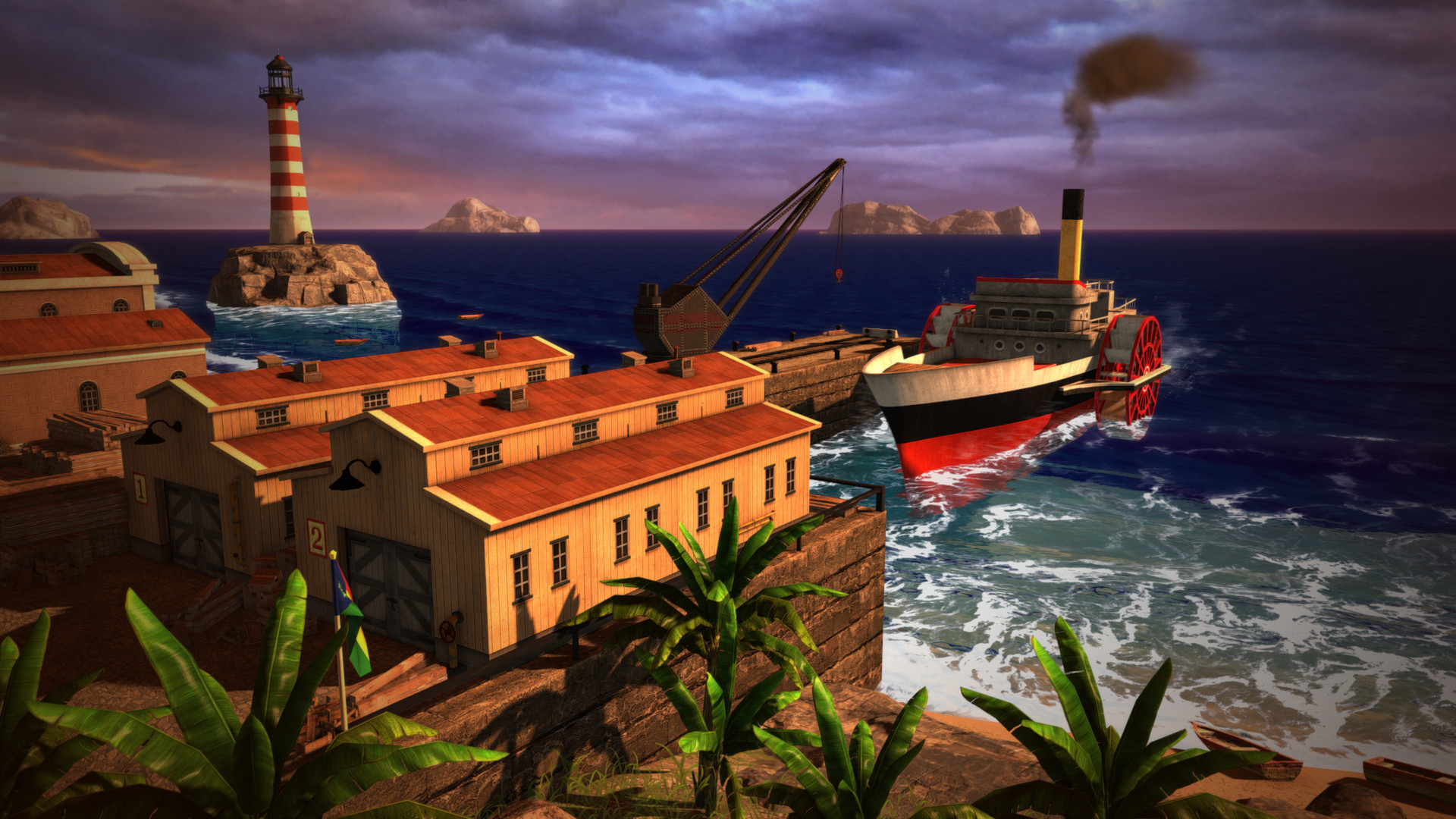
I have a soft spot for any city-builder that forces me to read a diplomacy screen before I place a single road, and Tropico 5 scratches that itch just enough to keep a strategy player interested through its first twenty hours. You step into the boots of El Presidente, managing a small Caribbean island from the Colonial Era through the Cold War and into the Modern age, making decisions that ripple across faction happiness bars, your personal Swiss bank account, and the mood of whatever foreign superpower currently has its eye on your harbor. That multi-era spine is the headline addition here, and it genuinely changes how you prioritize buildings. You are choosing from over one hundred structures tied to specific historical periods, which means your early-game plantation economy looks nothing like your late-game research-and-tourism machine. The faction balancing is where the depth actually lives. You are simultaneously managing the Crown, religious leaders, intellectuals, capitalists, communists, and your own military, and pleasing one bloc reliably irritates another. The constitution system lets you codify your governing philosophy in writing, which is a neat mechanical touch: picking between free elections and iron-fisted authoritarianism has downstream effects on how hard your approval ratings are to maintain. The dynasty mechanic layers on top of this by letting you promote family members to roles like commanding general or ambassador, with each posting providing passive bonuses to the buildings they oversee. In practice, most players end up treating dynasty members as glorified buff tokens rather than genuinely interesting characters, but the system at least gives your island a sense of continuity across eras. The trading system is worth a brief mention because the marketing leans on it heavily. You can assign trade ships to import raw materials or export finished goods, and in theory you could run an island economy almost entirely on commerce. In practice, the whole thing operates off-screen and feels disconnected from the satisfying visible bustle of your city. It works, but it does not reward the kind of close attention that a dedicated strategy player wants to give it. The tutorial covers surface mechanics competently but leaves advanced concepts like constitution drafting and era transition timing almost entirely unexplained, which means a lot of your first campaign is trial-and-error pacing. Multiplayer is listed as a headlining feature and deserves a frank assessment. Up to four players can share an island map, either cooperating through shared trade routes and worker pools or competing outright. The structural design is sound: you can share resources, finances, and population with allies or pivot to military aggression. The execution is rougher. Multiplayer sessions run at a locked fast speed with no option to slow things down, there is no mid-session save function, and community feedback going back years flags crashes that dump all progress. If you have a stable group of friends who can commit to a full uninterrupted session, there is genuine fun here. Going in expecting a polished co-op experience comparable to later city-builder co-op implementations will leave you frustrated. For a single-player audience, this sits comfortably as a mid-depth strategy experience. It is not a Paradox-tier decision engine, but it is more politically textured than most casual city-builders. Veterans of Tropico 4 will notice that the mechanical foundation is largely unchanged, and the era system while conceptually interesting can make the campaign feel slow during transitions. As a starting point for newcomers to the series, the accessible diplomacy, readable UI, and forgiving early-game economy make it a reasonable entry, provided you treat the tutorial as a floor rather than a ceiling and spend time in sandbox mode before tackling campaign missions. Steam Workshop support extends the shelf life meaningfully.

Strategy & simulation
Tags
System Requirements
Minimum
- Processor
- 2 GHz Dual Core CPU
- Memory
- 4 GB RAM
- Graphics
- GeForce 400 or higher, AMD Radeon HD 4000 or higher, Intel HD 4000 or higher (DirectX 11 hardware suppo…
Recommended
- Processor
- 2.5 GHz Quad Core CPU
- Memory
- 8 GB RAM
- Graphics
- GeForce 500 or higher, AMD Radeon HD 5000 or higher
- DirectX
- Version 11
- Storage
- 4 GB available…
Keep exploring
Community Discussion
Be the first to comment on Tropico 5 - Inquisition.
Reviews & Ratings
Game Info
- Developer
- Haemimont Games
- Publisher
- Kalypso Media Digital
- Release Date
- May 23, 2014