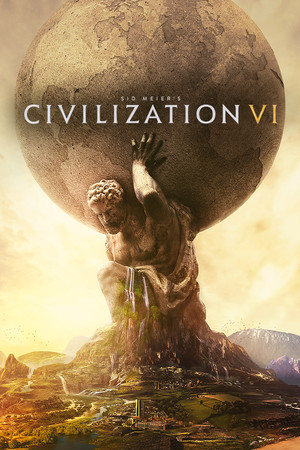
Sid Meier’s Civilization VI: Rise and Fall
Era Score and Loyalty finally punish the runaway AI leader, but you won't feel either until turn 100. Worth it if you finish campaigns, redundant if Gathering Storm is installed.
GamerScout Verdict
Best for players who actually reach turn 250; if Gathering Storm is installed, you're buying leaders, not systems.
Compare Prices(4 stores)
Every store in this table quotes us in euros, so the EUR figure is the price the seller actually set, not our arithmetic — which is why EUR is also the currency we rank in. We only list an offer here when the store gives us its price in euros, so nothing in this table is a number we invented.
Pick USD, PLN, GBP, CAD or AUD in the header and we convert from EUR at the European Central Bank reference rate — converted amounts are prefixed with ~. Your bank or the store may apply a different rate at checkout. We never hide offers based on where you are: everyone sees this whole table.
We may earn a commission when you buy games through links on this page — at no extra cost to you. It never affects our rankings or verdicts.
Price History
Screenshots & Media
About Sid Meier’s Civilization VI: Rise and Fall
The store page pitches Rise and Fall as the expansion that finally gives a Civ VI campaign a shape: Golden Ages, Dark Ages, empires that strain and crack under their own weight. About two thirds of that promise lands. The shape is real, and once you see it you cannot unsee it. What the page does not say is that almost none of it bites before turn 100, and turn 100 is where a lot of Civ VI games are already decided. That gap between the pitch and the play is the whole story of this pack. Every expansion adds a resource. This one adds two, and Era Score is the important one. You bank points for Historic Moments, first-time acts like meeting a new civ, finishing a wonder, settling on a new continent, clearing a barbarian outpost early. Cross the era threshold and you get a Golden Age plus a Dedication you pick: Monumentality for faith-bought Settlers and Builders, Free Inquiry for science off commercial hubs, and so on. Fall short and you get a Dark Age, which is not just a slap on the wrist. It is a Loyalty penalty across your cities and a real chance of losing one. The counterweight is the Heroic Age, the reward for climbing out of a Dark Age inside one era, and it is the best comeback mechanic Firaxis has shipped for this series. Deliberately tanking an era to set up a Heroic Age is a legitimate line of play, and it is the most interesting decision in the box. Loyalty is the anti-snowball tooth. Cities project pressure based on population and proximity, so a huge neighbour's culture leaks across your border and a badly-placed forward settle simply rots and flips into a Free City. That reshapes your opening. Planting four tiles from a rival used to be free real estate. Now it is a commitment that needs Amani parked in the city to hold it, or a monument and an early amenity plan. The seven governors are the other half of the build order rework: Magnus for chop yields and settlers that cost no population, Pingala for great person points, Liang for extra builder charges, Reyna for gold. Titles arrive slowly, roughly one every twenty to thirty turns, so you are genuinely choosing between breadth (one governor everywhere for loyalty cover) and depth (a fully promoted Magnus running your production city). Real decision tree, and the game is better for it. The mixed Steam standing, a shade under 60 percent positive across roughly 2,900 reviews, is not people calling the mechanics bad. It is people calling the value math broken. If you own Gathering Storm you already have Era Score, Loyalty and governors, because that expansion is built on top of this one. Picking up Rise and Fall separately after the fact gets you nine leaders, the Government Plaza district, some wonders and units, and little else you do not already run. Then there is the AI, which handles Loyalty about as well as it handles everything else in Civ VI: it will still settle inside your pressure shadow and watch the city flip, and Emergencies, the coalition system that lets civs gang up on a runaway warmonger, rarely produces the dramatic reversal the concept deserves. The tutorial explains almost none of this. Era Score sits behind a timeline screen that tells you what already happened without telling you what to do next. My case for buying it anyway, if you are new: people hear "grand strategy expansion" and assume three hundred hours of prerequisite knowledge. Not the case here. Rise and Fall makes Civ VI more forgiving for a first-timer, because the Dark Age to Heroic Age loop gives a losing game somewhere to go instead of the slow flatline where an AI on the far continent quietly out-techs you for eighty turns. Play King, go wide, take Monumentality on your first Golden Age, and the systems teach themselves. Multiplayer holds up too, since Steam Turn Notifications and Play-By-Cloud let a six-player game run for weeks at one turn a day, and the Workshop still carries ruleset mods that sharpen the loyalty numbers if you find them soft. Just know what you are buying. This is the middle chapter, aimed at players who reach turn 250 rather than restart on turn 60, and if the Anthology bundle is already on your shelf you are shopping for leaders, not for systems.

Strategy & simulation
Tags
System Requirements
Minimum
- Processor
- Intel Core i3 2.5 Ghz or AMD Phenom II 2.6 Ghz or greater
- Memory
- 4 GB RAM
- Graphics
- 1 GB & AM…
Recommended
- Processor
- Fourth Generation Intel Core i5 2.5 Ghz or AMD FX8350 4.0 Ghz or greater
- Memory
- 8 GB RAM…
Keep exploring
Community Discussion
Be the first to comment on Sid Meier’s Civilization VI: Rise and Fall.
Reviews & Ratings
Game Info
- Developer
- Firaxis Games, Aspyr (Mac), Aspyr (Linux)
- Publisher
- 2K, Aspyr (Mac), Aspyr (Linux)
- Release Date
- Feb 7, 2018