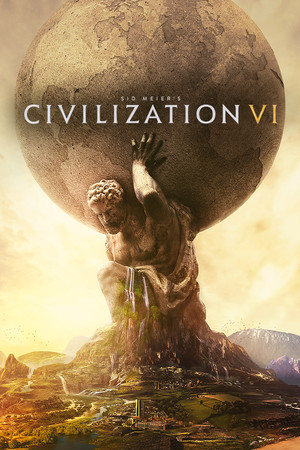
Compare Sid Meier's Civilization VI: Gathering Storm prices across trusted key stores and find the best deal. Developed by Firaxis Games, Aspyr (Mac), Aspyr (Linux). Published by 2K, Aspyr (Mac), Aspyr (Linux). Released on 2/13/2019. Available on PC. Genres: Strategy. Metacritic score: 80/100.

The expansion that finally gives Civ VI a reason to exist past turn 200: fuel budgets, power grids and a climate you personally broke. Soft AI diplomacy is the tax you pay.

The store page promises a planet that fights back, and by my count it delivers that in the back half of a match and almost nowhere in the front half. For the first hundred turns of a standard-speed game, geology mostly reads as free yields: floodplains and volcanic soil hand you fat farm tiles in exchange for the occasional flattened improvement and a rebuild order. The real pressure arrives in the Industrial era, when your coal plants start filling a carbon counter that none of the other seven empires are managing either. Nobody should mistake this for a survival game wearing a Civ skin. What it actually does is give Civilization VI a reason to keep playing after the point where most of my base-game campaigns used to quietly resolve themselves. The mechanical spine is resource accounting, and it is the best work in the package. Strategic resources stopped being a binary yes-or-no gate and became a stockpile. You mine coal into a pile, and your ironclads, tanks and factories draw down from that pile every single turn. A war now has a fuel budget, which means the fun part of planning an offensive happens forty turns before the first unit moves. Buildings want power, power comes from coal, oil, uranium or renewables, and every one of those choices is output now against flooded coastline later. Engineering projects give you levers instead of scenery: dams that tame a river basin, canals that let a fleet cross a continent, flood barriers you fund district by district, railroads laid by Military Engineers that collapse a sprawling empire into something you can actually defend. This is the first version of Civ VI that made me keep a real spreadsheet, and I mean that as a compliment. The World Congress is the shakier half. Diplomatic favor accrues from alliances, city-state suzerainty and a few wonders, then gets spent voting on resolutions and eventually cashed for Diplomatic Victory points. In theory it is a whole new win condition with its own economy. In practice, once you understand that favor is just another currency to hoard and dump at the right moment, the Diplomatic Victory becomes one of the more solvable paths in the game, and experienced players will find the exploit before the AI finds a counter. The new civilizations fare better. Maori starting in open ocean genuinely rewires your first twenty turns. Mali trading raw production for a gold engine forces a different build order. Inca terrace farms on mountains, Canada locked out of surprise wars, Hungary's levy economy and Phoenicia's movable capital are all distinct enough to change how you open rather than just handing out a percentage bonus. That 67 percent Steam rating against an 80 on Metacritic is worth unpacking, because both numbers are telling the truth about different things. Critics scored the systems, and the systems are strong. Players scored the experience of buying a second expansion for a game whose AI still does not credibly threaten a competent human on the middle difficulties, and whose turn times in the Information era test your patience on a big map. The climate model is also more scripted than emergent once you have seen a couple of full runs: the temperature bands tick over on a fairly predictable schedule and the disasters are weighted, not chaotic. And the in-game advisor does not do nearly enough to explain power, consumption rates or carbon to somebody arriving fresh. That last one is a real failing, because these are the most teachable systems Firaxis has ever shipped. Here is my case for newcomers anyway. A 200-hour strategy game sounds like a commitment, but Civ VI is one of the few in the category where the first fifteen hours are self-contained and legible. Play Prince, pick Sweden or Canada, ignore the carbon counter entirely on your first run, and let one game teach you what power shortages feel like. The systems in Gathering Storm are additive rather than gatekeeping, so nothing here punishes you for not knowing it exists yet. It stacks with the first expansion without requiring it, the Workshop mod scene has been maintained for years, and Remote Play Together plus cross-platform multiplayer means you can drag a friend through their first campaign without either of you buying two copies of everything. Approach it as the version of Civ VI where the endgame finally has stakes, and you will get your hours back. Diego, Scout Team

Sid Meier's Civilization VI: Gathering Storm

Sid Meier's Civilization VI: Gathering Storm

Feb 13, 2019Firaxis Games, Aspyr (Mac), Aspyr (Linux)2K, Aspyr (Mac), Aspyr (Linux)
GamerScout Says

The expansion that finally gives Civ VI a reason to exist past turn 200: fuel budgets, power grids and a climate you personally broke. Soft AI diplomacy is the tax you pay.

PC
Best Price Available
€19.99-50%
at Steam
Lowest tracked: €19.99
Track this price

GamerScout Verdict

Worth it if your Civ VI games die of boredom around turn 200; skip it if you never play past the Renaissance.

Compare Prices(4 stores)

SteamBest price
StandardEurope (EU)Steam KeyKey
€19.99-50%
Priced in EUR by the store
Buy
StandardGlobalSteam KeyKey
€37.99-5%
Priced in EUR by the store
Buy
StandardGlobalSteam KeyKey
€39.98
Priced in EUR by the store
Buy
StandardGlobalSteam KeyKey
€39.99
Priced in EUR by the store
Buy

Every store in this table quotes us in euros, so the EUR figure is the price the seller actually set, not our arithmetic — which is why EUR is also the currency we rank in. We only list an offer here when the store gives us its price in euros, so nothing in this table is a number we invented.

Pick USD, PLN, GBP, CAD or AUD in the header and we convert from EUR at the European Central Bank reference rate — converted amounts are prefixed with ~. Your bank or the store may apply a different rate at checkout. We never hide offers based on where you are: everyone sees this whole table.

We may earn a commission when you buy games through links on this page — at no extra cost to you. It never affects our rankings or verdicts.

Price History

Lowest tracked
€19.996 Sept 2026
Current best
€19.99
Lowest since we started tracking
Official stores
€18.39€19.46€20.52€21.596 Sept7 Sept
Tracking prices since 6 Sept 2026
Create alert

Screenshots & Media

About Sid Meier's Civilization VI: Gathering Storm

The store page promises a planet that fights back, and by my count it delivers that in the back half of a match and almost nowhere in the front half. For the first hundred turns of a standard-speed game, geology mostly reads as free yields: floodplains and volcanic soil hand you fat farm tiles in exchange for the occasional flattened improvement and a rebuild order. The real pressure arrives in the Industrial era, when your coal plants start filling a carbon counter that none of the other seven empires are managing either. Nobody should mistake this for a survival game wearing a Civ skin. What it actually does is give Civilization VI a reason to keep playing after the point where most of my base-game campaigns used to quietly resolve themselves. The mechanical spine is resource accounting, and it is the best work in the package. Strategic resources stopped being a binary yes-or-no gate and became a stockpile. You mine coal into a pile, and your ironclads, tanks and factories draw down from that pile every single turn. A war now has a fuel budget, which means the fun part of planning an offensive happens forty turns before the first unit moves. Buildings want power, power comes from coal, oil, uranium or renewables, and every one of those choices is output now against flooded coastline later. Engineering projects give you levers instead of scenery: dams that tame a river basin, canals that let a fleet cross a continent, flood barriers you fund district by district, railroads laid by Military Engineers that collapse a sprawling empire into something you can actually defend. This is the first version of Civ VI that made me keep a real spreadsheet, and I mean that as a compliment. The World Congress is the shakier half. Diplomatic favor accrues from alliances, city-state suzerainty and a few wonders, then gets spent voting on resolutions and eventually cashed for Diplomatic Victory points. In theory it is a whole new win condition with its own economy. In practice, once you understand that favor is just another currency to hoard and dump at the right moment, the Diplomatic Victory becomes one of the more solvable paths in the game, and experienced players will find the exploit before the AI finds a counter. The new civilizations fare better. Maori starting in open ocean genuinely rewires your first twenty turns. Mali trading raw production for a gold engine forces a different build order. Inca terrace farms on mountains, Canada locked out of surprise wars, Hungary's levy economy and Phoenicia's movable capital are all distinct enough to change how you open rather than just handing out a percentage bonus. That 67 percent Steam rating against an 80 on Metacritic is worth unpacking, because both numbers are telling the truth about different things. Critics scored the systems, and the systems are strong. Players scored the experience of buying a second expansion for a game whose AI still does not credibly threaten a competent human on the middle difficulties, and whose turn times in the Information era test your patience on a big map. The climate model is also more scripted than emergent once you have seen a couple of full runs: the temperature bands tick over on a fairly predictable schedule and the disasters are weighted, not chaotic. And the in-game advisor does not do nearly enough to explain power, consumption rates or carbon to somebody arriving fresh. That last one is a real failing, because these are the most teachable systems Firaxis has ever shipped. Here is my case for newcomers anyway. A 200-hour strategy game sounds like a commitment, but Civ VI is one of the few in the category where the first fifteen hours are self-contained and legible. Play Prince, pick Sweden or Canada, ignore the carbon counter entirely on your first run, and let one game teach you what power shortages feel like. The systems in Gathering Storm are additive rather than gatekeeping, so nothing here punishes you for not knowing it exists yet. It stacks with the first expansion without requiring it, the Workshop mod scene has been maintained for years, and Remote Play Together plus cross-platform multiplayer means you can drag a friend through their first campaign without either of you buying two copies of everything. Approach it as the version of Civ VI where the endgame finally has stakes, and you will get your hours back.

Diego
Diego · Scout Team

Strategy & simulation

Tags

auto-admittedClimate SimulationResource StockpilingPower Grid ManagementEngineering ProjectsDiplomatic VictoryLate-Game DepthTurn-Based 4XEmpire ManagementWorkshop Mod Support

System Requirements

Minimum

Processor
Intel Core i3 2.5 Ghz or AMD Phenom II 2.6 Ghz or greater
Memory
4 GB RAM
Graphics
1 GB & AM…

Recommended

Processor
Fourth Generation Intel Core i5 2.5 Ghz or AMD FX8350 4.0 Ghz or greater
Memory
8 GB RAM…

Keep exploring

Community Discussion

Be the first to comment on Sid Meier's Civilization VI: Gathering Storm.

Reviews & Ratings

Metacritic
80
Steam
67%(3,172)

Game Info

Developer
Firaxis Games, Aspyr (Mac), Aspyr (Linux)
Publisher
2K, Aspyr (Mac), Aspyr (Linux)
Release Date
Feb 13, 2019

Features

Single-playerMultiplayerPvPOnline PvPLAN PvPShared/Split Screen PvPShared/Split ScreenCross Platform Multiplayer+7 more

Price Alert

Get notified when the price drops below your target!

Create Alert
Best price€19.99
See offer

Across the 24,405 games we track, a verified key was cheaper than the official store 90% of the time. See the method and the full numbers in our game price report.

No card? Pay another way

Top up your Steam Wallet or buy crypto with any card — instant delivery, no bank account needed.

More from Firaxis Games, Aspyr (Mac), Aspyr (Linux)

Buy smarter: helpful guides

Looking for more? See games like Sid Meier's Civilization VI: Gathering Storm →

Frequently asked questions about Sid Meier's Civilization VI: Gathering Storm

How much does Sid Meier's Civilization VI: Gathering Storm cost?

As of 7 September 2026, the cheapest in-stock offer for Sid Meier's Civilization VI: Gathering Storm is €19.99 at Steam, out of 4 live offers we track across verified key stores. Prices change daily — the table on this page is refreshed continuously.

Where can I buy Sid Meier's Civilization VI: Gathering Storm cheapest?

The lowest in-stock price we track for Sid Meier's Civilization VI: Gathering Storm is €19.99 at Steam (7 September 2026). We compare 4 live offers from verified key stores — the full table with every store and its trust score is on this page.

What platforms is Sid Meier's Civilization VI: Gathering Storm available on?

Sid Meier's Civilization VI: Gathering Storm is available on PC.

When was Sid Meier's Civilization VI: Gathering Storm released?

Sid Meier's Civilization VI: Gathering Storm was released on 13 February 2019.

Who developed Sid Meier's Civilization VI: Gathering Storm?

Sid Meier's Civilization VI: Gathering Storm was developed by Firaxis Games, Aspyr (Mac), Aspyr (Linux) and published by 2K, Aspyr (Mac), Aspyr (Linux).

Is Sid Meier's Civilization VI: Gathering Storm worth buying?

Sid Meier's Civilization VI: Gathering Storm holds a Metacritic score of 80/100, making it one of the standout Strategy titles. See the full reviews, ratings and how-long-to-beat times on this page to decide.