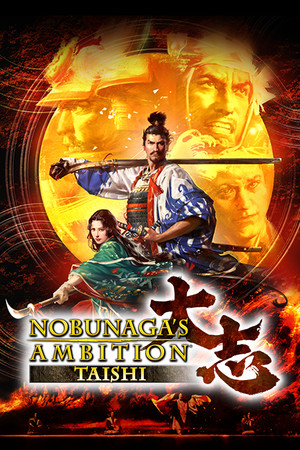
NOBUNAGA'S AMBITION: Taishi
Forty hours into unifying the Sengoku period and you will either love the slow, logistics-heavy grind or quietly uninstall. Veteran grand-strategy players get real depth; everyone else faces a steep, poorly signposted climb.
GamerScout Verdict
Best for Sengoku-history fans and grand-strategy veterans willing to work around shallow system integration and a punishing pace.
Compare Prices(2 stores)
Every store in this table quotes us in euros, so the EUR figure is the price the seller actually set, not our arithmetic — which is why EUR is also the currency we rank in. We only list an offer here when the store gives us its price in euros, so nothing in this table is a number we invented.
Pick USD, PLN, GBP, CAD or AUD in the header and we convert from EUR at the European Central Bank reference rate — converted amounts are prefixed with ~. Your bank or the store may apply a different rate at checkout. We never hide offers based on where you are: everyone sees this whole table.
We may earn a commission when you buy games through links on this page — at no extra cost to you. It never affects our rankings or verdicts.
Price History
Screenshots & Media
About NOBUNAGA'S AMBITION: Taishi
My spreadsheet instincts lit up the moment I saw Taishi's interlocking systems laid out on screen: a seasonal agricultural worker-placement layer, trade zones that behave something like EU4 trade nodes, a policy tree bought with council-generated points, and a military machine where troop assembly alone can eat weeks of in-game time before a single battle is fought. On paper, this is exactly the kind of interconnected simulation I want from a long-running historical grand-strategy series. In practice, those systems talk to each other less than you'd hope. Commerce, agriculture, and military feel like separate sub-games sharing a map rather than gears in one machine - you need gold to do almost anything, and you need provisions to march armies, but beyond those surface links the mechanical feedback loop is thinner than the 15-entry pedigree implies. The headline addition is the Resolve system, and it genuinely is the best design work in the whole package. Each daimyo carries a set of Resolve traits that shape both their available policies and their strategic identity. Nobunaga Oda's traits, for instance, lean toward disciplined infantry and accelerated trade zone development, which means a very different opening build-order from a pacifist commerce clan or a rural militia-heavy lord in the north. Picking a daimyo is effectively choosing your playstyle, and the diversity is real. The "we go" tactical combat - where you issue orders then watch both sides resolve simultaneously in real time - can produce some genuinely tense flanking maneuvers and morale collapses, but the system has a ceiling. Morale is the single win condition in battle, and once you understand that, the elaborate terrain and weather modifiers fade into background noise on most engagements. For newcomers to the series, the picture is complicated but not hopeless. Taishi added tutorial systems that do explain what each menu does, and the sheer number of scenarios means you can pick a starting position from the top of the power rankings and give yourself room to learn before rivals swallow you. Choosing a large starting clan on the easiest scenario settings is, honestly, the correct first-timer move - it creates enough breathing room to absorb the seasonal agricultural cycle, get comfortable with the trade zone investment loop, and run a few small military campaigns before the late-game juggling act kicks in. The tutorial will not hold your hand on timing, though. Miss a quarterly agricultural allocation and the game moves on without you. Veterans of Sphere of Influence will feel the regression in some areas. The visual presentation took a visible hit due to a simultaneous mobile development track, and the AI settings are sparser than its predecessor's. The officer interaction system was simplified, and long-time players have noted the absence of event depth that made earlier entries feel alive. The paid DLC count is also worth noting before purchase. On the upside, the trade zone mechanic and militia-versus-professional-infantry unit split are genuine improvements, and the war exhaustion mechanic adds a realistic ceiling to aggressive expansion that makes mid-game diplomacy matter. Taishi sits in an awkward spot in the series lineup - more accessible than its reputation suggests for complete newcomers, but a lateral step or mild regression for anyone who lived in Sphere of Influence. If Sengoku-period Japan and the idea of managing seasonal rice harvests while slowly engineering a multi-clan alliance before a decisive winter campaign sounds like your idea of a good time, there is enough here to keep you occupied for a long run. If you need tight mechanical feedback and a sense of momentum, the pacing will exhaust you long before Japan is unified.

Strategy & simulation
Tags
System Requirements
Minimum
- OS
- Windows® 10 Japanese Version 64bit
- Memory
- 2 GB RAM
- DirectX
- Version 10
- Network
- Broadband Internet connection
- Storage
- 10 GB available space
- Graphics
- VRAM 256MB over / VRAM 4GB over for 4K graphics
- Processor
- Intel Core2 Duo 1.8GHz or over
- Sound Card
- 16 bit stereo, 48KHz WAVE file can be played
Recommended
- OS
- Windows® 10 Japanese Version 64bit
- Memory
- 2 GB RAM
- DirectX
- Version 11
- Network
- Broadband Internet connection
- Storage
- 10 GB available space
- Graphics
- VRAM 256MB over / VRAM 4GB over for 4K graphics
- Processor
- Intel Core i5 3.0GHz or over
- Sound Card
- 16 bit stereo, 48KHz WAVE file can be played
Keep exploring
Community Discussion
Be the first to comment on NOBUNAGA'S AMBITION: Taishi.
Reviews & Ratings
No ratings available
Game Info
- Developer
- KOEI TECMO GAMES CO., LTD.
- Publisher
- KOEI TECMO GAMES CO., LTD.
- Release Date
- Nov 29, 2017