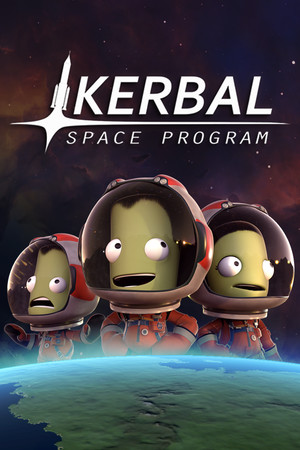
Compare Kerbal Space Program prices across trusted key stores and find the best deal. Developed by Squad. Published by Private Division. Released on 4/27/2015. Available on PC, Mac, Linux, Xbox. Genres: Indie, Simulation. Metacritic score: 88/100.

Rocket science has never been this entertaining or this humbling: KSP hands you a physics engine and a parts bin and trusts you to figure out why your spacecraft is corkscrewing into the ocean.

I've sunk more hours into Kerbal Space Program than I care to admit, and the honest-to-Kerbin truth is that the first time your rocket clears the atmosphere and you nail a stable orbit, you feel like you actually understand something real. That sensation is not a trick. The orbital mechanics here are grounded in actual physics - Hohmann transfers, delta-v budgets, specific impulse - and the game teaches them through failure rather than lecture. You will blow up dozens of spacecraft on the launchpad. That is the tutorial. The three modes give you a sensible on-ramp regardless of your experience level. Sandbox drops you into the Vehicle Assembly Building with every part unlocked and zero budget constraints - pure experimentation. Science Mode layers in a tech tree that asks you to run experiments and collect data in orbit or on the surface of the Mun before you can unlock more advanced components, giving structured players a satisfying progression loop without the financial pressure. Career Mode is the full package: you manage contracts, track funding, upgrade the Kerbal Space Centre's facilities, and weigh risk versus reward every time you schedule a crewed mission. That last mode has the depth a strategy player wants - you're constantly making decisions about efficiency, mission sequencing, and resource allocation that would not feel out of place in a proper management sim. The elephant in the Vehicle Assembly Building is the learning curve, but here is the case for ignoring that warning. The in-game tutorials do a reasonable job covering ascent profiles, orbit mechanics, and manoeuvre nodes. The real power, though, is the community. The Steam Workshop and the CKAN mod manager together give you access to hundreds of mods - Kerbal Engineer Redux surfaces the delta-v and thrust-to-weight numbers you need while building, Kerbal Alarm Clock stops you missing critical burn windows when you have six active missions, MechJeb handles repetitive orbital tasks once you've already learned to do them manually. Visual overhauls like EVE and Parallax turn the stock planets into something genuinely striking. The modding infrastructure is mature, well-documented, and frankly one of the best in the simulation genre. Where the game shows its age is in performance and polish. Large part-count vessels can hammer frame rates, the stock UI feels dated compared to modern sims, and the in-house AI for mission target accuracy is non-existent - there are no enemies, no opposing space programs, no diplomatic friction. Career Mode's contract system can feel repetitive once you're past the mid-game. These are real complaints, and players who need a tightly authored experience will bounce off KSP hard. It rewards the kind of person who treats a failed Mun landing as a design problem to solve rather than a frustrating setback. Patience is not optional. For strategy and sim players specifically, this is one of the rare sandboxes where the depth of decision-making scales across hundreds of hours. Getting your first Kerbal to orbit is one game; assembling a refuelling station around Minmus, planning a gravity-assist trajectory to Jool, and then landing on all five of its moons in sequence is another game entirely - and both live inside the same install. The 88 Metacritic and 95% positive Steam rating are accurate reflections of what you get when you commit to it. Diego, Scout Team

Kerbal Space Program

Kerbal Space Program

Apr 27, 2015SquadPrivate Division
GamerScout Says

Rocket science has never been this entertaining or this humbling: KSP hands you a physics engine and a parts bin and trusts you to figure out why your spacecraft is corkscrewing into the ocean.

PCMacLinuxXbox
Steam Deck PlayableProtonDB Platinum
Best Price Available
€0.00
at N/A
Historical low: €6.24

Compare Prices(0 stores)

Loading prices...

We may earn a commission when you buy games through links on this page — at no extra cost to you. It never affects our rankings or verdicts.

Price History

Historical low
€6.242 Jul 2026
Keyshops
€6.07€6.66€7.25€7.845 Jun12 Jun19 Jun25 Jun2 Jul
Tracking prices since 5 Jun 2026
Create alert

Screenshots & Media

About Kerbal Space Program

I've sunk more hours into Kerbal Space Program than I care to admit, and the honest-to-Kerbin truth is that the first time your rocket clears the atmosphere and you nail a stable orbit, you feel like you actually understand something real. That sensation is not a trick. The orbital mechanics here are grounded in actual physics - Hohmann transfers, delta-v budgets, specific impulse - and the game teaches them through failure rather than lecture. You will blow up dozens of spacecraft on the launchpad. That is the tutorial. The three modes give you a sensible on-ramp regardless of your experience level. Sandbox drops you into the Vehicle Assembly Building with every part unlocked and zero budget constraints - pure experimentation. Science Mode layers in a tech tree that asks you to run experiments and collect data in orbit or on the surface of the Mun before you can unlock more advanced components, giving structured players a satisfying progression loop without the financial pressure. Career Mode is the full package: you manage contracts, track funding, upgrade the Kerbal Space Centre's facilities, and weigh risk versus reward every time you schedule a crewed mission. That last mode has the depth a strategy player wants - you're constantly making decisions about efficiency, mission sequencing, and resource allocation that would not feel out of place in a proper management sim. The elephant in the Vehicle Assembly Building is the learning curve, but here is the case for ignoring that warning. The in-game tutorials do a reasonable job covering ascent profiles, orbit mechanics, and manoeuvre nodes. The real power, though, is the community. The Steam Workshop and the CKAN mod manager together give you access to hundreds of mods - Kerbal Engineer Redux surfaces the delta-v and thrust-to-weight numbers you need while building, Kerbal Alarm Clock stops you missing critical burn windows when you have six active missions, MechJeb handles repetitive orbital tasks once you've already learned to do them manually. Visual overhauls like EVE and Parallax turn the stock planets into something genuinely striking. The modding infrastructure is mature, well-documented, and frankly one of the best in the simulation genre. Where the game shows its age is in performance and polish. Large part-count vessels can hammer frame rates, the stock UI feels dated compared to modern sims, and the in-house AI for mission target accuracy is non-existent - there are no enemies, no opposing space programs, no diplomatic friction. Career Mode's contract system can feel repetitive once you're past the mid-game. These are real complaints, and players who need a tightly authored experience will bounce off KSP hard. It rewards the kind of person who treats a failed Mun landing as a design problem to solve rather than a frustrating setback. Patience is not optional. For strategy and sim players specifically, this is one of the rare sandboxes where the depth of decision-making scales across hundreds of hours. Getting your first Kerbal to orbit is one game; assembling a refuelling station around Minmus, planning a gravity-assist trajectory to Jool, and then landing on all five of its moons in sequence is another game entirely - and both live inside the same install. The 88 Metacritic and 95% positive Steam rating are accurate reflections of what you get when you commit to it.

Diego
Diego · Scout Team

Strategy & simulation

Tags

Single-playerSteam Trading CardsSteam WorkshopPartial Controller SupportSteam CloudFamily SharingsteamOrbital MechanicsTech Tree ProgressionCareer ManagementModdable SimPhysics SandboxHigh ReplayabilityCKAN Mod SupportSteep Learning Curve

System Requirements

Minimum

Processor
Core 2 Duo
Memory
2 GB RAM
Graphics
SM3 512MB VRAM Hard Drive:1 GB HD space

Recommended

OS
Windows 10 64-bit
Processor
Core i5
Memory
8 GB RAM
Graphics
DX10 (SM 4.0) capable, 1GB VRAM Hard Drive:4 GB HD space

DLC & Add-ons for Kerbal Space Program3

Expansions, DLC packs and add-on content for this game. Click any item to see store offers.

Keep exploring

Community Discussion

Be the first to comment on Kerbal Space Program.

Reviews & Ratings

Metacritic
88
Steam
95%(140,491)

Game Info

Developer
Squad
Publisher
Private Division
Release Date
Apr 27, 2015

Game Modes

singleplayer

Languages

Subtitles (9)
EnglishSpanish - SpainSimplified ChineseJapaneseRussianFrench+3 more

Features

Cloud Saves

Price Alert

Get notified when the price drops below your target!

Create Alert

No card? Pay another way

Top up your Steam Wallet or buy crypto with any card — instant delivery, no bank account needed.

Buy smarter: helpful guides

Kerbal Space Program live on Twitch

Looking for more? See games like Kerbal Space Program →

Frequently asked questions about Kerbal Space Program

How much does Kerbal Space Program cost?

Kerbal Space Program pricing changes often and varies by store, edition and region. The live price table on this page compares the cheapest in-stock offers from trusted key stores like Eneba and Kinguin, so you always see the current lowest price before you buy.

Where can I buy Kerbal Space Program cheapest?

Compare Kerbal Space Program prices across every verified store in the price table on this page. We list the cheapest in-stock key and store offers, updated regularly, so you always see the best current deal before you buy.

What platforms is Kerbal Space Program available on?

Kerbal Space Program is available on PC, Mac, Linux, Xbox.

When was Kerbal Space Program released?

Kerbal Space Program was released on 27 April 2015.

Who developed Kerbal Space Program?

Kerbal Space Program was developed by Squad and published by Private Division.

Is Kerbal Space Program worth buying?

Kerbal Space Program holds a Metacritic score of 88/100, making it one of the standout Indie titles. See the full reviews, ratings and how-long-to-beat times on this page to decide.