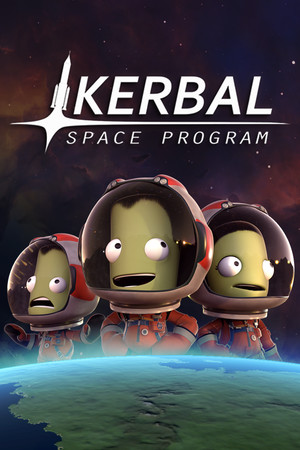
Kerbal Space Program: Breaking Ground Expansion (DLC)
Breaking Ground bolts robotic parts and surface science onto KSP's core loop, giving veteran players a reason to revisit every planet they already landed on.
GamerScout Verdict
Best for KSP veterans ready to spend serious hours engineering robotic landers and passive science networks on planets they already know.
Compare Prices(5 stores)
Every store in this table quotes us in euros, so the EUR figure is the price the seller actually set, not our arithmetic — which is why EUR is also the currency we rank in. We only list an offer here when the store gives us its price in euros, so nothing in this table is a number we invented.
Pick USD, PLN, GBP, CAD or AUD in the header and we convert from EUR at the European Central Bank reference rate — converted amounts are prefixed with ~. Your bank or the store may apply a different rate at checkout. We never hide offers based on where you are: everyone sees this whole table.
We may earn a commission when you buy games through links on this page — at no extra cost to you. It never affects our rankings or verdicts.
Price History
Screenshots & Media
About Kerbal Space Program: Breaking Ground Expansion (DLC)
Kerbal Space Program is already a deep sandbox where orbital mechanics double as a physics education, and Breaking Ground is the expansion that fills in the 'now what?' gap that opens up after you first plant a flag on the Mun. The two headline additions are a robotic parts system and a surface science overhaul, and together they shift the late-game focus from 'can I get there' to 'what can I actually do once I arrive.' The robotic components are the real draw. Hinges, pistons, rotors, and servos can be chained together in the VAB to build anything from a deployable antenna arm to a fully articulated rover chassis. The parts slot into the existing part-attachment system so the learning curve is gentler than it looks, but the ceiling is genuinely high. Rotor-driven propeller aircraft become viable on Kerbin and Laythe, and the torque values are tunable enough that you can iterate on a design without rebuilding from scratch. KAL-1000 controllers let you script sequences of robotic movements with a timeline editor, which is one of those features that sounds niche until you realise it lets you automate landing-leg deployment or build a walking lander. Depth is there if you chase it. Surface features add scattered geological and biological objects to planetary bodies, generating new science reports when you send a Kerbal to interact with them or deploy a scanner. This sounds thin on paper, but it gives every return trip to an existing biome a small checklist of objectives. Combine that with the new deployable science stations, which draw power over time and transmit data autonomously, and you have a genuine passive-income science loop that rewards setting up a proper surface base rather than a quick sample-and-run mission. For players running career or science-mode saves, this is more meaningful than it sounds. Where Breaking Ground stumbles is scope. The robotic system, for all its flexibility, lacks dedicated IK (inverse kinematics) support, so complex multi-joint builds can behave unpredictably under physics load, especially on lower-end rigs. The surface science additions also feel unevenly distributed across celestial bodies, and the expansion does not add new planets or major story objectives, so if you are hoping for a fresh destination rather than new toys for existing ones, you will be underwhelmed. It is unambiguously an expansion for players who already have 100-plus hours in the base game and want more to optimise. For that audience, though, the mod ecosystem integration is worth flagging. Steam Workshop support in the base game means community-built robotic contraptions and surface base templates are a click away, and Breaking Ground's parts are already well-supported by major overhaul mods. If you are the type who treats KSP as a long-term project rather than a playthrough, this expansion adds a meaningful layer to that project without invalidating anything you have already built.

Strategy & simulation
Tags
System Requirements
Minimum
- Processor
- Core 2 Duo
- Memory
- 4 GB RAM
- Graphics
- DX10 (SM 4.0) capable, 512MB VRAM Hard Drive:3 GB HD space
Recommended
- OS
- Windows 10 64-bit
- Processor
- Core i5
- Memory
- 8 GB RAM
- Graphics
- DX10 (SM 4.0) capable, 1GB VRAM Hard Drive:4 GB HD space
Keep exploring
Community Discussion
Be the first to comment on Kerbal Space Program: Breaking Ground Expansion (DLC).
Reviews & Ratings
No ratings available
Game Info
- Developer
- Squad
- Publisher
- Private Division
- Release Date
- May 30, 2019