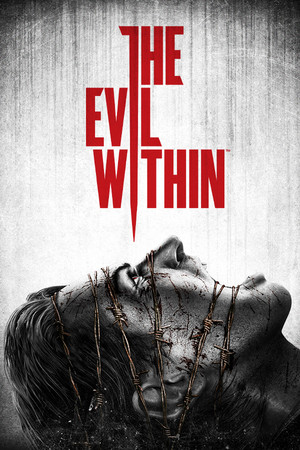
The Evil Within The Assignment
Two to three hours of hiding in lockers as Kidman, with almost no gun and no upgrades. Great if you want the other half of The Evil Within's story, rough if you wanted its combat.
GamerScout Verdict
Worth it for base-game finishers who want Kidman's half of the story and can stomach trial-and-error stealth over combat.
Compare Prices(2 stores)
Every store in this table quotes us in euros, so the EUR figure is the price the seller actually set, not our arithmetic — which is why EUR is also the currency we rank in. We only list an offer here when the store gives us its price in euros, so nothing in this table is a number we invented.
Pick USD, PLN, GBP, CAD or AUD in the header and we convert from EUR at the European Central Bank reference rate — converted amounts are prefixed with ~. Your bank or the store may apply a different rate at checkout. We never hide offers based on where you are: everyone sees this whole table.
We may earn a commission when you buy games through links on this page — at no extra cost to you. It never affects our rankings or verdicts.
Screenshots & Media
About The Evil Within The Assignment
Alien: Isolation trained me to treat a locker as a home base, and the first hour of The Assignment plays like that lesson dragged into Krimson City. The difference that matters is scale. Isolation hands you a whole station to hide in and one hunter improvising across it, while Kidman's chapters are tight authored corridors where the game has already decided how you get caught and mostly wants you to find the intended line through the trap. This is the first half of a two part story expansion for The Evil Within, released in March 2015, and it hands you Juli Kidman, the partner who spent the main campaign being evasive about who she actually works for. Her chapters run concurrent with Sebastian's, which means you revisit spaces you already know from an angle where you are far less capable. Kidman does not get his arsenal. For most of the running time you have no meaningful way to kill anything, so the verbs shrink down to crouching, reading patrol paths, throwing something to pull attention, and picking the exact moment to slip past. It takes two to three hours if you are not stubborn, longer if you are, and it assumes you have already finished the base game. Going in cold, you will understand roughly nothing about Mobius, Leslie, or why anyone cares about a machine that wires brains together. What it does exceptionally well is pressure. Tango made the Haunted genuinely frightening again by taking your options away, and a shambling enemy you would have shotgunned as Sebastian becomes a real problem when your entire plan is a locker and good timing. The Keeper, the executioner with a safe for a head, returns as a pursuer rather than a boss fight, and those stretches are the best thing here by a distance. Sound design does most of the heavy lifting. You spend a lot of this listening to footsteps through a door, trying to work out whether the thing outside has lost interest. There is craft in how familiar locations get recontextualized too. Seeing the same corridors from Kidman's timeline quietly reframes several beats from the main game without stopping to explain itself, and the pacing is tight enough that it never sags the way short horror side stories usually do around the halfway mark. The problems are structural. Stealth here is not a systems playground, it is a sequence of puzzles with one intended answer, and getting spotted usually means dying on the spot and replaying the setup. Checkpoints are mostly fair, but a couple of chase segments will have you repeating the same thirty seconds until you memorize the route, which is pattern learning dressed up as tension. Enemy detection is inconsistent enough that some deaths feel arbitrary rather than earned. There is no upgrade loop to chase between chapters either, so your only real progression is your own improving read of each room. And the story, which is the entire reason to be here, deliberately withholds. Questions get raised, new faces appear, then the credits point at part two. The Mostly Positive standing on Steam tracks with all of that. Players who loved the base game for its scrappy, resource-starved combat came away feeling shorted, while players who wanted Kidman's side of the plot generally got what they came for. Play it for atmosphere and perspective, not mechanical depth. If The Evil Within worked for you specifically because you enjoyed rationing ammo, crafting bolts, and rigging traps, this is the wrong side of that coin and you should know it before you start. If you rolled credits on the campaign confused about who Kidman was actually reporting to, this is a tense, well paced few hours that earns its place in the story, provided you accept up front that it ends on a comma rather than a period. Just do not start it expecting a second campaign. It is a companion piece, and it behaves like one.

Catch-all
Tags
System Requirements
Minimum
- Processor
- i7 or an equivalent with four plus core processor
- Memory
- 4 GB RAM
- Graphics
- GTX 460 or equivalent 1 GB VRAM card
- DirectX
- Version 11
- Storage
- 8 GB availab…
Recommended
- Processor
- i7 with four plus cores
- Memory
- 4 GB RAM
- Graphics
- GeForce GTX 670 or equivalent with 4GBs of VRAM
- DirectX
- Version 11
- Storage
- 8 GB available space
Keep exploring
Community Discussion
Be the first to comment on The Evil Within The Assignment.
Reviews & Ratings
Game Info
- Developer
- Tango Gameworks
- Publisher
- Bethesda Softworks
- Release Date
- Mar 9, 2015