Starpoint Gemini Warlords - Deadly Dozen
A 4X-lite space sandbox where you build the fleet and then fly the flagship yourself. Deep enough to reward planning, slow enough to test you, and the AI never quite plays back.
GamerScout Verdict
Best for solo players who want an economy to optimise and a flagship to personally steer into the results, not a clever AI rival.
Compare Prices(3 stores)
Every store in this table quotes us in euros, so the EUR figure is the price the seller actually set, not our arithmetic — which is why EUR is also the currency we rank in. We only list an offer here when the store gives us its price in euros, so nothing in this table is a number we invented.
Pick USD, PLN, GBP, CAD or AUD in the header and we convert from EUR at the European Central Bank reference rate — converted amounts are prefixed with ~. Your bank or the store may apply a different rate at checkout. We never hide offers based on where you are: everyone sees this whole table.
We may earn a commission when you buy games through links on this page — at no extra cost to you. It never affects our rankings or verdicts.
Price History
Screenshots & Media
About Starpoint Gemini Warlords - Deadly Dozen
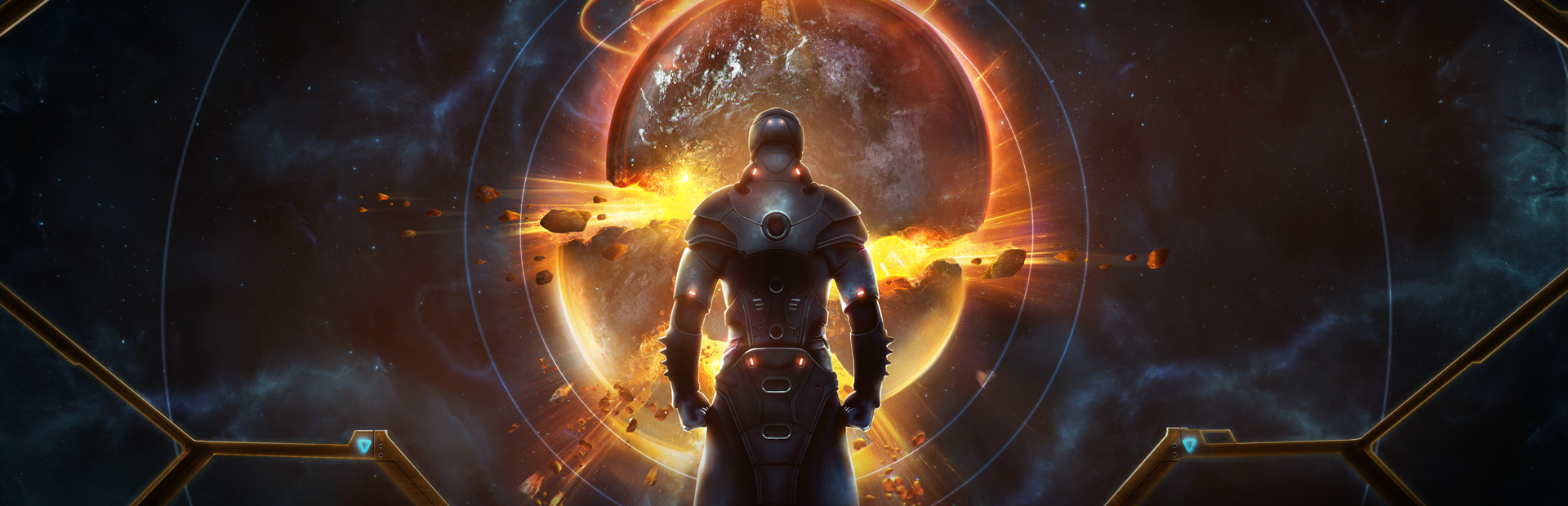
The mechanic that reorganised how I play space games is the toggle: you can be the admiral pushing fleet icons around a star map one minute, then drop into the third-person cockpit of your own capital ship and personally hold the line the next. Most 4X-lite designs ask you to trust the combat resolution and watch the numbers settle. Warlords hands you a rudder and lets you cheat your own math. Once that clicks, your build order changes. A fleet you can personally reinforce is a fleet you can under-build, and I spent most of my early hours running deliberately lean squadrons because I knew I was the missing hull. Structurally this sits between an action RPG and a light 4X. You run a headquarters that you expand module by module, feeding it resources until it unlocks better research, better ship classes and better production. Out in the sectors you take territory, capture and defend stations, and pick fights with rival factions whose attitudes shift based on who you have been shooting. Progression runs on a perk system rather than a tech tree with a hundred branches, so the decisions are chunkier and far easier to reason about than in a Paradox title. It is a sandbox with a campaign wrapped around it, and the sandbox is the better half. Here is why I would still recommend it to someone who has bounced off grand strategy twice already. The systems layer is deep enough to be interesting but shallow enough to learn in a single sitting. Economy management comes down to a handful of resource lines and a build queue, not a supply-chain simulator. Faction warfare is legible: you can see who hates you, why, and which territory would fix it. And because you always have a personal ship to fall back on, one bad strategic call does not quietly end your run forty hours later. If you want a concrete plan, spend your first ten hours in freeform, ignore the campaign, buy a mid-weight hull instead of saving for a dreadnought, and sink early perks into income rather than damage. Economy first is the correct build order here, same as it is in every 4X worth playing. Now the disappointments, and they are real. It is slow in ways that are not always intentional. Travel across sectors eats minutes, side missions recycle their templates well past the point of charm, and the interface buries actions you will perform hundreds of times under several layers of menu. The AI is the weakest part of the package: enemy fleets rarely surprise you, and once you have a properly outfitted capital ship with a competent escort, the mid-to-late game stops being a strategy problem and turns into an errand list. Combat has genuine weight, capital ships turn like they have mass, but that weight also means fights settle into predictable broadside exchanges. And it is single-player only. No co-op, no shared sandbox, nobody to compare empire spreadsheets with. The Workshop support matters more than the feature list suggests, since community content patches a lot of the quality-of-life ground the base build leaves rough, and it is worth browsing before your first serious run instead of after. Controller support is properly implemented, which is rare for anything carrying this much menu, though I would still take mouse and keyboard for the strategic layer. The tutorial is functional rather than generous: it explains the buttons and leaves the economy to you, so budget an hour of reading tooltips and accept that your first station purchase will be a mistake. Mostly Positive at 73 percent across several thousand reviews lines up with the 73 on Metacritic, and both feel honest. That is the score of a game that does what it promised without transcending it. If you want 40 to 60 hours of stacking an economy, assembling a fleet and then flying the flagship into the result yourself, this delivers exactly that. If you want an opponent that plays chess back at you, keep looking.

Strategy & simulation
Tags
System Requirements
Minimum
- Processor
- Intel Core 3.0 GHz or equivalent
- Memory
- 8 GB RAM
- Graphics
- DirectX 11 nVidia GeForce GTX 470 / 560, 1280M…
Recommended
Requires a 64-bit processor and operating system
Keep exploring
Community Discussion
Be the first to comment on Starpoint Gemini Warlords - Deadly Dozen.
Reviews & Ratings
Game Info
- Developer
- Little Green Men Games
- Publisher
- Little Green Men Games
- Release Date
- May 23, 2017