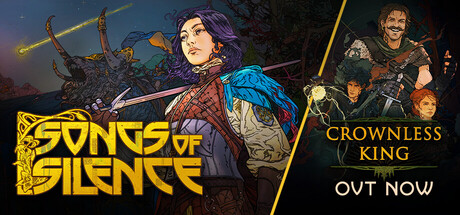
Songs of Silence
If Heroes of Might and Magic had a child with an autobattler and dressed it in Art Nouveau, you'd get this. A Metacritic 81 that earns its score on style and hooks you with surprisingly decent faction depth.
GamerScout Verdict
Best for 4X fans who want a story-focused campaign with striking visuals and can accept a low faction count and an AI that fights dirty.
Compare Prices(8 stores)
Every store in this table quotes us in euros, so the EUR figure is the price the seller actually set, not our arithmetic — which is why EUR is also the currency we rank in. We only list an offer here when the store gives us its price in euros, so nothing in this table is a number we invented.
Pick USD, PLN, GBP, CAD or AUD in the header and we convert from EUR at the European Central Bank reference rate — converted amounts are prefixed with ~. Your bank or the store may apply a different rate at checkout. We never hide offers based on where you are: everyone sees this whole table.
We may earn a commission when you buy games through links on this page — at no extra cost to you. It never affects our rankings or verdicts.
Price History
Screenshots & Media
About Songs of Silence
My first session with Songs of Silence lasted longer than I planned, and I attribute exactly half of that to discipline failure and half to the game genuinely keeping me curious. Chimera Entertainment built what is best described as a 4X kingdom-management game with turn-based map movement and real-time autobattled combat, glued together by a card-ability system that sits somewhere between a cooldown bar and a hand of spells. The overworld loop will feel immediately legible to anyone who has spent time with the Heroes of Might and Magic series: march heroes across a hex-tiled map, claim settlements, level up, recruit units, pick fights. The map movement system even adds an ambush layer that rewards careful positioning, with armies exposed to counter-attack if they burn more than half their movement points in a single turn. Hiding in forests to spring ambushes on enemy stacks is a small but satisfying wrinkle that keeps the traversal from feeling purely administrative. The three base factions, the Thousand Kingdoms (cavalry and faith-based units), the Old Race Firstborn, and the Crusade with their roaming capital mechanic that literally silences tiles it vacates, each play differently enough to warrant separate playthroughs. Hero classes like the Hochmeister, a mounted warrior who can solo smaller armies, the Hierophant who stacks summons and heals but needs bodyguards, and the Firstborn Konstruktor, a body-fused artificer, give the roster real identity. Cards are not a deck-builder in any meaningful sense; they are hero abilities on timers, some deployed on the world map to build structures or recruit units, others triggered mid-battle to redirect cavalry charges or detonate area damage. That distinction matters because newcomers often bounce off the UI thinking they are building a deck when they are actually queuing cooldowns. Once that clicks, the combat layer is accessible without being trivial. The criticism the game earns honestly: the campaign AI runs faster and more aggressively than your own economy can match in the mid-to-late chapters, and certain mission structures force progress resets that make hard-won cities feel pointless to capture. Some stealth-themed campaign segments slow the pace to a crawl and feel borrowed from a completely different game. The unit stack cap frustrates players hoping to snowball a dominant army type, particularly anyone arriving from Heroes 3 expecting to pile skeletons sky-high. Faction variety is also a genuine concern at the base game level: three factions is thin for a genre where replay depth hinges on roster asymmetry. The Lighteaters DLC added a fourth faction with its own Nexus Capital mechanics and new battle cards like Abyssal Maw and Mind Control, which broadens the skirmish and multiplayer pool considerably. Multiplayer supports up to six players and includes a Friend's Pass, which is worth knowing if co-op is the draw. Visually, it is hard to overstate how distinctive this thing looks. The Art Nouveau art direction, cited among the best in its release year, runs consistently from character portraits to UI chrome to unit animations. The soundtrack was composed with clear intention and holds up across long sessions. Neither of those qualities is a substitute for mechanical depth, and the harder-edged critics are right that the gameplay borrows from several genres without fully committing to any single one. What it does commit to is being a complete, focused experience with a roughly 15-20 hour campaign and a skirmish and multiplayer mode that extends the value, rather than a 300-hour system-layered sandbox. For strategy players who want something polished, story-contextualised, and visually unlike everything else in the genre, that trade-off works. For players who want late-game faction asymmetry on par with Age of Wonders or the unit stacking options of older HoMM entries, the depth ceiling will feel low.

Strategy & simulation
Tags
System Requirements
Minimum
- OS
- 64-bit Windows 7 or newer
- Memory
- 8 GB RAM
- DirectX
- Version 10
- Storage
- 10 GB available space
- Graphics
- NVIDIA GTX 1050
- Processor
- Intel® Core™ i5-8400T CPU @ 1.70GHz
Recommended
- OS
- 64-bit Windows 10
- Memory
- 16 GB RAM
- DirectX
- Version 11
- Storage
- 10 GB available space
- Graphics
- NVIDIA GTX 1070
- Processor
- Intel® Core™ i7-7700T CPU @ 2.90GHz
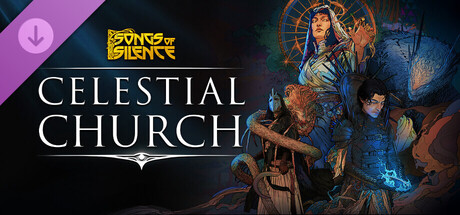
DLC & Add-ons for Songs of Silence3
Expansions, DLC packs and add-on content for this game. Click any item to see store offers.
Keep exploring
Community Discussion
Be the first to comment on Songs of Silence.
Reviews & Ratings
Game Info
- Developer
- Chimera Entertainment
- Publisher
- Chimera Entertainment
- Release Date
- Nov 13, 2024