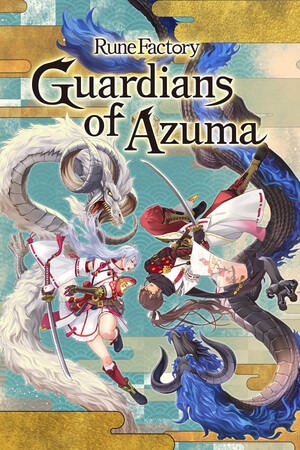
Rune Factory: Guardians of Azuma Digital Deluxe Edition
Farming, village-building, and dragon mythology wrapped in a Japanese aesthetic that the series has never tried before. Worth your time if you can forgive combat that plays it safe.
GamerScout Verdict
Best for Rune Factory fans and farming-RPG regulars who prioritize cast and world atmosphere over deep dungeon design.
Compare Prices(4 stores)
Every store in this table quotes us in euros, so the EUR figure is the price the seller actually set, not our arithmetic — which is why EUR is also the currency we rank in. We only list an offer here when the store gives us its price in euros, so nothing in this table is a number we invented.
Pick USD, PLN, GBP, CAD or AUD in the header and we convert from EUR at the European Central Bank reference rate — converted amounts are prefixed with ~. Your bank or the store may apply a different rate at checkout. We never hide offers based on where you are: everyone sees this whole table.
We may earn a commission when you buy games through links on this page — at no extra cost to you. It never affects our rankings or verdicts.
Price History
Screenshots & Media
About Rune Factory: Guardians of Azuma Digital Deluxe Edition
I went into Guardians of Azuma expecting a safe sequel-by-numbers and came out genuinely surprised by how much of it worked, and soberly honest about where it didn't. This is technically a spin-off, trading the European fantasy backdrop of mainline Rune Factory for a setting steeped in Japanese seasonal tradition, scarred by a cataclysm called the Celestial Collapse that shattered the land and sent chunks of it floating skyward. You play as either Subaru or Kaguya, an amnesiac Earth Dancer whose powers let you purify the Blight corrupting Azuma's four elemental villages and coax sleeping gods back into existence. Yes, the amnesia hook is back. The series has made it a tradition at this point, and Guardians of Azuma at least lampshades it with enough self-awareness to keep it from being annoying. The biggest structural addition is village-building, and it lands somewhere between promising and shallow depending on your expectations. You are not just tending one farm now; you are rebuilding four settlements, placing bakery carts and waterways and crop grids on flat plots that buff your stats in ways that feel a bit arbitrary but are nonetheless satisfying to watch fill out. Critics who bounced off the game tended to note that scratching beneath the surface of these systems reveals less depth than the setup implies, and that is a fair reading. What holds the loop together is the rhythm of it: explore a blighted area, unlock a new village, recruit residents, level up your bond with them, then bring them into combat as party members. Almost everything you do feeds a skill tree somewhere, whether that is forging weapons, cooking, fishing, or deepening relationships, which means the explore-build-socialise cycle rarely feels pointless. Combat is the most divisive part of the package. The Earth Dancer toolkit adds Dance Stance moves tied to Sacred Treasures that drain a Spirit Gauge, and these are genuinely fun for crowd control, particularly when you need to stagger a big enemy like one of the red oni outside Spring Village. New weapon types including bows and talismans broaden the options versus previous entries, and a well-timed dodge triggers a slow-motion window for follow-up damage. Companions recruited through the bond system each bring their own combat skills, so the party composition angle has real texture. The dungeon design underneath all of that, however, is a recurring complaint across reviews: corridors feel thin, enemy variety runs out before the credits, and the combat depth does not hold up to RPGs that put combat at the center of their identity. If you come in treating combat as seasoning rather than the main course, you will be fine. The writing is a genuine bright spot. The cast across all four villages is charming, and the fully voiced relationship scenarios reward patience with actual character development rather than the repeated gift-giving drip-feed the genre often substitutes for storytelling. The main narrative starts small and eventually escalates toward a grander conflict involving warring dragon gods, and while the story is not going to dethrone your favorite CRPG for complexity, it has moments of real warmth and a handful of beats that land with surprising weight. One note worth flagging for Digital Deluxe buyers: the Deluxe content includes DLC packs that lock romance routes for two characters, Pilika and Cuilang, who are already present in the base game. Locking romance behind day-one paid DLC for a series where relationship-building is half the appeal is a frustrating choice that has left a sour taste in the community, and you should know about it before you decide which edition to buy. Guardians of Azuma sits at an 80 on Metacritic and Very Positive on Steam for good reason: the core loop is comfortable, the setting is the freshest the series has ever looked, and the bond system genuinely rewards investment in its characters. It is not the deepest RPG on the platform, the dungeons are forgettable, and the village-building stops short of the complexity it teases. But the steady cadence of healing a broken world, one crop row and one friendship at a time, is hard to put down once it gets its hooks in.

RPGs
Tags
System Requirements
Minimum
- OS
- Windows 10 and 11
- Processor
- Intel Core i5-10400
- Memory
- 8 GB RAM
- Graphics
- NVIDIA GeForce GTX 1650 SUPER
- DirectX
- Version 11
- Storage
- 20 GB available space
Recommended
- OS
- Windows 10 and 11
- Processor
- Intel Core i7-9700
- Memory
- 16 GB RAM
- Graphics
- NVIDIA GeForce RTX 2060 SUPER
- DirectX
- Version 11
- Storage
- 20 GB available space
Keep exploring
Community Discussion
Be the first to comment on Rune Factory: Guardians of Azuma Digital Deluxe Edition.
Reviews & Ratings
Game Info
- Developer
- Marvelous Inc.
- Publisher
- XSEED Games, Marvelous USA, Inc., Marvelous Europe
- Release Date
- Jun 4, 2025