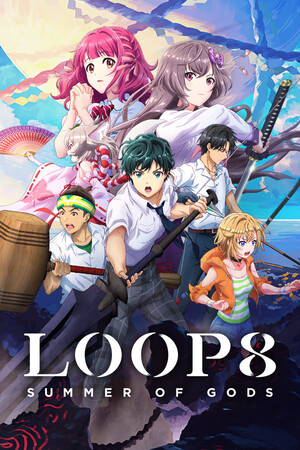
Loop8: Summer of Gods
Gorgeous 1980s Japanese summer setting, a clever time-loop premise, and then forty-five hours of mashing through hollow stat menus. The bones of something special are here - buried under repetition.
GamerScout Verdict
Best for atmosphere-chasers who can tolerate a repetitive stat grind; Persona fans expecting narrative depth will hit a wall fast.
Compare Prices(3 stores)
Every store in this table quotes us in euros, so the EUR figure is the price the seller actually set, not our arithmetic — which is why EUR is also the currency we rank in. We only list an offer here when the store gives us its price in euros, so nothing in this table is a number we invented.
Pick USD, PLN, GBP, CAD or AUD in the header and we convert from EUR at the European Central Bank reference rate — converted amounts are prefixed with ~. Your bank or the store may apply a different rate at checkout. We never hide offers based on where you are: everyone sees this whole table.
We may earn a commission when you buy games through links on this page — at no extra cost to you. It never affects our rankings or verdicts.
Price History
Screenshots & Media
About Loop8: Summer of Gods
I came to Loop8: Summer of Gods carrying exactly the kind of hope that gets punished. A social-sim RPG set in rural 1983 Japan, starring a kid named Nini who fell from a destroyed space station and landed in the one town the demon-gods called Kegai haven't yet consumed - and who happens to be able to reset time every time things go sideways. That premise is genuinely exciting. Shades of Persona, a hint of Higurashi, the supernatural weight of Japanese folklore. And for the first ten hours or so, the game earns that excitement. The core structure asks you to spend the month of August in the town of Ashihara, building relationships with twelve residents by talking to them, doing activities together, and collecting stat-boosting blessings from shrines scattered around town. Your Friendship, Affection, and Hate ratings with each character are tracked in both directions - meaning townsfolk have opinions about each other too, and those inter-character bonds feed into which abilities your party can use when the Kegai trigger a five-day countdown toward possession and apocalypse. Nini's Demon Sight ability lets him read a target's current mood and emotional state before picking a conversation approach, and on paper the whole social web feels meaningfully intricate. The turn-based combat, meanwhile, sends you into the Yomotsu Hirasaka - an underworld mirror of Ashihara with a blue colour filter swapped over the same environmental assets - where you fight possessed townspeople alongside AI-controlled allies. If your party wipes, the loop triggers and August resets. Here is where the ambition meets a wall it cannot climb. Each loop runs eight to ten hours of real playtime. The conversations you repeat are largely generic, reduced to menu prompts like "Compliment" or "Get to Know Each Other" that produce near-identical responses loop after loop. The blessings from shrines are random stat bumps delivered by a flying squirrel whose voice acting reviewers across the board have described with audible pain. Combat gives you direct control only over Nini while teammates act on AI logic that will, at the worst possible moment, choose to buff instead of land the finishing blow. The underworld dungeon is not a dungeon - it recycles town geometry under a colour filter and asks almost nothing of you tactically. Across thirty to forty-five hours, the overarching plot amounts to roughly the same event repeated six times before a brief branching epilogue, and Nini himself barely comments on any of it. The "choices matter" framing is real in a narrow sense - relationship stats do determine combat options and ending conditions - but the path there is a stat grind dressed in social-sim clothing rather than a story that earns its emotional beats. What genuinely works: the art direction. The blend of pre-rendered backdrops with 3D character models captures the specific texture of a quiet Japanese coastal town in a way that lingers. The anime-style low-framerate character animation is a deliberate aesthetic choice and, once you adjust, a charming one. A handful of character arcs - Machina reflecting on identity, Ichika's priestess burden - show the creative team reaching for something earnest. Beni the fox-god has personality. The horror undertones and light sci-fi mythology are a combination nobody else is doing right now, and that counts for something. But Loop8 is ultimately a concept game that shipped before the execution caught up with the concept. If your tolerance for repetitive social-sim loops runs high, if Romancing SaGa-style obtuse structure appeals to you, and if atmosphere alone can carry you through hollow mechanics, there is a strange, niche experience buried here. For everyone else - especially anyone drawn by Persona comparisons or promises of meaningful narrative choices - the mismatch between the game it wants to be and the game it actually is will surface long before the credits roll.

RPGs
Tags
System Requirements
Minimum
- OS
- Windows 10
- Memory
- 6 GB RAM
- DirectX
- Version 11
- Storage
- 4 GB available space
- Graphics
- NVIDIA Geforce GTX 660 / Radeon HD7870
- Processor
- Intel i5-3470 / AMD FX-8300
Recommended
- OS
- Windows 10
- Memory
- 8 GB RAM
- DirectX
- Version 11
- Storage
- 4 GB available space
- Graphics
- NVIDIA Geforce GTX 1060 / Radeon RX580
- Processor
- Intel i7-6700 / AMD Ryzen 5 2600
Keep exploring
Community Discussion
Be the first to comment on Loop8: Summer of Gods.
Reviews & Ratings
No ratings available
Game Info
- Developer
- Marvelous Inc.
- Publisher
- XSEED Games
- Release Date
- Jun 6, 2023