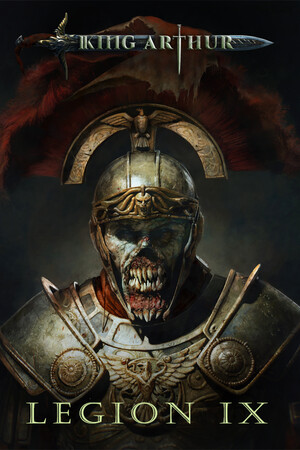
King Arthur - The Role-playing Wargame
Total War meets Arthurian myth, but with RPG morality choices and text adventures baked right into the campaign map. Worth your time if you can stomach rough AI and some balance gaps.
GamerScout Verdict
Best for strategy players who want RPG character investment inside a grand-strategy campaign and can live with uneven AI and patchy balance.
Compare Prices(5 stores)
Every store in this table quotes us in euros, so the EUR figure is the price the seller actually set, not our arithmetic — which is why EUR is also the currency we rank in. We only list an offer here when the store gives us its price in euros, so nothing in this table is a number we invented.
Pick USD, PLN, GBP, CAD or AUD in the header and we convert from EUR at the European Central Bank reference rate — converted amounts are prefixed with ~. Your bank or the store may apply a different rate at checkout. We never hide offers based on where you are: everyone sees this whole table.
We may earn a commission when you buy games through links on this page — at no extra cost to you. It never affects our rankings or verdicts.
Price History
Screenshots & Media
About King Arthur - The Role-playing Wargame
My spreadsheet instincts fired up about ten minutes into this one: two resources, four seasons as turn structure, a morality axis splitting Christian versus Old Faith and Righteous versus Tyrant, and twelve Round Table seats to fill with Warlord, Champion, or Sage class knights. That is a lot of interlocking dials, and NeocoreGames released this thing in 2009. The ambition alone earns it a look. The campaign structure will feel familiar if you have put hours into Total War. You manage a province-based map of Britannia, push armies across territory, and when conflicts resolve you drop into real-time battles with unit formations, terrain that punishes cavalry in woodland and rewards them on open fields, and morale-draining control points that also hand out magical bonuses when captured. What separates it is the Adventure system: individual knights get dispatched on text-based RPG scenarios where your choices, filtered through each knight's class skills and your king's current morality standing, determine both the story outcome and concrete rewards back on the strategic map. It sounds like a gimmick; after a few acts it is the best reason to keep playing. The RPG layer has genuine depth. Knights level up during winter turns, spend skill points across four-level skill trees, equip artifact slots, and govern fiefdoms whose output shifts with their personal traits. A late-game Round Table of twelve fully specialized knights, some Warlord-built for army-wide buffs, some Champion-tuned for single-unit carnage, some Sage-spec'd for battlefield spells, plays very differently than a rushed mid-game roster. That long arc of build investment is exactly the kind of thing that keeps strategy players anchored to a campaign. The morality system is also cleverly structural, not cosmetic: lean too far toward the Old Faith and certain Christian knights become disloyal; push Tyrant and you unlock different units and quest branches, with downstream effects that only surface dozens of turns later. The problems are real and worth knowing before you commit. AI battle behavior is the most obvious crack, with enemy units sometimes failing to exploit numerical advantages or clustering in ways that a competent player can punish hard. Archer balance was bad enough at launch that patches were required, and community discussions still circulate house-rule lists to prevent certain spells and skills from trivializing the late campaign. Stability on modern systems has also been flagged by players over the years, though the patched Steam version runs reasonably. The tutorial covers basics but will not prepare you for the economic tempo decisions of the first ten turns, so expect one restart. Steam reviews sit at roughly 67 percent positive from a limited pool, which reads more as a niche-audience filter than a condemnation: the people who like this genuinely like it a lot. For a newcomer, the honest entry path is to start on Easy or Beginner, treat the first campaign as a learning run, and resist the urge to min-max knight skills before you understand which morality axis your playstyle naturally gravitates toward. The quest trees branch on those choices, and committing to a coherent identity, Righteous Christian, Righteous Old Faith, Tyrant Christian, Tyrant Old Faith, produces a more satisfying late game than sitting on the fence. If you have ever wanted a game that is roughly half Crusader Kings character drama and half Total War battlefield management, layered over Celtic myth that is not shy about sending your knights into Sidhe dimensions, this is a specific flavour that nothing else quite replicates.

Strategy & simulation
Tags
System Requirements
Minimum
- OS
- Windows XP SP2/Vista/7
- Sound
- DirectX 9-compliant sound card
- Memory
- 1Gb RAM (XP) 1.5Gb RAM (Vista/7)
- Graphics
- Nvidia 6600 (256Mb) / ATI Radeon X700 (256Mb)
- DirectX®
- 9.0c or higher
- Processor
- AMD Athlon 3500+ or Intel Pentium IV 3.4 Ghz
- Hard Drive
- 8 Gb of free space
Keep exploring
Community Discussion
Be the first to comment on King Arthur - The Role-playing Wargame.
Reviews & Ratings
No ratings available
Game Info
- Developer
- NeocoreGames
- Publisher
- Paradox Interactive
- Release Date
- Nov 24, 2009