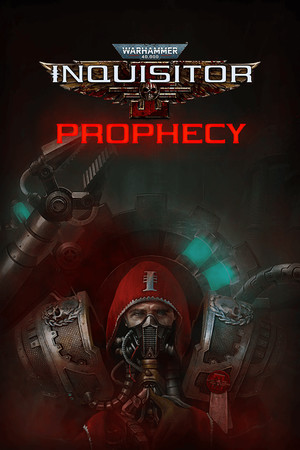
Warhammer 40,000: Inquisitor - Prophecy
A summoner-class ARPG that works best as a gateway into the Inquisitor series - solid 40K atmosphere, one very playable new class, and enough loot to justify the grind if Nids and Aeldari are your thing.
GamerScout Verdict
Best for 40K fans and summon-build enthusiasts willing to overlook rough difficulty tuning and soft combat feedback.
Compare Prices(6 stores)
Every store in this table quotes us in euros, so the EUR figure is the price the seller actually set, not our arithmetic — which is why EUR is also the currency we rank in. We only list an offer here when the store gives us its price in euros, so nothing in this table is a number we invented.
Pick USD, PLN, GBP, CAD or AUD in the header and we convert from EUR at the European Central Bank reference rate — converted amounts are prefixed with ~. Your bank or the store may apply a different rate at checkout. We never hide offers based on where you are: everyone sees this whole table.
We may earn a commission when you buy games through links on this page — at no extra cost to you. It never affects our rankings or verdicts.
Price History
Screenshots & Media
About Warhammer 40,000: Inquisitor - Prophecy
I came to Prophecy from the shooter end of the 40K spectrum - Darktide, Space Marine 2, the usual suspects - and what I found here is a slower, more deliberate kind of damage delivery. That is not automatically a strike against it. The Tech-Adept is genuinely the most interesting reason to boot this up: instead of aiming and clicking your way through hordes, you are managing a small army of Legio Cybernetica constructs, spending Data-Flux points to field Kataphron Destroyers, Kastelan Robots, Tarantula Turrets, and Psiloi combat units while your own weapons (a Plasma Caliver at range, an Omni-Axe up close if you feel brave) serve as support fire rather than primary damage. The class plays a lot like a Diablo 3 Necromancer but grittier, and the construct customization runs deep enough that build variety is real - Kataphron Vanguard tanking while a Phosphor Cannon Kastelan and a Tarantula Turret Missile Launcher do their thing from range is a legitimately satisfying setup to optimize. The 2.0 overhaul baked into Prophecy is where Neocore finally sorted out the pacing problem that plagued the original Martyr launch. Missions move faster, loot rolls more frequently, and the crafting system has enough depth - socketing psalms as runewords, chasing Daemonforged and Archeotech-tier gear - to keep the grind loop moving. The 2-4 player co-op carries over from Martyr, and running constructs alongside a friend's Psyker or Crusader builds into a decent cooperative rhythm, though the multiplayer has historically had stability issues you should go in expecting. For solo players in particular, the Tech-Adept's construct army functions as a built-in party, which makes this class unusually forgiving when the co-op queue is empty. The problems are real and worth knowing upfront. Difficulty tuning is unreliable: the Tarot card modifier system introduces random effects that can swing from trivial to punishing with no gradual middle ground, and there is no clean slider for players who want a steady challenge curve. Performance can spike even on capable rigs. The combat feedback - the actual tactile crunch of hitting things - is soft compared to what shooter-adjacent ARPG players will be used to. The three original classes (Psyker, Crusader, Death-Cult Assassin) all rely on dodge-rolling and blocking mechanics the engine was never quite built to support well, so if you skip the Tech-Adept and go straight for Crusader, expect some friction. Enemy variety gets a genuine boost here with Aeldari units including Howling Banshees, Warp Spiders, and Swooping Hawks, plus full Tyranid rosters up to Carnifexes and Zoanthropes - the setting work is solid throughout. The question of whether Prophecy stands alone or needs Martyr is technically answered in its favor - you do not need the base game to play. Practically, though, the three-chapter campaign will feel thin if you are not interested in running the shared endgame content that bleeds back into Martyr's systems. The 40K lore is handled with enough authenticity to satisfy fans without being impenetrable to newcomers, but the person who will get the most out of this is someone already invested in the Caligari Sector's ongoing story. For a performance-obsessed ARPG player measuring this against Path of Exile or Grim Dawn, the build ceiling is lower and the moment-to-moment action is not as tight. For a 40K lore fan or someone who wants a summon-commander fantasy with genuine construct depth, this lands.

Shooters
Tags
System Requirements
Minimum
- OS
- 64-bit Windows 7+ (8 / 8.1 / 10)
- Memory
- 4 GB RAM
- DirectX
- Version 11
- Network
- Broadband Internet connection
- Storage
- 30 GB available space
- Graphics
- Nvidia GeForce GTX 760 (2 GB) / AMD Radeon HD 7850 (2 GB)
- Processor
- Intel CPU Core i3-2120 (3.3 GHz) / AMD CPU FX-6300 (3.5 GHz)
Recommended
- OS
- 64-bit Windows 7+ (8 / 8.1 / 10)
- Memory
- 8 GB RAM
- DirectX
- Version 11
- Network
- Broadband Internet connection
- Storage
- 30 GB available space
- Graphics
- Nvidia GeForce GTX 1060 (3 GB) / AMD Radeon RX 480 (4 GB)
- Processor
- Intel CPU Core i7-2600 (3.4 GHz) / AMD CPU FX-8320 (3.5 GHz)
Keep exploring
Community Discussion
Be the first to comment on Warhammer 40,000: Inquisitor - Prophecy.
Reviews & Ratings
No ratings available
Game Info
- Developer
- NeocoreGames
- Publisher
- NeocoreGames
- Release Date
- Jul 30, 2019