Compare Home is Where One Starts... prices across trusted key stores and find the best deal. Developed by David Wehle. Published by David Wehle. Released on 5/12/2015. Available on PC. Genres: Adventure, Indie.

An hour of walking, listening, and looking at nothing in particular, and it earns almost all of it. Bring patience for the pace, leave the puzzle-brain at the door.

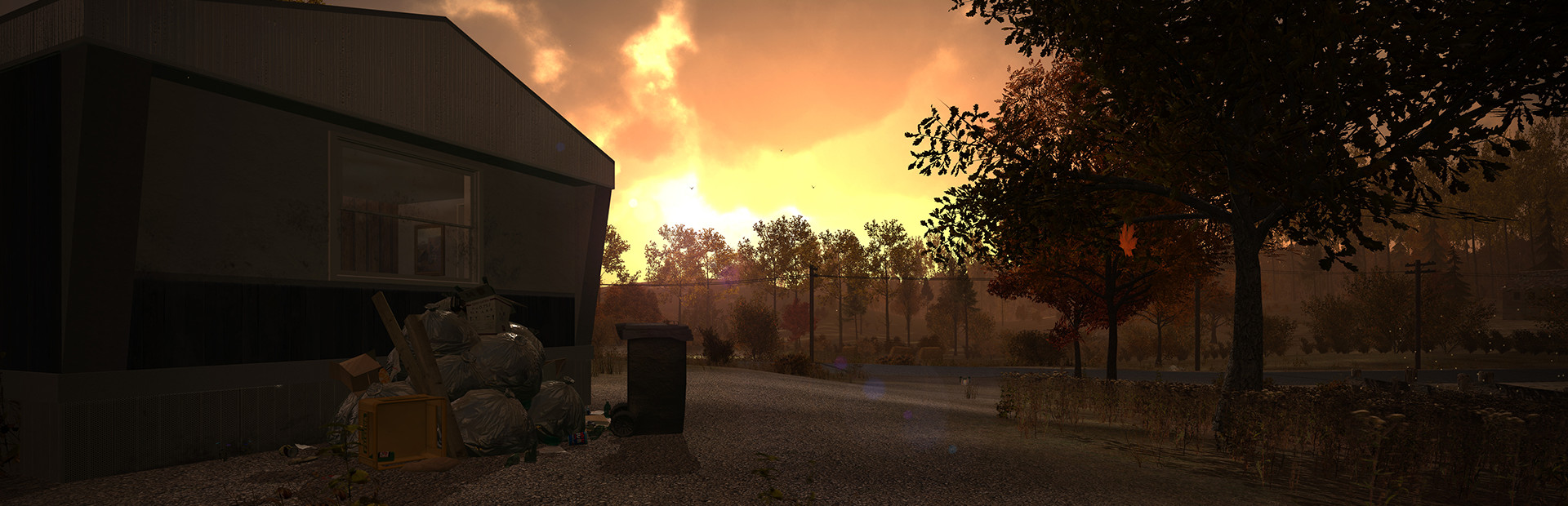
Before it gives you anything back, this one asks for an uninterrupted hour and a willingness to move at the speed of a kid who has nowhere to be. There is no combat, no puzzle to solve, no inventory, no fail state, no scoring. What you do is walk across a rural Southern property in the late afternoon, look at things that do not reward you mechanically, and let a voice tell you what they meant. If that sounds like a bad trade, it will be a bad trade for you, and I would rather say that now than talk anyone into a mood piece they will resent forty minutes in. If it sounds like the specific kind of quiet you have been hunting for, David Wehle's 2015 debut does something a lot of walking sims fumble. The setup is deliberately small. You are a girl who has missed the school bus, and instead of panicking you drift home and then keep drifting: overgrown yard, outbuildings, dirt tracks, fields going gold at the edges. Scattered through all of it are objects and places that trigger narration from an older version of yourself looking back on the day. That is the entire loop. Find a thing, hear a thought, walk on. There is full controller support, captions if you want them, Steam achievements for anyone who wants to sweep the map clean, and no quest marker anywhere nagging you toward the next beat. The game is betting you will be curious on your own. How much you get out of it depends almost entirely on whether you take that bet. What works is the craft, and it is genuinely the work of one person paying attention. The light is the star: everything is staged in that long, slanted, dust-in-the-air hour before dinner, and Wehle frames doorways and fence lines like he knows exactly where you will stop walking. The soundscape does the rest, ambient and low and mostly made of wind, insects, and distance, so that when the score does swell it lands instead of shoving. And the narrator, crucially, knows when to shut up. So many games in this shape talk over their own scenery. This one drops a line, then leaves you alone with a rusted swing set for thirty seconds, and the silence is where the actual storytelling happens. The family situation it circles is never announced. You assemble it from a stack of unopened mail, a room that has not been used in a while, the condition of the house itself. That restraint is the whole reason the ending has any weight. Where it disappoints is real, and the Mostly Positive rating rather than something warmer tells you people notice. The walk speed is slow even by the standards of the genre, and if you backtrack for a missed pickup you will feel every step of it. Some of the environment art does not survive close inspection, with repeated props and flat textures breaking the spell if you press your face against them. The narration occasionally explains a feeling the visuals had already delivered, which is the one place the restraint slips. And the ending arrives fast. Not badly, but fast enough that some players finish and feel the credits landed a scene early rather than exactly on time. I think it stops in the right place. I also understand the complaint, and it is the kind of thing you should know going in rather than discover at minute fifty-five. Who is this for? People who already know they like the form, who have finished Gone Home or Dear Esther and wanted something smaller and less writerly. People who care about lighting and sound as a craft in their own right. People who want a complete, finished, self-contained thing they can hold in a single evening without a save file to manage. It is not for anyone looking for systems, challenge, or replay value, because there is no second layer under this and it never pretends otherwise. Wehle went on to make bigger, more confident work, but the fingerprints are all here already: golden hour, memory, a house with a history, a walk that ends where it should. Play it in one sitting, at night, with headphones. Do not check your phone. That is the entire instruction manual. Kai, Scout Team

Home is Where One Starts...

Home is Where One Starts...

May 12, 2015David Wehle
GamerScout Says

An hour of walking, listening, and looking at nothing in particular, and it earns almost all of it. Bring patience for the pace, leave the puzzle-brain at the door.

PC
Best Price Available
€1.07
at Gamivo
Track this price

GamerScout Verdict

Best for anyone who wants one quiet hour of golden-hour Americana with zero mechanics; skip it if you need gameplay.

Compare Prices(3 stores)

GamivoBest price
StandardGlobalSteam KeyKey
€1.07
Priced in EUR by the store
Buy
StandardEurope (EU)Steam KeyKey
€2.99
Priced in EUR by the store
Buy
StandardGlobalSteam KeyKey
€2.99
Priced in EUR by the store
Buy

Every store in this table quotes us in euros, so the EUR figure is the price the seller actually set, not our arithmetic — which is why EUR is also the currency we rank in. We only list an offer here when the store gives us its price in euros, so nothing in this table is a number we invented.

Pick USD, PLN, GBP, CAD or AUD in the header and we convert from EUR at the European Central Bank reference rate — converted amounts are prefixed with ~. Your bank or the store may apply a different rate at checkout. We never hide offers based on where you are: everyone sees this whole table.

We may earn a commission when you buy games through links on this page — at no extra cost to you. It never affects our rankings or verdicts.

Screenshots & Media

About Home is Where One Starts...

Before it gives you anything back, this one asks for an uninterrupted hour and a willingness to move at the speed of a kid who has nowhere to be. There is no combat, no puzzle to solve, no inventory, no fail state, no scoring. What you do is walk across a rural Southern property in the late afternoon, look at things that do not reward you mechanically, and let a voice tell you what they meant. If that sounds like a bad trade, it will be a bad trade for you, and I would rather say that now than talk anyone into a mood piece they will resent forty minutes in. If it sounds like the specific kind of quiet you have been hunting for, David Wehle's 2015 debut does something a lot of walking sims fumble. The setup is deliberately small. You are a girl who has missed the school bus, and instead of panicking you drift home and then keep drifting: overgrown yard, outbuildings, dirt tracks, fields going gold at the edges. Scattered through all of it are objects and places that trigger narration from an older version of yourself looking back on the day. That is the entire loop. Find a thing, hear a thought, walk on. There is full controller support, captions if you want them, Steam achievements for anyone who wants to sweep the map clean, and no quest marker anywhere nagging you toward the next beat. The game is betting you will be curious on your own. How much you get out of it depends almost entirely on whether you take that bet. What works is the craft, and it is genuinely the work of one person paying attention. The light is the star: everything is staged in that long, slanted, dust-in-the-air hour before dinner, and Wehle frames doorways and fence lines like he knows exactly where you will stop walking. The soundscape does the rest, ambient and low and mostly made of wind, insects, and distance, so that when the score does swell it lands instead of shoving. And the narrator, crucially, knows when to shut up. So many games in this shape talk over their own scenery. This one drops a line, then leaves you alone with a rusted swing set for thirty seconds, and the silence is where the actual storytelling happens. The family situation it circles is never announced. You assemble it from a stack of unopened mail, a room that has not been used in a while, the condition of the house itself. That restraint is the whole reason the ending has any weight. Where it disappoints is real, and the Mostly Positive rating rather than something warmer tells you people notice. The walk speed is slow even by the standards of the genre, and if you backtrack for a missed pickup you will feel every step of it. Some of the environment art does not survive close inspection, with repeated props and flat textures breaking the spell if you press your face against them. The narration occasionally explains a feeling the visuals had already delivered, which is the one place the restraint slips. And the ending arrives fast. Not badly, but fast enough that some players finish and feel the credits landed a scene early rather than exactly on time. I think it stops in the right place. I also understand the complaint, and it is the kind of thing you should know going in rather than discover at minute fifty-five. Who is this for? People who already know they like the form, who have finished Gone Home or Dear Esther and wanted something smaller and less writerly. People who care about lighting and sound as a craft in their own right. People who want a complete, finished, self-contained thing they can hold in a single evening without a save file to manage. It is not for anyone looking for systems, challenge, or replay value, because there is no second layer under this and it never pretends otherwise. Wehle went on to make bigger, more confident work, but the fingerprints are all here already: golden hour, memory, a house with a history, a walk that ends where it should. Play it in one sitting, at night, with headphones. Do not check your phone. That is the entire instruction manual.

Kai
Kai · Scout Team

Indie & narrative

Tags

auto-admittedWalking SimulatorEnvironmental StorytellingOne-Sitting PlaythroughSolo DeveloperComing-of-AgeNarration-DrivenRural AmericanaAmbient SoundtrackNo CombatFirst-Person ExplorationAtmosphericSlice of LifeMemory-Driven StoryGolden Hour VisualsStory RichSound Design ShowcaseRelaxing Pace

System Requirements

Minimum

Processor
Intel i3 or equivalent
Memory
4 GB RAM
Graphics
DX 9.0c video card with 256 MB VRAM and shader model 3.0 suppo…

Recommended

Processor
Intel i5, 2.8+ GHz
Memory
4 GB RAM
Graphics
NVIDIA GTX 570, AMD Radeon 6870, or equivalent
DirectX
Version 10…

Keep exploring

Community Discussion

Be the first to comment on Home is Where One Starts....

Reviews & Ratings

Steam
77%(719)

Game Info

Developer
David Wehle
Publisher
David Wehle
Release Date
May 12, 2015

Features

Single-playerSteam AchievementsFull controller supportSteam Trading CardsCaptions availableFamily Sharing

Price Alert

Get notified when the price drops below your target!

Create Alert
Best price€1.07
See offer

Across the 24,405 games we track, a verified key was cheaper than the official store 90% of the time. See the method and the full numbers in our game price report.

No card? Pay another way

Top up your Steam Wallet or buy crypto with any card — instant delivery, no bank account needed.

More from David Wehle

Buy smarter: helpful guides

Looking for more? See games like Home is Where One Starts... →

Frequently asked questions about Home is Where One Starts...

How much does Home is Where One Starts... cost?

As of 8 September 2026, the cheapest in-stock offer for Home is Where One Starts... is €1.07 at Gamivo, out of 3 live offers we track across verified key stores. Prices change daily — the table on this page is refreshed continuously.

Where can I buy Home is Where One Starts... cheapest?

The lowest in-stock price we track for Home is Where One Starts... is €1.07 at Gamivo (8 September 2026). We compare 3 live offers from verified key stores — the full table with every store and its trust score is on this page.

What platforms is Home is Where One Starts... available on?

Home is Where One Starts... is available on PC.

When was Home is Where One Starts... released?

Home is Where One Starts... was released on 12 May 2015.

Who developed Home is Where One Starts...?

Home is Where One Starts... was developed by David Wehle.