
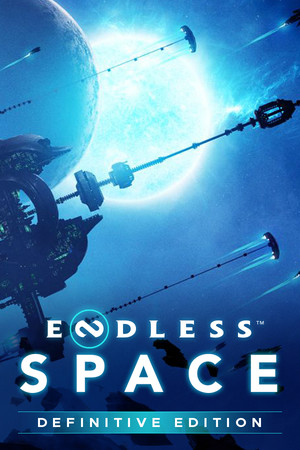
Endless Space Definitive Edition
The Definitive bundle is the version worth owning: Disharmony's AI and combat rework turns a handsome 2012 4X into one you actually finish.
GamerScout Verdict
For 4X players who want fights won on the design screen: take the Disharmony bundle, skip the standard edition's weaker AI.
Compare Prices(4 stores)
Every store in this table quotes us in euros, so the EUR figure is the price the seller actually set, not our arithmetic — which is why EUR is also the currency we rank in. We only list an offer here when the store gives us its price in euros, so nothing in this table is a number we invented.
Pick USD, PLN, GBP, CAD or AUD in the header and we convert from EUR at the European Central Bank reference rate — converted amounts are prefixed with ~. Your bank or the store may apply a different rate at checkout. We never hide offers based on where you are: everyone sees this whole table.
We may earn a commission when you buy games through links on this page — at no extra cost to you. It never affects our rankings or verdicts.
Price History
Screenshots & Media
About Endless Space Definitive Edition
Every battle here is decided before a single shot lands, on the ship design screen, and for a numbers-first player like me that is the entire hook. Combat runs in three phases (long, medium, short range) and you play action cards into each one, but the cards only nudge percentages. What actually resolves the fight is whether your hulls carry kinetics against an enemy stacked with deflectors, or lasers into a fleet that spent its slots on shields. Weapon type versus defence type is the real rock-paper-scissors, and the tech tree feeds it. That changes how you spend a turn: you are not micromanaging a battle screen, you are reading scouting reports, guessing what the AI is teching toward, and refitting your fleet two turns before contact. If you like that loop, the rest of the game clicks into place. So the question with this edition is not whether the base game holds up, it is what the bundle adds on top. What you get is the 2012 release plus Disharmony, the expansion Amplitude built specifically to repair the two weakest parts of the launch build. Disharmony adds the Harmony as a playable faction, a silicon species that ignores the Dust economy every other empire is built around, which forces you to relearn your expansion order from scratch. It layers fighters and bombers onto the combat phases, adds repair and retrofit modules so fleets stop being disposable, and rebalances the weapon and defence families that the whole design game rests on. It also ships the reworked AI. That last item matters most and is the one nobody puts on a bullet list. Who is the extra content actually for? Anyone who plans to play more than two campaigns. This is not a cosmetic package. There are no wallpaper folders or soundtrack files padding the component list, and nothing here is shelf-filler you install once and never open again. Disharmony's changes sit in systems you touch every single turn, which means the standard edition is the compromised version rather than the lean one. The narrow case for going without it: you are playing multiplayer alongside a friend who owns the base game and you want your versions matched, or you specifically want the simpler launch-era combat model for a nostalgia run. Outside those two situations, the standard edition means opting into the weaker AI, and a 4X with weak AI is solitaire with extra steps. Now the part I always argue about. Grand strategy has a reputation for 200-hour learning curves, and this is the counterexample I point newcomers to. A campaign on a small spiral galaxy against four opponents runs 10 to 15 hours, not a season of your life. The tech tree splits into four coloured quadrants instead of one sprawling web, so you can see your plan at a glance. Heroes slot onto fleets or planets with readable skill trees. Faction creation lets you buy traits against a point budget, which is the fastest way I know to learn what the systems actually value. The tutorial is thin and dated, so plan on one throwaway game as United Empire to learn the interface, then start properly. That is the whole on-ramp. What does not hold up is the late game. Once you are two techs and six systems ahead, the AI stops threatening you and the remaining forty turns become administration. Ground invasions are shallow next to the depth of the space layer, fleet management gets clicky at scale, and the mod scene never grew into anything like Stellaris territory, so there is no community overhaul waiting to fix the endgame pacing. The Steam consensus (81 percent positive across roughly 9,600 reviews, 77 on Metacritic) reads right to me: a very good 4X with a soft finish. Take the bundled version, treat every fight as a loadout problem, and walk away from a campaign the moment it stops being a contest.

Strategy & simulation
Tags
System Requirements
Minimum
- Processor
- Core 2 Duo Processor or Equivalent
- Memory
- 2 GB RAM
- Graphics
- 256 MB DX9 Compliant DirectX®:9.0c Hard Drive:2 GB HD space Sound:DirectX 9 Compatible Audio
Recommended
- Processor
- Core i5/i7 or equivalent
- Memory
- 2 GB RAM
- Graphics
- 512 MB DX9 Compliant with PS 3.0 support DirectX®:9.0c Hard Drive:2 GB HD space Sound:DirectX 9 Compatible A…
Keep exploring
Community Discussion
Be the first to comment on Endless Space Definitive Edition.
Reviews & Ratings
Game Info
- Developer
- AMPLITUDE Studios
- Publisher
- AMPLITUDE Studios
- Release Date
- Jul 4, 2012