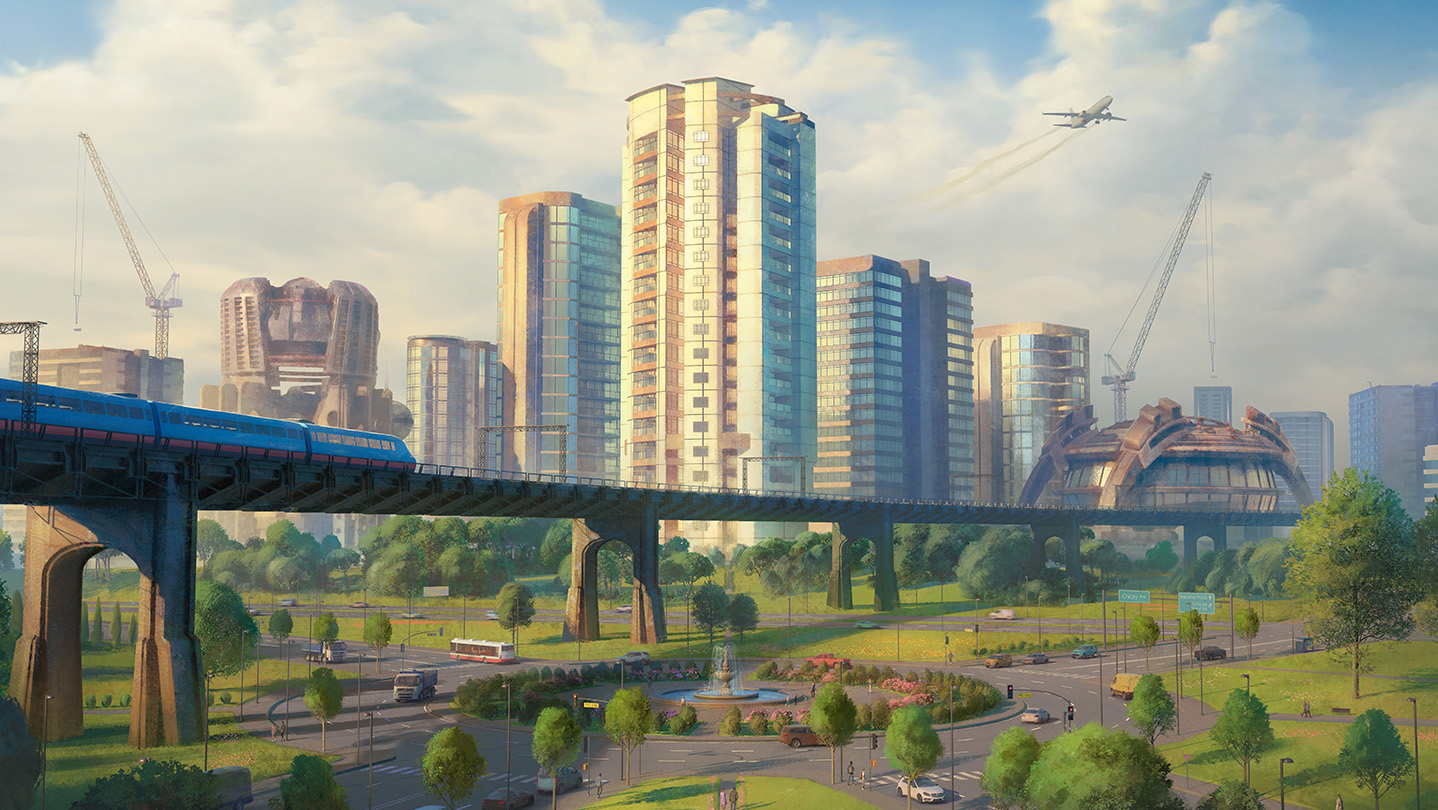
Cities: Skylines - After Dark (DLC)
Add-on / DLC for Cities: Skylines — view full gameAfter Dark drags your city into the night shift, adding tourism, leisure zoning, and a day-night cycle that actually changes how your roads behave.
GamerScout Verdict
Essential for transit-obsessed city builders who want time-of-day demand to stress-test their road networks in new ways.
Compare Prices(1 stores)
Every store in this table quotes us in euros, so the EUR figure is the price the seller actually set, not our arithmetic — which is why EUR is also the currency we rank in. We only list an offer here when the store gives us its price in euros, so nothing in this table is a number we invented.
Pick USD, PLN, GBP, CAD or AUD in the header and we convert from EUR at the European Central Bank reference rate — converted amounts are prefixed with ~. Your bank or the store may apply a different rate at checkout. We never hide offers based on where you are: everyone sees this whole table.
We may earn a commission when you buy games through links on this page — at no extra cost to you. It never affects our rankings or verdicts.
Price History
Screenshots & Media
About Cities: Skylines - After Dark (DLC)
Cities: Skylines - After Dark is an expansion for Colossal Order's city-builder that does something the base game quietly needed: it splits the clock into two distinct planning problems. During the day your commercial districts run at full tilt, traffic chokes your arterial roads on the usual schedule, and everything feels familiar. After dark, demand redistributes. Leisure and tourism zones light up, your public transit gets stress-tested by a different commuter pattern, and the roads that worked fine at noon can suddenly become bottlenecks at midnight. That behavioral shift is the core hook, and for anyone who has already optimized a base-game city into a humming machine, it is exactly the kind of wrench you want thrown into the gears. The headline additions are two new zone types: commercial leisure and commercial tourism. These are not cosmetic reskins. Leisure zones generate nighttime traffic and require you to think about bus lines and metro coverage for hours when most residential demand drops off. Tourism zones interact with your transit hubs in ways that reward players who have already built airports and train stations with purpose rather than aesthetics. Taxi services arrive as a new transit option, sitting somewhere between your bus network and private car use, and they matter most in dense entertainment districts where point-to-point trips dominate over fixed-route commuting. Cargo hubs and bus terminals also get fleshed out here, giving logistics players more to chew on. The day-night cycle itself is visually competent - the city looks genuinely good under artificial light - but the more important mechanic is the traffic and demand simulation underneath it. If your city was already struggling with congestion in the base game, After Dark does not fix that; it exposes it harder. You will find intersections that seemed adequate suddenly failing when the late-night bar crowd decides to drive home simultaneously. That is a design philosophy worth respecting. The expansion trusts players to solve emergent problems rather than patching over them with easy buffs. Where After Dark falls shorter is scope. Compared to later expansions in the Cities: Skylines lineup, the content volume is modest. The new zones, transit options, and policies add up to a meaningful layer of complexity, but players expecting an industry-overhaul level of content will feel the boundaries quickly. It is an expansion that rewards city planners who genuinely care about traffic modeling and transit efficiency over those hunting for spectacle or new building art packs. The policy system also gets a few nightlife-specific additions, letting you adjust things like taxi fares and leisure district behavior, which is appreciated even if the policy depth does not reach the granularity that later DLC achieved. For anyone serious about Cities: Skylines as a long-term platform, After Dark holds up as a foundational expansion - one that reframes the entire simulation around time-of-day logic that the base game left on the table. The mod community has also built extensively on top of its systems, so if you run a modded install the expansion's value compounds. Go in expecting a traffic puzzle with a new dimension, not a content avalanche, and it will deliver.

Strategy & simulation
Tags
System Requirements
Minimum
- OS
- Windows® 10 Home 64 Bit
- Processor
- Intel® Core™ I7 930 | AMD® FX 6350
- Memory
- 8 GB RAM
- Graphics
- Nvidia® GeForce™ GTS 450 (1 GB) | AMD® R7 250 (2 GB)…
Recommended
- OS
- Windows® 10 Home 64 bit
- Processor
- Intel® Core™ I7 2700K | AMD® Ryzen 7 2700X
- Memory
- 16 GB RAM
- Graphics
- Nvidia® GeForce™ GTX 580 (1.5 GB) | A…
Keep exploring
Community Discussion
Be the first to comment on Cities: Skylines - After Dark (DLC).
Reviews & Ratings
Game Info
- Developer
- Colossal Order
- Publisher
- Paradox Interactive
- Release Date
- Mar 10, 2015