
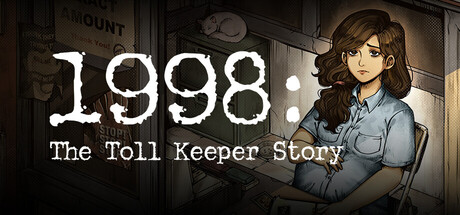
1998: The Toll Keeper Story
Papers, Please taught us bureaucracy could be harrowing. This Indonesian-developed sim raises the stakes further by making you a pregnant woman one bad shift away from losing everything.
GamerScout Verdict
A compact, emotionally taxing narrative sim that punishes moral laziness and rewards players willing to sit with genuine historical discomfort.
Compare Prices(3 stores)
Every store in this table quotes us in euros, so the EUR figure is the price the seller actually set, not our arithmetic — which is why EUR is also the currency we rank in. We only list an offer here when the store gives us its price in euros, so nothing in this table is a number we invented.
Pick USD, PLN, GBP, CAD or AUD in the header and we convert from EUR at the European Central Bank reference rate — converted amounts are prefixed with ~. Your bank or the store may apply a different rate at checkout. We never hide offers based on where you are: everyone sees this whole table.
We may earn a commission when you buy games through links on this page — at no extra cost to you. It never affects our rankings or verdicts.
Price History
Screenshots & Media
About 1998: The Toll Keeper Story
I usually measure a sim by its decision tree density and late-game complexity, so a three-to-five-hour narrative game about a toll booth should not have kept me thinking for days. It did. 1998: The Toll Keeper Story puts you in the booth as Dewi, a heavily pregnant toll keeper in Janapa, a fictional Southeast Asian country crumbling under the weight of a financial crisis and violent civil unrest drawn directly from the real 1998 Indonesian riots. The macro collapse is visible only through newspaper headlines at the start of each shift and the slow physical decay of the world outside your window, which is a deliberate, quietly devastating design choice. The core loop will feel instantly familiar to anyone who has spent time with Papers, Please: charge vehicles by class, verify documents, run the metal detector for contraband, flag counterfeit money, and open or close the gate. New rules stack in almost every day, and mistakes come straight out of your wages with no three-strike grace period. That financial pressure is the game's sharpest mechanical hook. Rent keeps climbing, prenatal vitamins cost money, and side work distributing flyers for either the regime or the student movement adds a moral-economy layer on top of the routine compliance work. Letting a football star through without full payment because you feel bad for him? The next day's newspaper will record whether the national team won or lost. The causality chain is short and legible, which actually makes the moral weight hit harder than in games that bury consequences under fifty variables. Where the game pulls ahead of its obvious inspiration is in character work. Between shifts, short visual novel sequences and end-of-day diary entries flesh out Dewi's husband Heru, her best friend Sinta, and even the landlord raising the rent. These scenes use a heavily muted, almost sepia palette that marks them apart from the booths blueish daylight filter, and the contrast reinforces the sense that home is a different emotional register from work. The handdrawn art, dot textures, and old-paper aesthetics are a genuine achievement in period atmosphere. Critics and the Steam community have praised the visual direction consistently, and that praise is earned. The sound design earns similar credit: the beep of the metal detector, the murmur of distant protests, and the scratch of documents build ambient tension without a single line of dialogue. The criticisms worth noting are real but containable. Some players flag that two bus variants share nearly identical silhouettes, making vehicle classification a genuine source of frustration rather than satisfying puzzle-solving. The penalty system charges you immediately for any first error, which feels punishing before you have internalised all the rules. A handful of UI quirks, including dialogue occasionally cut off by overlapping menus, were reported at launch. The domestic cutscenes offer limited player interaction, functioning more as passive story delivery than the two-way moral pressure the booth sequences generate. And at a single playthrough of roughly three hours, with around four distinct endings to chase, your appetite for replay will determine a lot of your overall satisfaction. The Endless Mode, updated post-launch with expanded customisation options, adds some shelf life beyond the story. For the audience this is built for, genre purists who care about moral weight over action loops, and anyone curious about Southeast Asian history rendered through an interactive lens, those limitations are secondary. The 89 percent positive Steam rating across 271 reviews and the critical consensus around its emotional staying power are not accidents. GameChanger Studio, based in Tangerang and led by CEO Riris Marpaung, has made something that uses repetitive mechanics as a deliberately uncomfortable metaphor for what it feels like when survival becomes a full-time administrative task. It is not a comfortable game. It is not supposed to be.

Strategy & simulation
Tags
System Requirements
Minimum
- OS
- Windows 7 (SP1+), Windows 10 and Windows 11
- Memory
- 8 GB RAM
- Storage
- 3 GB available space
- Graphics
- DX10, DX11, DX12 capable.
- Processor
- x86, x64 architecture with SSE2 instruction set support.
Recommended
Requires a 64-bit processor and operating system
Keep exploring
Community Discussion
Be the first to comment on 1998: The Toll Keeper Story.
Reviews & Ratings
No ratings available
Game Info
- Developer
- GameChanger Studio
- Publisher
- GameChanger Studio
- Release Date
- Oct 28, 2025