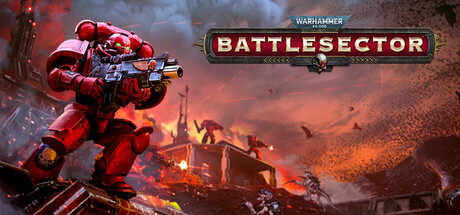
Warhammer 40,000: Battlesector - Sisters of Battle
Turn-based 40K where hiding in cover is how you lose. The Sisters roster turns every round into a sequencing puzzle, and it's the friendliest wargame here for tabletop newcomers.
GamerScout Verdict
Best for tactics players who want short, aggressive matches and no strategic layer to manage between missions.
Compare Prices(4 stores)
Every store in this table quotes us in euros, so the EUR figure is the price the seller actually set, not our arithmetic — which is why EUR is also the currency we rank in. We only list an offer here when the store gives us its price in euros, so nothing in this table is a number we invented.
Pick USD, PLN, GBP, CAD or AUD in the header and we convert from EUR at the European Central Bank reference rate — converted amounts are prefixed with ~. Your bank or the store may apply a different rate at checkout. We never hide offers based on where you are: everyone sees this whole table.
We may earn a commission when you buy games through links on this page — at no extra cost to you. It never affects our rankings or verdicts.
Price History
Screenshots & Media
About Warhammer 40,000: Battlesector - Sisters of Battle
Momentum rewired how I play turn-based tactics, and it took about twenty minutes. Kills and aggressive plays feed a shared pool, and that pool pays for extra activations and unit abilities, which means the reflex every tactics veteran brings to this genre (park everyone in cover, trade shots, wait for the clean angle) actively starves your own engine. I counted the turns in my first serious skirmish where I did nothing but reposition and hold fire: four. Four turns of zero income, while the AI banked enough Momentum to double-activate a squad into my flank and end the argument. This game does not reward patience. It rewards correctly timed violence, and those are very different skills. The Sisters of Battle roster is the sharpest expression of that design, which is exactly why I would hand it to a newcomer before any of the power-armour lists. They run a second economy stacked on top of Momentum: Acts of Faith, a resource that builds during the fight and gets spent on effects that feel borderline unfair when you time them correctly. Jump-pack Seraphim dropping onto a backline, Repentia who exist to charge and who die embarrassingly if you hesitate a single turn, Immolators and Exorcists that punish anyone who lets their squads clump. The list has almost no defensive answers and it clearly does not want any. Playing it well is a sequencing problem: which unit opens the round, which unit converts that opening into Momentum, which unit spends the Faith, and in what order. That is a build order in everything but name, and once it clicks you stop thinking in turns and start thinking in chains of three or four actions. Now the argument I always end up making for wargames like this. Battlesector looks like it demands tabletop literacy, and it does not. There is no army-list construction homework, no codex to memorise, no strategic map layer between missions to manage. It is squad-level combat on a hex grid, the interface shows you your odds before you commit, and missions run short enough to finish one in a lunch break. The real tutorial is not the pop-up text, it is the first three missions punishing you for playing scared, and that is a much better teacher. If you have bounced off grand strategy because 200 hours of systems learning felt like a second job, this is the opposite proposition: maybe fifteen decisions per turn, all of them legible, all of them yours. Where it disappoints is variety and longevity. Objective types repeat more than they should, and by the back half you can predict the shape of a mission from the deployment zone. The AI plays the aggression game competently, which is more than most turn-based opponents manage, but it telegraphs its priority targets and rarely surprises a player who has learned the Momentum math. The asymmetric factions are genuinely distinct rather than reskins, though that asymmetry means some matchups feel decided by list identity before the first activation. Online PvP exists but the population is thin, so realistically your multiplayer is hotseat or Remote Play Together with one friend who already owns a 40K opinion. Controller support is partial and feels like it. There is no meaningful mod ecosystem to extend the life of the thing, which for a tactics game of this size is the difference between 40 hours and 400. What you are buying is a tight, aggressive, readable tactics game with one excellent central idea and a faction that expresses it better than the rest of the roster. It is not a campaign you will replay for years, and it is not trying to be. It is the game I recommend to people who want the 40K fantasy without the 40K spreadsheet, and to tactics players who want to be rewarded for pressing forward instead of punished for it. Learn the Momentum curve, commit to the alpha strike, stop apologising for losing Repentia.

Strategy & simulation
Tags
System Requirements
Minimum
- OS
- 64-bit Windows 10
- Processor
- i5-4460 (or equivalent)
- Memory
- 4 GB RAM
- Graphics
- Geforce GTX 750 (2GB VRAM)
- DirectX
- Version 11
- Storage
- 25 GB available…
Recommended
- OS
- 64-bit Windows 10
- Processor
- i5-6400 (or equivalent)
- Memory
- 8 GB RAM
- Graphics
- Geforce GTX 950 (2GB VRAM)
- DirectX
- Version 11
- Storage
- 25 GB avail…
Keep exploring
Community Discussion
Be the first to comment on Warhammer 40,000: Battlesector - Sisters of Battle.
Reviews & Ratings
Game Info
- Developer
- Slitherine Ltd.
- Publisher
- Slitherine Ltd.
- Release Date
- Jul 22, 2021