
Unity of Command II - Moscow 41
The hex-map wargame that finally clicked for me: cut the roads behind an enemy corps and watch it evaporate. Steep first hour, then one of the most readable strategy loops on PC.
GamerScout Verdict
Best for puzzle-minded strategy players who want WWII logistics without a 200-page manual. Skip it if you need a devious AI.
Compare Prices(2 stores)
Every store in this table quotes us in euros, so the EUR figure is the price the seller actually set, not our arithmetic — which is why EUR is also the currency we rank in. We only list an offer here when the store gives us its price in euros, so nothing in this table is a number we invented.
Pick USD, PLN, GBP, CAD or AUD in the header and we convert from EUR at the European Central Bank reference rate — converted amounts are prefixed with ~. Your bank or the store may apply a different rate at checkout. We never hide offers based on where you are: everyone sees this whole table.
We may earn a commission when you buy games through links on this page — at no extra cost to you. It never affects our rankings or verdicts.
Screenshots & Media
About Unity of Command II - Moscow 41
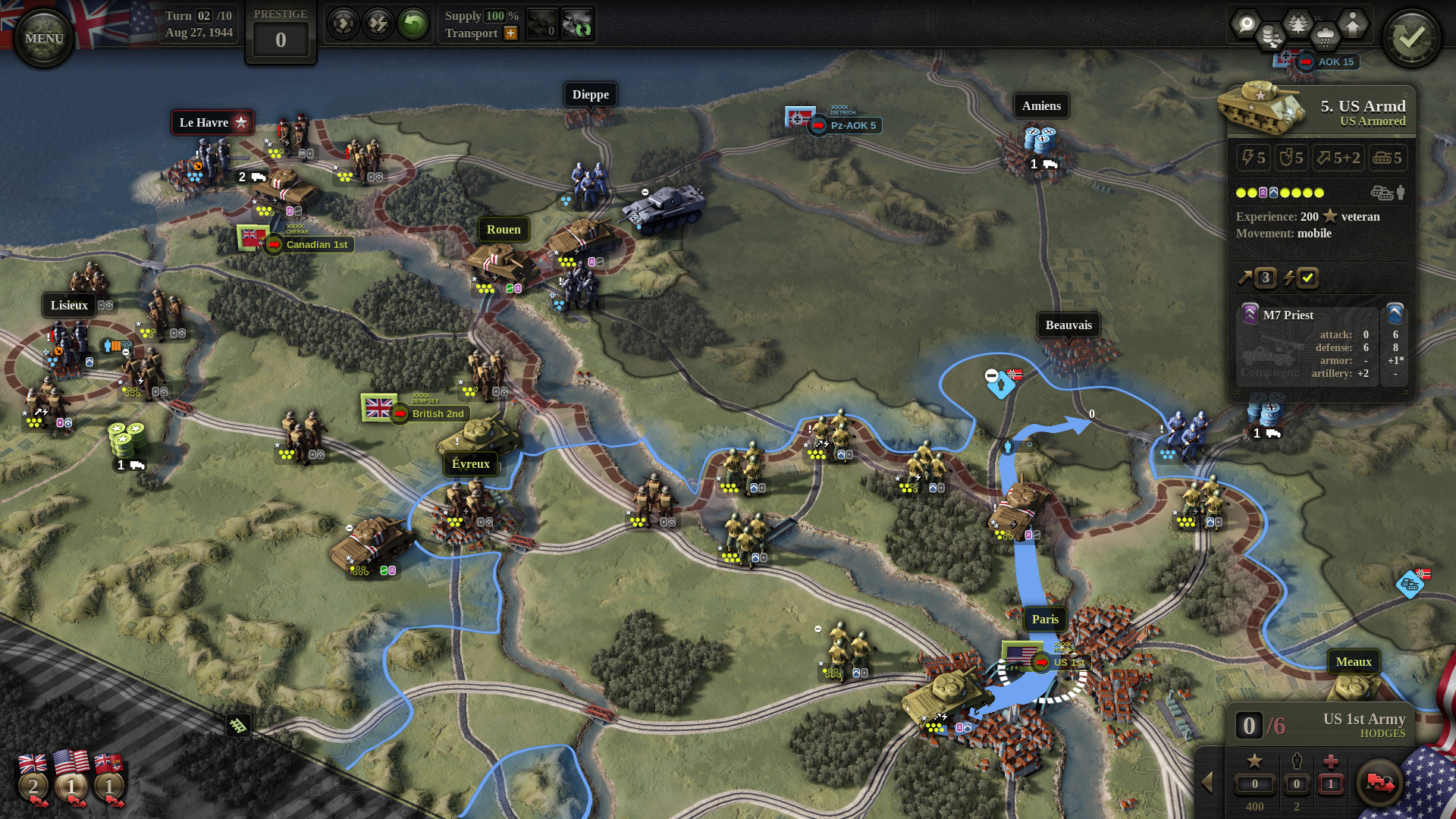
My first hour ended with an armored wedge sitting three hexes from the objective, a red supply icon over every unit I owned, and no real idea what I had done wrong. That is the friction, and it is worth naming up front. This does not teach the way modern strategy games teach. It hands you a hex map, a turn counter that is always about two turns shorter than you want, and a supply overlay you will ignore exactly once. The tutorial is competent about which buttons do what and vague about why any of it matters. The actual lesson lands when a scenario fails and you replay it realizing that the stretch of road you never bothered to clear was the entire problem. Push through that. Hour one is the worst this game ever feels, and the curve after it is unusually generous. Underneath the intimidation is an operational wargame with one big idea executed cleanly: supply decides everything. Every unit traces a line back through rail heads and roads to a source, and your HQs push that network forward as you advance. Firepower matters, but mostly as the tool that opens a corridor. Sever an enemy formation's line and something that would have soaked up three turns of frontal attacks folds in one. That single rule converts every map into a geometry problem. You stop hunting for the weakest stack and start hunting for the two hexes behind it whose loss collapses the whole position. Turn limits force commitment, because grinding is not an available strategy. Between missions the prestige economy makes you pick a lane: attach specialist support, refit divisions that got chewed up, or bank it for the harder branch coming. The campaign branches on your results, so a scrappy partial win routes you somewhere different than a clean one, and the 1941 fighting around Moscow gives that structure real teeth because the map and the calendar are both working against you. I would still put this in front of someone whose entire wargame experience is Company of Heroes. The genre earned its reputation for opacity from games that hide their math behind three nested submenus. This one puts the numbers on the screen. Units display supply state, strength, and attack values, and the tooltips explain the modifier stack in plain language. There is no logistics spreadsheet to maintain and no fog of ambiguity about why an attack failed, and turns resolve fast enough that a full scenario fits into an evening. The learning loop is short and honest: fail, see the cause, adjust, win. Fifty hours in you will still be finding better opening moves on scenarios you already cleared, which is the mark of genuine depth rather than a long content checklist. The Workshop and the built-in scenario editor stretch that further, and community-made content is where the long tail lives once the campaign runs dry. Where it disappoints: the AI is a solid defender and a poor opportunist. It holds a line properly, but it rarely punishes an overextended flank the way a human would, so once the supply logic clicks, later scenarios start feeling like puzzles with one intended solution instead of real contests. The turn limits amplify this. Bonus objectives are usually gated behind a tight clock, so the optimal play is often to restart after scouting the enemy's setup, which is efficient and also a little hollow. Presentation is crisp but austere, and the counter-and-map aesthetic reads as dry if you want spectacle. Multiplayer exists, including hotseat and Remote Play Together, but the population is thin and the honest value there is a slow asynchronous game against a friend rather than matchmaking. And this is a campaign built around one specific operational situation, so it is a slice of the war, not the whole shelf. Community sentiment tracks with my read. The praise is broad, the dissent comes from people who wanted more scenarios or a smarter opponent, and almost nobody argues the core design is broken. That is the right shape of complaint to have. If operational wargaming has always interested you but every entry point you looked at arrived with a manual thicker than a paperback, start here instead. Give it three evenings before you form an opinion. The first one will go badly, and that is the point.

Strategy & simulation
Tags
System Requirements
Minimum
- OS
- Windows® 10 or newer (64-bit)
- Processor
- Dual core processor
- Graphics
- OpenGL 3.3+ supporting GPU with 1GB VRAM
- Storage
- 5 GB available space Additional…
Recommended
- OS
- Windows® 10 64-bit
- Processor
- 6th Generation Intel® Core™ i5 Processor or AMD equivalent
- Graphics
- NVIDIA® GeForce® GTX 970 or AMD equivalent Storage…
Keep exploring
Community Discussion
Be the first to comment on Unity of Command II - Moscow 41.
Reviews & Ratings
Game Info
- Developer
- 2x2 Games, Croteam
- Publisher
- 2x2 Games
- Release Date
- Nov 12, 2019