TransOcean 2: Rivals (CZ/PL)
Pick a port, build a fleet from rusty Feeders up to Suezmax tankers, and quietly freeze your rivals' bank accounts. Satisfying in short sessions, repetitive in long ones.
GamerScout Verdict
Best for casual tycoon players who want a low-friction multiplayer business skirmish and can forgive patchy optimization.
Compare Prices(2 stores)
Every store in this table quotes us in euros, so the EUR figure is the price the seller actually set, not our arithmetic — which is why EUR is also the currency we rank in. We only list an offer here when the store gives us its price in euros, so nothing in this table is a number we invented.
Pick USD, PLN, GBP, CAD or AUD in the header and we convert from EUR at the European Central Bank reference rate — converted amounts are prefixed with ~. Your bank or the store may apply a different rate at checkout. We never hide offers based on where you are: everyone sees this whole table.
We may earn a commission when you buy games through links on this page — at no extra cost to you. It never affects our rankings or verdicts.
Price History
Screenshots & Media
About TransOcean 2: Rivals (CZ/PL)
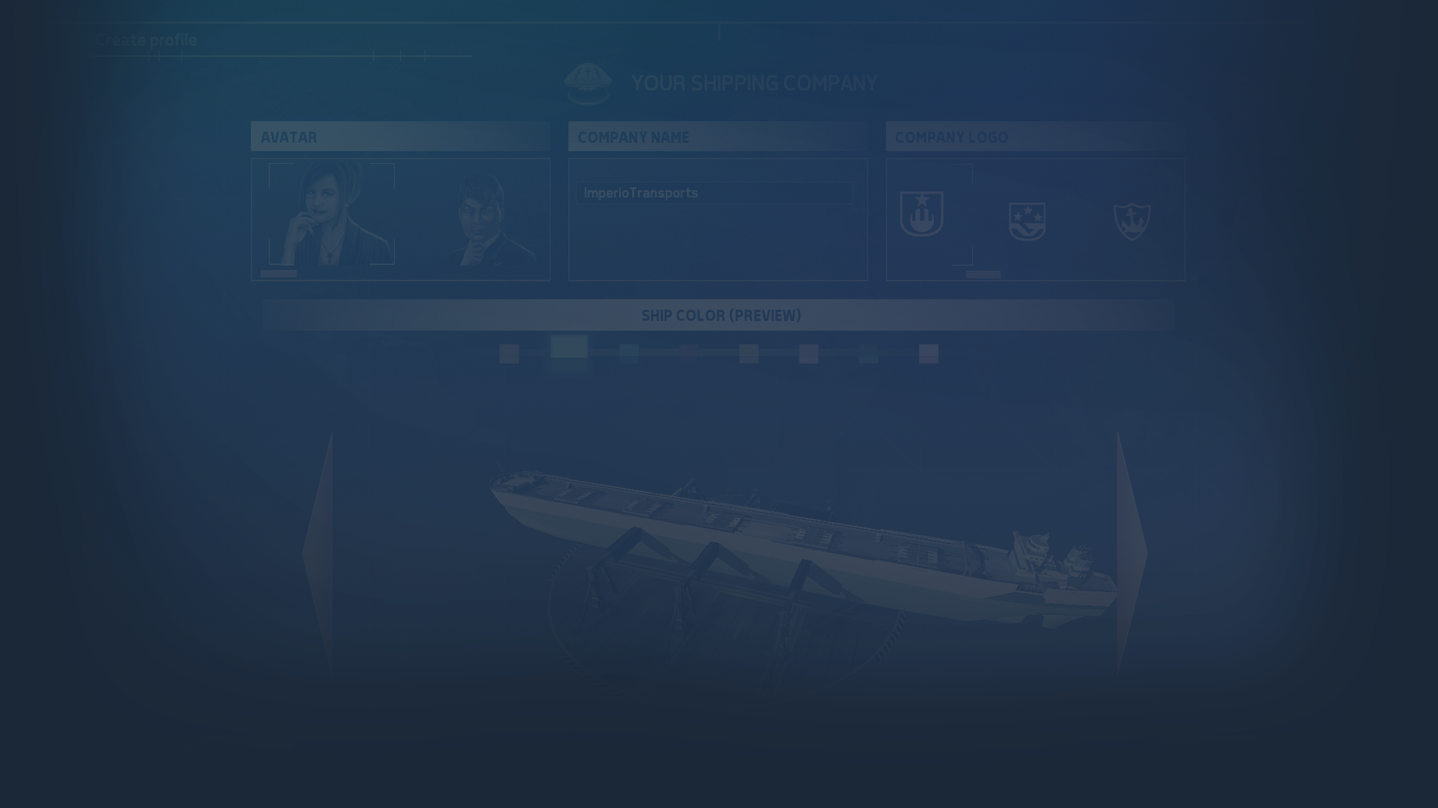
My first impression of TransOcean 2: Rivals was that it looked almost too modest for its own good. A flat world map, some ship icons creeping between ports, a clean menu. Then I started losing contracts to an AI that had twice my tonnage and I realized there was something genuinely requiring attention here. This is a real-time economic sim about building a global cargo empire from scratch, one contract at a time, and it has enough moving parts to keep a certain type of player busy for a solid run. You pick your home port from 60 options, start with a beat-up Feeder, and slowly work up toward Panamax Container Ships, Suezmax Bulk Carriers, and proper oil Tankers. Each ship class has distinct strengths - Tankers are the reliable money-printers, Bulk Carriers matter when Region Points are the victory condition, and Containers fill the middle ground. Specializing too early into one class will leave you exposed in chapters that reward a different metric, which is the game's most interesting strategic tension. Solo play offers a six-chapter Campaign, a timed Competition mode against up to seven AI opponents, and a no-deadline Endless Game that works best for learning the ropes without the pressure. Multiplayer, the headline addition over the original, supports up to eight human players in rounds where the victory conditions are randomly generated at the start, which at least prevents any single dominant strategy from calcifying. The sabotage system is what makes TransOcean 2 feel different from a plain logistics sim. You can anonymously freeze a rival's accounts for three days, locking them out of purchases and repairs while their running costs keep ticking, or report their ships to customs for a costly inspection. It costs more each time you use it and targets get a protection window afterward, so timing matters. In multiplayer it lands with real weight. In solo play it is noticeably blunter, mostly an AI nuisance rather than a tactical pivot point. The event-card depth reviewers were hoping for never quite materialized, but as a disruption tool it works. The rough edges are real and worth knowing up front. Loading times are punishing, with port transitions triggering their own screens. The campaign difficulty spikes unevenly - chapter two has sent plenty of players back to the lobby multiple times, and the game's own tutorials do a poor job flagging which ship class actually wins which conditions. Optimization is uneven: running the time-scale above 2x can introduce slowdown. Steam user sentiment settled at a mixed 51 percent, which is about right. The community's early complaints about the lack of a pause button were addressed by a patch the day after launch, though a chunk of those negative reviews were never updated. Long-term players who stuck with it reported 100-plus hour campaign runs, suggesting the ceiling is higher than the floor. Who is this for? Casual tycoon fans who want something lighter than Offworld Trading Company, players who enjoy watching logistics networks fill in gradually, and anyone who likes a competitive multiplayer mode they can finish in under two hours. It is not for players expecting deep macroeconomic simulation or a rich campaign story - the narrative is cheesy backdrop, nothing more. Approach it as a breezy, occasionally tense business skirmish game and it delivers that. Ask it to be something heavier and it will disappoint.

Catch-all
Tags
System Requirements
Minimum
- Memory
- 4 GB RAM
- DirectX
- 10
- Storage
- 8 GB
- Graphics
- Gece GTX 260, Radeon HD 4850 (1 GB VRAM)
- Processor
- Intel Core i3-2120, 3,3 GHz
- System requirements
- Windows 7 (64 Bit)
Recommended
- Processor
- Intel Core i5-3570K, 3.4 GHz or higher
- Memory
- 8 GB RAM
- Graphics
- Geforce GTX 760 or comparable
- DirectX
- Ve…
Keep exploring
Community Discussion
Be the first to comment on TransOcean 2: Rivals (CZ/PL).
Reviews & Ratings
Game Info
- Developer
- Deck13 Hamburg
- Publisher
- astragon Entertainment
- Release Date
- May 10, 2016