Total War: THREE KINGDOMS - Eight Princes
Court politics will end more of your campaigns than any battlefield does. Superb for a hundred hours, then the late game rolls over and lets you win.
GamerScout Verdict
For map-painters who want their generals to have opinions, and who can live with a late game that stops fighting back.
Compare Prices(2 stores)
Every store in this table quotes us in euros, so the EUR figure is the price the seller actually set, not our arithmetic — which is why EUR is also the currency we rank in. We only list an offer here when the store gives us its price in euros, so nothing in this table is a number we invented.
Pick USD, PLN, GBP, CAD or AUD in the header and we convert from EUR at the European Central Bank reference rate — converted amounts are prefixed with ~. Your bank or the store may apply a different rate at checkout. We never hide offers based on where you are: everyone sees this whole table.
We may earn a commission when you buy games through links on this page — at no extra cost to you. It never affects our rankings or verdicts.
Screenshots & Media
About Total War: THREE KINGDOMS - Eight Princes
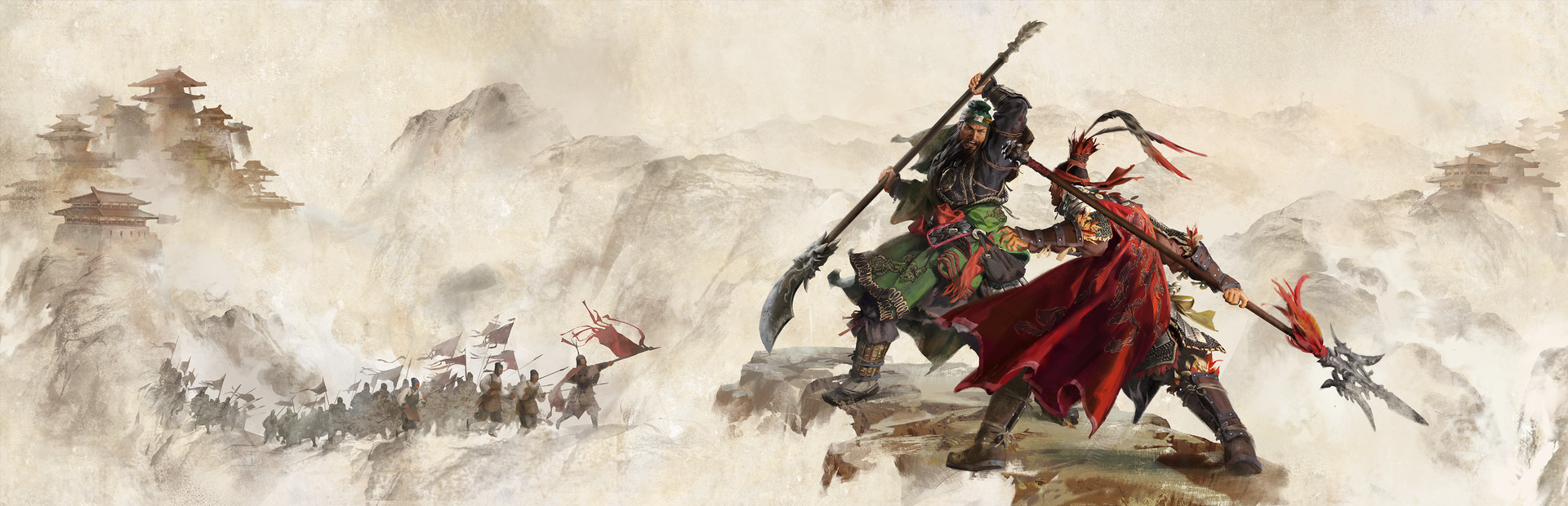
Turn 41 of my first serious campaign, I lost a war I had already won. Not on the field. My best general had spent twenty turns climbing the satisfaction ladder, a rival at court got the appointment he wanted instead, and he walked out with his retinue, three units of veteran cavalry, and a claim on two of my commanderies. The neighbouring prince I had been slowly carving up smelled it within two turns. That is the actual shape of this thing: you can win every engagement on the map and still collapse because you never opened the character screen and read the web of grudges you were quietly building. Underneath, it runs the classic two-layer structure. A turn-based campaign map where you juggle commanderies, food, public order, reforms and assignments, and real-time tactical battles where the army you built either holds its line or folds. What separates this from the rest of the series is that generals are not stat sticks. Each one carries traits, ambitions, and a guanxi network of friendships and resentments that updates constantly. Marriages, adoptions and promotions are real strategic levers with downstream costs. Slot someone into a post beneath their expectations and you pay for it eight turns later, usually at the worst moment. The battle layer leans hard on named commanders, so duels between heroes genuinely swing an engagement instead of being decoration. Sieges are the weakest of the battle types, since most of them funnel into a grinding scrum at a single wall segment once the AI commits. Here is the part I will defend at length: this is a sane first grand strategy game, despite the reputation. Campaign and battle difficulty are adjustable independently, which matters far more than people give it credit for. Drop battle difficulty to easy, leave campaign on normal, and you get to learn the economy and the diplomacy systems without your stacks evaporating while you read tooltips. The diplomacy screen is the clearest in the series about why an offer is being refused, giving you a numeric breakdown rather than a shrug, and auto-resolve is honest enough that you can skip the lopsided fights without being punished. My suggested opening for a newcomer: take a faction with a simple economy, annex roughly one commandery every five turns, and never declare on anyone with more than double your military strength until you hold two full stacks and a positive food balance. That is the entire build order. Everything past it is learnable at the table. The problems are real and they arrive late. Once you hold about a third of the map, the campaign stops pushing back. Income compounds, your character pool gets deep enough that court management solves itself, and the surviving factions rarely coordinate against the obvious threat sitting on their border. Snowballing is not unique to this game, but it stings more here because the mid-game, call it turns 40 through 130, is genuinely excellent by comparison. The diplomacy AI is inconsistent about coalitions too, and you will eventually watch a faction accept vassalage from someone it had every reason to fight to the last man. Big battles can wobble on older hardware, and late-campaign turn times grow the way they always do in this genre. Two things extend the shelf life well past that. Campaign co-op is properly supported, online and over LAN, and sharing a campaign with someone who plays the political layer differently from you is the best version of the game on offer. The mod scene is also broad and well established, with overhaul packs that rebalance the snowball, rework rosters, and stretch the timeline if the base pacing stops holding you. Steam sentiment is very positive across more than ninety thousand reviews and critic scores landed in the mid-eighties, which tracks with what I found: an outstanding first two thirds and a soft finish that mods largely patch over. If your idea of a good evening is a map, a ledger, and a court full of talented people who quietly resent each other, budget a hundred hours before the cracks show and count on the workshop for what comes after.

Strategy & simulation
Tags
System Requirements
Minimum
- Processor
- Intel Core 2 Duo 3.00Ghz
- Memory
- 4 GB RAM
- Graphics
- GTX 650 Ti 1GB|HD 7850 1GB|Intel UHD Graphics 620
- DirectX
- Version 11
- Storage
- 60 GB available space Additional Notes…
Recommended
- OS
- Windows 10 64 Bit
- Processor
- Intel i5-6600 | Ryzen 5 2600X
- Memory
- 8 GB RAM
- Graphics
- GTX 970 | R9 Fury X 4GB VRAM
- DirectX
- Version 11
- Storage
- 60 GB available space
Keep exploring
Community Discussion
Be the first to comment on Total War: THREE KINGDOMS - Eight Princes.
Reviews & Ratings
Game Info
- Developer
- CREATIVE ASSEMBLY, Feral Interactive (Mac), Feral Interactive (Linux)
- Publisher
- SEGA, Feral Interactive (Mac), Feral Interactive (Linux)
- Release Date
- May 23, 2019