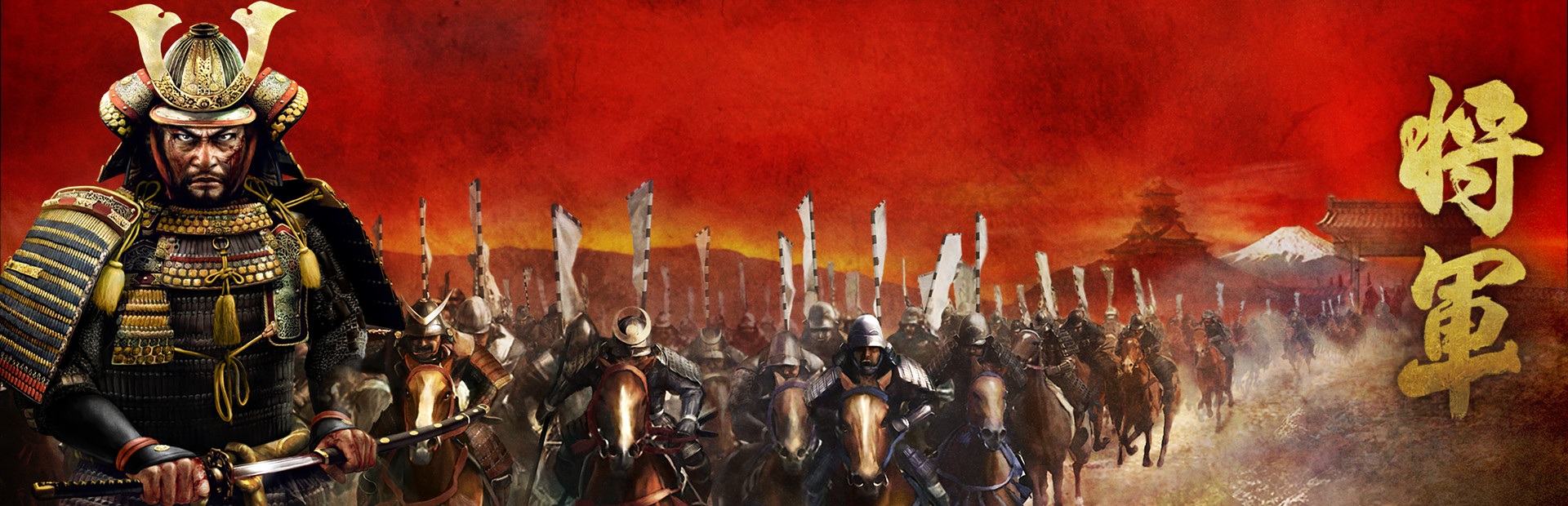
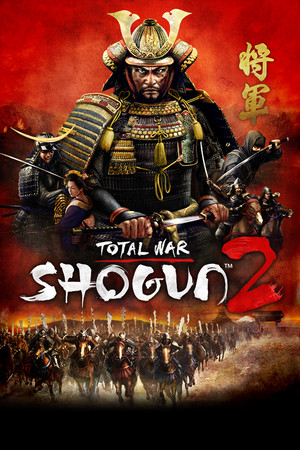
Total War: Shogun 2 - Collection
The tightest Total War ever made, and the one that turns on you: conquer half of Japan and the other half declares war in a single turn. Newcomer-friendly, if you plan for the ambush.
GamerScout Verdict
The best entry point into Total War: a legible, sub-100-turn campaign that still punishes sloppy expansion timing.
Compare Prices(3 stores)
Every store in this table quotes us in euros, so the EUR figure is the price the seller actually set, not our arithmetic — which is why EUR is also the currency we rank in. We only list an offer here when the store gives us its price in euros, so nothing in this table is a number we invented.
Pick USD, PLN, GBP, CAD or AUD in the header and we convert from EUR at the European Central Bank reference rate — converted amounts are prefixed with ~. Your bank or the store may apply a different rate at checkout. We never hide offers based on where you are: everyone sees this whole table.
We may earn a commission when you buy games through links on this page — at no extra cost to you. It never affects our rankings or verdicts.
Price History
Screenshots & Media
About Total War: Shogun 2 - Collection
Realm Divide is the mechanic I build my entire campaign around, and it is why I still rank Shogun 2 above most of what Creative Assembly has shipped since. Take enough provinces as any clan and the game flips a switch: allies tear up their treaties, vassals turn, and most of Japan declares for whoever is not you. It sounds punitive. It is actually the best pacing device the series has ever had, because it forces you to plan a campaign in two halves. The first half is expansion, economy, and diplomacy you already know you are going to lose. The second half is a defensive war on interior lines with whatever gold, food surplus and veteran armies you banked before the roof came off. So I plan the opening around it: grab a coastline, chain trade nodes, keep two full field armies instead of six half-strength garrisons, and time the tenth or eleventh province for a turn when I can absorb the counterattack. Structurally this is the cleanest version of the Total War loop. A turn-based campaign map of Sengoku era Japan starting in 1545, one settlement per province so there is no busywork about which of five towns gets the barracks, and real-time battles where a few thousand men resolve in ten to twenty minutes. The nine base-game clans each carry a real mechanical identity rather than a flavour paragraph: Chosokabe archers, Shimazu katana infantry, Takeda cavalry, Oda cheaper ashigaru, Mori at sea. The unit triangle is genuinely readable. Yari spearmen brace against cavalry, katana and no-dachi units chew through spears, matchlock ashigaru shred anything standing still and go quiet in the rain. Generals carry skill trees and retainers, and the agent layer (ninja, monks, metsuke, geisha) runs a sabotage and assassination game parallel to the armies. Naval battles exist and are the weakest system in the box, but coastal raiding and blockades still bite economically. If you have never finished a grand campaign in anything, this is where I would start you. A Shogun 2 run usually wraps inside a hundred turns rather than the several hundred a Paradox title asks for, and the victory condition is legible: hold Kyoto plus a set number of provinces. The tutorial actually teaches, difficulty is adjustable, you can save anywhere, and you can auto-resolve battles on the turns you do not feel like commanding. The small roster is the feature, not a limitation. Twenty-odd unit types means you hold the whole army list in your head by turn thirty, which is exactly what a newcomer needs before graduating to the sprawling rosters of the later games. Play Chosokabe or Shimazu on normal, ignore the agent layer for one campaign, and let the battles teach you flanking and morale collapse. It is a fifty hour education in how strategy games think. What disappoints, disappoints in the same places fifteen years on. The campaign AI is a competent expander and a poor tactician. It feeds stacks at your walls piecemeal and never really learns to punish an exposed flank of your territory. Diplomacy is thin even before Realm Divide obliterates it, so negotiation collapses into buying a few turns of neutrality. Sieges are the low point of the battle engine: castle assaults funnel into predictable gate and courtyard scrums, and defending a full castle against the AI is close to free once you know where it paths. The stretch after Realm Divide can sag into mop-up, a procession of one-sided fights you auto-resolve because the outcome stopped being in doubt around province eighteen. The mod scene is alive but modest next to Warhammer or Attila, and multiplayer, while functional, is a quiet neighbourhood these days. The Collection is the version worth owning, because Fall of the Samurai is in it and Fall of the Samurai is arguably the better game. The Boshin War setting swaps yari walls for rifle lines, railways, ironclads and naval bombardment that reaches inland, and it rewrites the tactical maths completely. Rise of the Samurai goes the other way, back to a bow and cavalry war with no gunpowder at all. Three campaigns, one engine that still runs beautifully on modern hardware. Start with the base game, learn Realm Divide the hard way, then pick your era.

Strategy & simulation
Tags
System Requirements
Minimum
- Processor
- 2 GHz Intel Dual Core processor / 2.6 GHz Intel Single Core processor, or AMD equivalent (with SSE2)
- Memory
- 1GB RAM (XP), 2GB RAM (Vista / Windows7) Graphics…
Recommended
- Processor
- 2nd Generation Intel Core i5 processor (or greater), or AMD equivalent
- Memory
- 2GB RAM (XP), 4GB RAM (Vista / Windows7)
- Graphics
- AMD Radeon HD 5000 and 60…
Keep exploring
Community Discussion
Be the first to comment on Total War: Shogun 2 - Collection.
Reviews & Ratings
Game Info
- Developer
- CREATIVE ASSEMBLY, Feral Interactive (Mac), Feral Interactive (Linux)
- Publisher
- SEGA, Feral Interactive (Mac), Feral Interactive (Linux)
- Release Date
- Mar 15, 2011