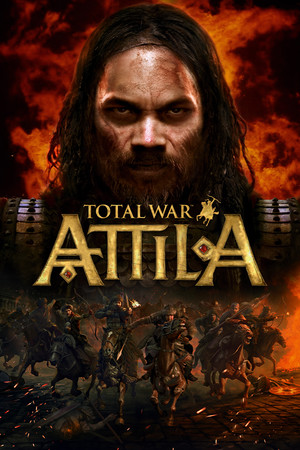
Total War: Attila - Tyrants & Kings Edition
The bleakest campaign layer Total War has ever built, and its first hour is designed to make you feel like you are already losing. Push through and it is the series at its most tactical.
GamerScout Verdict
Best for strategy players who want famine, attrition and hard choices over power fantasy, and who can forgive a clumsy siege AI.
Compare Prices(2 stores)
Every store in this table quotes us in euros, so the EUR figure is the price the seller actually set, not our arithmetic — which is why EUR is also the currency we rank in. We only list an offer here when the store gives us its price in euros, so nothing in this table is a number we invented.
Pick USD, PLN, GBP, CAD or AUD in the header and we convert from EUR at the European Central Bank reference rate — converted amounts are prefixed with ~. Your bank or the store may apply a different rate at checkout. We never hide offers based on where you are: everyone sees this whole table.
We may earn a commission when you buy games through links on this page — at no extra cost to you. It never affects our rankings or verdicts.
Screenshots & Media
About Total War: Attila - Tyrants & Kings Edition
The first hour of Attila will convince you that something is broken on your end. Take the Western Roman Empire, the faction the game quietly nudges you toward, and by turn five you are running a deficit, watching two provinces slide toward revolt, staring at squalor numbers you have no immediate answer for, and tracking an enemy stack you cannot beat in the field. Nothing is broken. That is the pitch. This is a game about managed collapse, and the question worth settling before you buy is whether that opening hour reads as insulting or fascinating. I found it fascinating, but I understand everyone who bounced off it. Mechanically this is the familiar Total War split: a turn-based campaign map where you juggle provinces, armies, agents and family politics, and real-time battles where a few thousand men decide whether your last three hours of planning held. What separates this entry is how much of the campaign layer is about subtraction. Settlements can be razed to the ground instead of captured, which is a legitimate long-term strategy rather than a spite button. Migrating factions can abandon their homes entirely and travel as a horde, rebuilding as they move. A cooling climate makes northern provinces progressively less productive, which pushes everyone south and turns the map into a pressure cooker. Sanitation, food and public order are not background numbers here. They are the actual opposition for your first thirty turns. Here is my usual argument for why a game this hostile is still a reasonable first grand-strategy purchase, with one condition attached: do not start as Rome. The Western Empire campaign is effectively the hard mode the developers built for veterans, and beginning there is like learning chess from an endgame study. Start with the Sassanids, who have a stable economy, defensible borders and room to make mistakes, or take a horde faction such as the Visigoths where your only real decisions are where to move and who to hit. The difficulty settings are granular, you can save at any point rather than committing to a bad turn, and the campaign rewards a simple build order: secure a food surplus, keep sanitation ahead of population growth, then expand. The tutorial is thin and does a poor job of explaining the horde and razing systems, so budget an hour of reading or a decent video primer. That is the real onboarding cost, not the mechanics themselves. The complaints are real and mostly unchanged since release. Performance was the launch scandal and this is still a heavy campaign for its age, with long turn times on large saves and battles that punish an aging CPU harder than you would expect from a 2015 title. Battle AI is inconsistent, especially in sieges, where attacking stacks will feed units into a gate one at a time or stall on pathfinding around fortifications. Fire is a genuinely good addition, with burning arrows and torched buildings changing how you defend a settlement, but it also exposes how often the AI fails to react to a district already ablaze. Agent actions can feel like dice rolls with a coat of paint. And the family and politics layer, compelling as it sounds on paper, mostly resolves into periodically bribing or quietly removing people before they become a problem. A decade on, the reception numbers still track: 82 percent positive across roughly 37,000 Steam reviews and an 80 on Metacritic, which is about where I would put it too. The multiplayer offering is thorough on paper, with online and LAN support for both versus battles and co-op campaigns, though finding a partner willing to commit to a full co-op campaign remains the usual problem. The mod scene is smaller than what Rome 2 or the Warhammer games attracted, but the essentials are there, including overhauls that rebalance the economy and stretch the timeline. If you want a Total War where you feel powerful, look elsewhere in the series. If you want one where holding a border for twenty turns feels earned, this is the best the historical line has done at that specific feeling.

Strategy & simulation
Tags
System Requirements
Minimum
- Processor
- Intel Core 2 Duo 3 GHz
- Memory
- 3 GB RAM
- Graphics
- 512 MB NVIDIA GeForce 8800 GT, AMD Radeon HD 2900 XT or Intel HD 4000
- DirectX
- Version 10
- Storage
- 35 GB available space A…
Recommended
- Processor
- 2nd Generation Intel Core i5
- Memory
- 4 GB RAM
- Graphics
- 2 GB NVIDIA GeForce GTX 560 Ti or AMD Radeon HD 5870
- DirectX
- Version 11
- Storage
- 35 GB available space Additional N…
Keep exploring
Community Discussion
Be the first to comment on Total War: Attila - Tyrants & Kings Edition.
Reviews & Ratings
Game Info
- Developer
- CREATIVE ASSEMBLY, Feral Interactive
- Publisher
- SEGA, Feral Interactive
- Release Date
- Feb 17, 2015