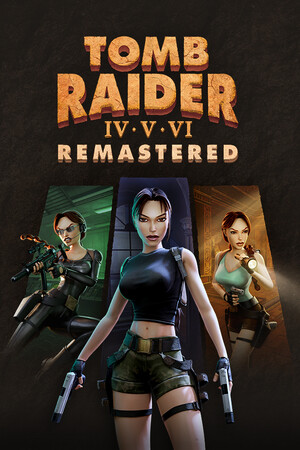
Tomb Raider I-VI: Remastered
Six classic Lara adventures in one launcher, preserved with a graphics toggle and optional modern controls. Glorious if you love grid-based platforming, brutal if you don't.
GamerScout Verdict
Best for returning fans and patient newcomers who treat 3D platforming as a puzzle, not a reflex test.
Compare Prices(5 stores)
Every store in this table quotes us in euros, so the EUR figure is the price the seller actually set, not our arithmetic — which is why EUR is also the currency we rank in. We only list an offer here when the store gives us its price in euros, so nothing in this table is a number we invented.
Pick USD, PLN, GBP, CAD or AUD in the header and we convert from EUR at the European Central Bank reference rate — converted amounts are prefixed with ~. Your bank or the store may apply a different rate at checkout. We never hide offers based on where you are: everyone sees this whole table.
We may earn a commission when you buy games through links on this page — at no extra cost to you. It never affects our rankings or verdicts.
Price History
About Tomb Raider I-VI: Remastered
Buy this if you can still sketch the layout of Lara's mansion from memory, and skip it entirely if your Tomb Raider starts with the 2013 reboot, because I can tell you nothing in this collection plays remotely like that. This is six games from the era when Lara moved on an invisible grid, when a jump was a measurement problem rather than a reflex, and when the camera was a suggestion. The bundle covers the original trilogy plus The Last Revelation, Chronicles and The Angel of Darkness, along with the expansion levels that used to be scattered across out-of-print discs and regional exclusives. As a preservation job it is genuinely useful. As a modern action game it is not even trying, and that is the whole point. The headline feature is the graphics toggle. One button flips between the original chunky polygons and the remastered art at any moment, mid-jump, mid-cutscene, and it works well enough that I kept doing it out of curiosity long after the novelty should have worn off. The new lighting and textures are conservative rather than reinvented, which I think is the right call: the levels still read exactly the way they did, so muscle memory transfers. You also get a choice between the original tank controls and a modern analogue scheme. Take the tank controls. The level geometry was built around them, and the modern option makes precise block-edge alignment harder than it needs to be. Photo mode and achievements round it out. What works is the thing these games always did better than their descendants: navigation as puzzle. Tomb Raider 1 is still the purest version, all quiet Peruvian caverns and long stretches where the only enemy is the room itself. Tomb Raider 2 trades some of that isolation for Venice canals, the Great Wall and the Floating Islands, and doubles the human enemies, which is a mixed blessing. The Last Revelation is the ambitious one, a connected Egyptian campaign where you carry items backwards between levels and actually have to remember where a locked door was two hours ago. Chronicles is four short vignettes of wildly uneven quality, but the submarine and the skyscraper stealth chapter are worth the visit. Where it disappoints is everywhere the original design was hostile and the remaster chose not to intervene. Combat is auto-aim and strafing, and it was never good. Tomb Raider 3 remains punishing in ways that feel arbitrary rather than fair, with instant-death traps that expect you to die once just to learn they exist. Enemy placement across the whole set assumes you will reload constantly, so save often and save in multiple slots. And then there is The Angel of Darkness. The remaster overhauls its controls and camera, and it is unquestionably more playable than the 2003 release, but you cannot patch a game that shipped unfinished into a good one. The pacing stalls, the stealth sections are still tedious, the strength-upgrade gimmick is nonsense, and the story stops rather than ends. Treat it as a curiosity you are finally able to play, not as a sixth full course. So who is this actually for? Two groups. People who played these as kids and want to find out whether their memory of St. Francis' Folly is accurate (it is, and the room is smaller than you think). And curious newcomers with patience for old design language, the kind of player who enjoys reading a room and mapping it out instead of following a waypoint. If you need modern checkpointing, forgiving platforming or combat that feels good, this will read as archaeology rather than entertainment. But if you want to see where an entire genre of 3D exploration came from, presented respectfully and without anyone sanding off the difficulty, there is more than a hundred hours of it here and the good parts have aged startlingly well.

Catch-all
Tags
System Requirements
Keep exploring
Community Discussion
Be the first to comment on Tomb Raider I-VI: Remastered.
Reviews & Ratings
No ratings available
Game Info
- Developer
- Unknown
- Publisher
- Unknown
- Release Date
- TBA