
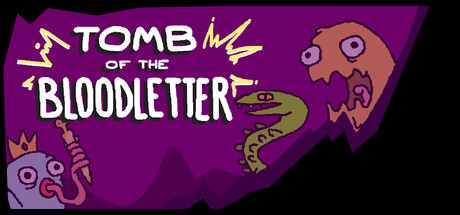
Tomb of the Bloodletter
Scrabble meets Slay the Spire in a brutal dungeon crawler where the quality of your vocabulary matters far less than how cleverly you sequence cursed letter-bound Magicks.
GamerScout Verdict
Worth it for tactics-minded word nerds who can stomach punishing RNG and zero between-run progression.
Compare Prices(7 stores)
Every store in this table quotes us in euros, so the EUR figure is the price the seller actually set, not our arithmetic — which is why EUR is also the currency we rank in. We only list an offer here when the store gives us its price in euros, so nothing in this table is a number we invented.
Pick USD, PLN, GBP, CAD or AUD in the header and we convert from EUR at the European Central Bank reference rate — converted amounts are prefixed with ~. Your bank or the store may apply a different rate at checkout. We never hide offers based on where you are: everyone sees this whole table.
We may earn a commission when you buy games through links on this page — at no extra cost to you. It never affects our rankings or verdicts.
Price History
Screenshots & Media
About Tomb of the Bloodletter
I went in expecting a breezy word-puzzle distraction and walked out with a genuine respect for how much tactical decision-making a solo developer has packed into something that costs less than a coffee. Tomb of the Bloodletter is a turn-based dungeon crawler where every point of damage, every scrap of healing, and every debuff you throw at an enemy flows directly from the words you type. Not from a hand of cards. Not from a skill tree. From the words you type right now, with the letters sitting in front of you. The core system is cleverer than it first looks. Each floor assigns Magicks to individual letters on your keyboard, and those Magicks obey strict, often punishing rules. A letter might deal bonus damage only when placed at the end of a word. Another might restore health, but only if you have not already triggered a damage effect earlier in that same word. Letter placement within the word matters as much as the word itself, which means you are constantly running a quick mental calculation: not "what is a long word I know" but "can I get the H before the K, and do I have a vowel bridge that lets me do it without triggering the self-damage on E." That is the actual decision space, and it is genuinely satisfying once it clicks. Runs are tightly paced, typically around 30 minutes, so the mental overhead stays manageable. The four playable characters, the Adventurer, the Heretic, the Scholar, and the Prophet (with the Hothead and Dockhand added post-launch), each warp the rules in different ways. The scholar-type characters tend to reward deeper word construction while the more aggressive classes push you toward short, violent bursts. Trinkets you pick up mid-run reinforce particular playstyles, which is the closest this game gets to traditional roguelike build expression. The honest caveat is that there is no between-run progression. No permanent unlocks, no meta-currency, no marginal stat gains on death. You restart with the same baseline every time, Magick placement reshuffled by RNG. For players who rely on incremental progression to smooth over difficulty spikes, that is going to sting. The game is genuinely harsh on healing, the upgrade system attaches a negative side-effect to every power-up you accept, and the RNG can absolutely hand you a letter spread that feels unworkable. Visually it leans into a pixelated, almost cartoonishly macabre style that reviewers have compared to Adventure Time aesthetics, which is a fair read. It is simple but deliberate, and the enemy designs have enough personality that facing the same types across multiple runs does not feel like asset recycling. Sound design is functional rather than memorable, though the absence of a time limit means you can comfortably mute it and put on your own playlist without losing anything. On the technical side, post-launch patches have addressed a widescreen mouse-lock bug and added fullscreen toggle via F4, which is the kind of active solo-developer maintenance that deserves a mention. For strategy players specifically: do not let the word-game framing fool you into thinking this is Wordle with combat. The decision tree per turn is real. Sequencing letter-Magicks is essentially combo planning under constraints, and the enemy telegraphing system, where you can see the opponent's next move before committing your word, pushes this closer to Slay the Spire's information-management loop than to anything Hasbro makes. It is also a genuinely approachable entry point for people new to roguelikes, because run length is short, the rules are all visible on screen, and there is no hidden math to reverse-engineer from a wiki. What you see is what you are working with.

Strategy & simulation
Tags
System Requirements
Minimum
- OS
- Windows 8 or Later
- Memory
- 2 GB RAM
- Storage
- 200 MB available space
- Graphics
- GeForce 7300 GT (512 MB), Radeon X1300 Pro (256 MB)
- Processor
- Intel Core i5
Keep exploring
Community Discussion
Be the first to comment on Tomb of the Bloodletter.
Reviews & Ratings
No ratings available
Game Info
- Developer
- Ethan's Secretions
- Publisher
- indie.io
- Release Date
- Feb 5, 2026