TIMEframe
Ten minutes before the end of the world, every loop: TIMEframe is a meditative artifact-hunt that asks whether stillness itself can be meaningful. For the right player, it absolutely can.
GamerScout Verdict
Worth it for meditative exploration fans who respect a short, handcrafted experience that knows exactly what it is.
Compare Prices(5 stores)
Every store in this table quotes us in euros, so the EUR figure is the price the seller actually set, not our arithmetic — which is why EUR is also the currency we rank in. We only list an offer here when the store gives us its price in euros, so nothing in this table is a number we invented.
Pick USD, PLN, GBP, CAD or AUD in the header and we convert from EUR at the European Central Bank reference rate — converted amounts are prefixed with ~. Your bank or the store may apply a different rate at checkout. We never hide offers based on where you are: everyone sees this whole table.
We may earn a commission when you buy games through links on this page — at no extra cost to you. It never affects our rankings or verdicts.
Price History
Screenshots & Media
About TIMEframe
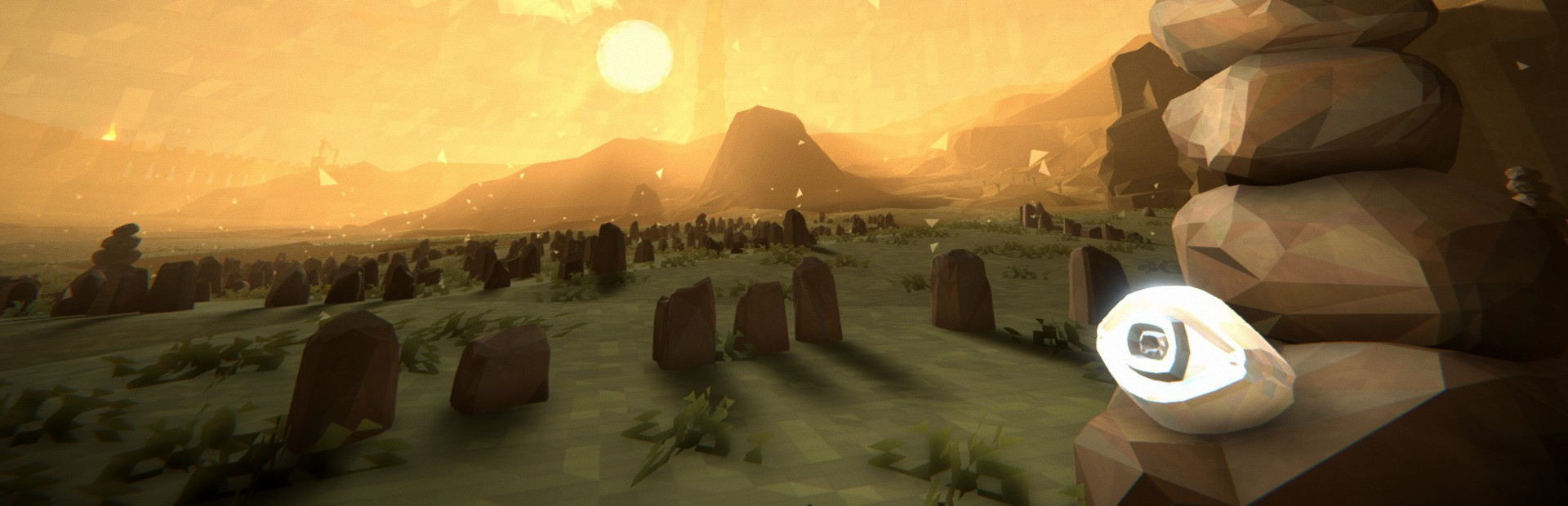
I want to defend TIMEframe, because it keeps getting dismissed as a walking simulator with a gimmick, and that dismissal misses something real. The core loop is genuinely strange and intentional: you begin inside a stone Spire, step out into a vast, low-poly landscape, and have roughly ten minutes to wander before a world-ending event resets everything. Discovered artifacts carry over between loops, each one adding a fragment of lore about a lost civilization and its mythological reckoning with something called The Nomad. Piece enough fragments together and you eventually unlock a final act that gives the whole thing a quiet, earned resolution. That structure, loops with persistent discovery, is borrowed from games like Majora's Mask in spirit but stripped to absolute essentials. No combat, no inventory management, no waypoints. Just you, the wind, and a circle prompt that appears when you get close to something worth touching. The art direction is one of the more honest aesthetic choices I have seen in a small indie release. The polygonal style is deliberately reminiscent of early PlayStation and N64 geometry, but it is not nostalgic pastiche. The low vertex count makes the world feel frozen, geological, like something preserved under glass. When the late-afternoon light hits a hilltop ruin, the flatness of the surfaces creates a stained-glass stillness that no high-fidelity renderer would produce. It suits the subject matter almost too perfectly. The soundtrack, composed by Clark Aboud, is the other load-bearing pillar. Classical guitar, piano, and cello, each location gets its own theme, and the music shifts as you move between areas in a way that feels genuinely responsive rather than just ambient filler. I have replayed single loops just to hear a particular guitar phrase resolve as I crested a hill. That is the kind of detail that separates a carefully made small game from a technically competent one. Here is where honesty requires me to be clear about the audience, though. TIMEframe was born out of the Ludum Dare 27 game jam, expanded carefully for commercial release, and it retains that jam-game tightness: the whole experience is probably two to three hours at a relaxed pace, less if you are efficient. Players who need mechanical resistance, progress bars, or a sense of accumulating power will find nothing here. The mixed reception from some corners comes precisely from that gap in expectation. A critical mass of Steam reviewers arrived wanting a puzzle game or an exploration RPG and found a mood piece with relic-collecting and a short countdown. That mismatch is real and worth flagging. The Metacritic user score sits in mixed territory for exactly that reason. But for the player who already knows they like Proteus, or who has replayed a short piece of interactive fiction more than once just to sit inside its atmosphere, TIMEframe earns its length. The loop structure means there is always a reason to go back to a corner of the map you skipped, and the cumulative lore about The Nomad and the civilization's final scribes builds into something genuinely melancholic by the time you reach the ending. It knows when to end. In a medium that routinely mistakes length for value, that restraint is worth something.

Indie & narrative
Tags
System Requirements
Minimum
- Memory
- 3 GB RAM
- Storage
- 780 MB available space
- Graphics
- Nvidia GeForce GT 755M | AMD Radeon HD 8870M
- Processor
- 4 Core 2.4Ghz
Recommended
- Memory
- 4 GB RAM
- Storage
- 780 MB available space
- Graphics
- Nvidia GPU GeForce GTX 660 | AMD GPU Radeon HD 7870
- Processor
- 4 Core 3.2Ghz
Keep exploring
Community Discussion
Be the first to comment on TIMEframe.
Reviews & Ratings
No ratings available
Game Info
- Developer
- Random Seed Games
- Publisher
- Random Seed Games
- Release Date
- Jul 7, 2015