TheHunter: Call of the Wild - Sundarpatan Nepal Hunting Reserve
A tracking simulator wearing a hunting game's clothes, where Sundarpatan's vertical Himalayan terrain punishes anyone treating it like a shooter and rewards patient readers of wind and ground.
GamerScout Verdict
Best for patient sim players who want wind, terrain and shot placement to matter more than aim; twitch shooters bounce off in an hour.
Compare Prices(1 stores)
Every store in this table quotes us in euros, so the EUR figure is the price the seller actually set, not our arithmetic — which is why EUR is also the currency we rank in. We only list an offer here when the store gives us its price in euros, so nothing in this table is a number we invented.
Pick USD, PLN, GBP, CAD or AUD in the header and we convert from EUR at the European Central Bank reference rate — converted amounts are prefixed with ~. Your bank or the store may apply a different rate at checkout. We never hide offers based on where you are: everyone sees this whole table.
We may earn a commission when you buy games through links on this page — at no extra cost to you. It never affects our rankings or verdicts.
Screenshots & Media
About TheHunter: Call of the Wild - Sundarpatan Nepal Hunting Reserve
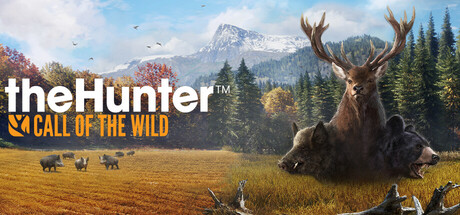
Ninety minutes into a stalk, I had a clean broadside at roughly 140 meters, took it with a rifle rated one class below what the animal actually needed, and then spent forty minutes following a blood trail that faded from bright red to dark flecks and finally to nothing at the lip of a gully. No harvest, no score, and a spooked valley to show for the effort. That failure taught me more about how this thing works than any amount of trailer footage, and it is the clearest signal I can give you about what you are actually buying. What Expansive Worlds has been building since the base game landed in 2017 is a tracking simulator with a rifle bolted to the front of it. Animals live on need zones, feeding, drinking and resting on a rough internal clock tied to specific terrain, so once you learn the schedule you stop wandering and start intercepting. Your scent travels downwind in a cone you can read in the field, which makes approach angle matter considerably more than aim. Every harvest gets graded after the fact on vitals hit, distance and whether your weapon class matched the animal class, and a sloppy shot spikes hunting pressure across the surrounding area, emptying it out for a meaningful stretch of in-game time. Very few open world games bother to model a consequence for greed. This one does, constantly, and it is the reason the moment-to-moment pace feels closer to a stealth game than a sports title. This is the part where I usually lose people. The store page presents years of add-on reserves, weapon packs and cosmetic bundles, and the total looks like a 300-hour tax on your free time. Approached correctly it is one of the gentler sims to start. Ignore every reserve except the one in front of you and set a single objective per session: find one animal, read its tracks, take one shot. The tracking assist will draw the trail for you early on, and you can switch the crutches off once your eyes adjust. The mission structure is a functional tutorial dressed up as busywork, introducing callers, scent lures, tripods and ground blinds in roughly the order a newcomer needs them. Two evenings of that and you will be reading terrain unprompted. Compare that to the fifteen-hour onboarding cliff of a Paradox campaign and this is practically welcoming. Sundarpatan is the vertical answer to the flatter reserves. Himalayan foothill country makes elevation the main difficulty modifier: shots stretch across valleys where wind and bullet drop both bite, and a stalk that looks like 300 meters on the map turns into a twenty-minute climb with a ridge in the way. Bring optics you trust and stop treating range estimation as decoration. Where the reserve wobbles is where the whole game wobbles. Animal AI still shows its scripting, with herds that walk a fixed line or freeze at distance for no visible reason. Dense foliage chews frames on older hardware. There is no meaningful mod scene to sand off the rough edges, which for a sim this mature is a real loss. And the add-on catalog is sprawling and badly signposted, so working out what you own and what a given map actually contains takes more effort than it should. Buy this if you want a game where the terrain is the opponent and the animal is the exam. Skip it if you need a kill every ten minutes, because you will get one every forty, and half of those will be failures you caused three ridgelines earlier. Played in two-hour blocks with a friend on comms in co-op, it turns into something closer to a hiking trip with stakes, which is not a pitch most simulators can make honestly. That is a narrow audience, but it is a deep one, and 89 percent of a very large review pool has stuck around long enough to agree.

Strategy & simulation
Tags
System Requirements
Minimum
- Processor
- Intel i3-4170
- Memory
- 4 GB RAM
- Graphics
- NVIDIA GTX 660 / ATI HD7870 - 1GB VRAM
- Storage
- 140 GB available space
Recommended
- OS
- 64bit OS - Windows 10
- Processor
- Intel i7 quad-core
- Memory
- 8 GB RAM
- Graphics
- NVidia GTX 760 / R9 270x - 4GB VRAM
- Storage
- 140 GB available space
Keep exploring
Community Discussion
Be the first to comment on TheHunter: Call of the Wild - Sundarpatan Nepal Hunting Reserve.
Reviews & Ratings
Game Info
- Developer
- Expansive Worlds
- Publisher
- Avalanche Studios
- Release Date
- Feb 16, 2017