theHunter: Call of the Wild - Parque Fernando
A hunting sim where wind direction decides everything and a two-hour session can end with a single animal. Bliss if that sounds like peace, agony if it sounds like waiting.
GamerScout Verdict
Best for patient sim players who want a wind-and-tracking puzzle rather than a shooter, and who can stomach the DLC sprawl.
Compare Prices(1 stores)
Every store in this table quotes us in euros, so the EUR figure is the price the seller actually set, not our arithmetic — which is why EUR is also the currency we rank in. We only list an offer here when the store gives us its price in euros, so nothing in this table is a number we invented.
Pick USD, PLN, GBP, CAD or AUD in the header and we convert from EUR at the European Central Bank reference rate — converted amounts are prefixed with ~. Your bank or the store may apply a different rate at checkout. We never hide offers based on where you are: everyone sees this whole table.
We may earn a commission when you buy games through links on this page — at no extra cost to you. It never affects our rankings or verdicts.
Screenshots & Media
About theHunter: Call of the Wild - Parque Fernando
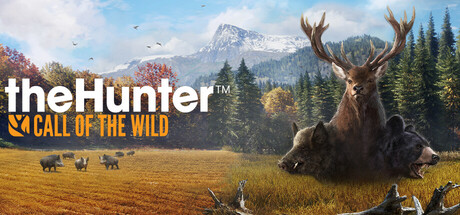
Wind direction is the entire game, and once that clicks the whole thing reorganises itself in your head. I approach hunting sims the way I approach a Paradox campaign, looking for the one variable everything else hangs off, and here it is the scent cone drifting off your character into the trees ahead of you. Walk the wrong line across a valley and every animal within a few hundred metres knows you exist before you have seen a single track. Circle downwind, drop to a crouch, keep your movement noise under the threshold the interface is quietly tracking for you, and that same valley turns cooperative. That one rule converts what looks like a walking simulator with rifles into a genuine positioning puzzle, and it is why people have poured absurd hour counts into this thing since its 2017 release. Underneath the wind is a scheduling problem. Every species cycles between feeding, drinking and resting zones on a clock, and the real skill ceiling is learning to read that clock off the map instead of wandering hopefully through the woods. Your tracking sense highlights prints, droppings and blood spatter, but it only points. The interpretation is yours, and a misread trail costs twenty real minutes. Weapons are gated by a difficulty class system, so bringing an underpowered calibre to heavy game means a wounded animal you will spend an hour chasing and a scoring penalty when you finally catch up to it. Harvest scoring rewards clean vital hits and short pursuits, which is the design nudging you toward patience without ever locking a door. Skill and perk points arrive slowly, and the ones that actually change your play are the boring-sounding ones: quieter movement, steadier aim, better spotting. Parque Fernando is the reserve that resets your habits. Where the German and Pacific Northwest maps are dense forest funnelling you into short sightlines and reactive snap shots, this one opens into South American scrub, grassland and marsh, and the geometry changes the whole approach. Blackbuck bolt across open ground at range, which finally makes long-distance ballistics and lead calculation matter rather than being a party trick you never use. Heavy game like water buffalo turns that same open terrain into a real risk assessment, because a bad first shot on something that size is a long, ugly afternoon of blood trails. Puma rewards a different relationship with callers and scents than anything the deer-heavy reserves teach you. Coming here after a hundred hours of spruce trees is genuinely disorienting in the best way. What does not work deserves the same bluntness. The tutorial is thin to the point of negligence for a game this systems-heavy, and a newcomer can burn three hours doing everything wrong without the game once explaining why the animals keep evaporating. Animal AI still produces nonsense: herds pathing into a rock and standing there, deer clipping through terrain, the occasional trophy that vanishes after a perfect shot. Multiplayer with friends is excellent in principle, though desync means the person who fired is not always the person the game credits. And the storefront situation is heavy. The base game is an entry point, with reserves, weapon packs and equipment sold separately, so a full collection is a far larger commitment than the initial purchase suggests. In-app purchases sit right there in the feature list and you will feel them. Even so, I would hand this to a sim newcomer before most of the genre. There is no build order to memorise, no economy to balance, no failure state that wipes an hour of planning. All it asks is that you slow down, watch an indicator, and accept that a long evening might end with one animal on the board. If that reads as tedium, trust the instinct and walk away. If it reads as the best decompression available on PC, you have just found your next several hundred hours. Play it in long quiet sessions, take only the shots you are actually equipped for, and let the rest walk.

Strategy & simulation
Tags
System Requirements
Minimum
- Processor
- Intel i3-4170
- Memory
- 4 GB RAM
- Graphics
- NVIDIA GTX 660 / ATI HD7870 - 1GB VRAM
- Storage
- 60 GB available space
Recommended
- OS
- 64bit OS - Windows 10
- Processor
- Intel i7 Quad Core
- Memory
- 8 GB RAM
- Graphics
- NVidia GTX 760 / R9 270x - 4GB VRAM
- Storage
- 60 GB available space
Keep exploring
Community Discussion
Be the first to comment on theHunter: Call of the Wild - Parque Fernando.
Reviews & Ratings
Game Info
- Developer
- Expansive Worlds
- Publisher
- Avalanche Studios
- Release Date
- Feb 16, 2017