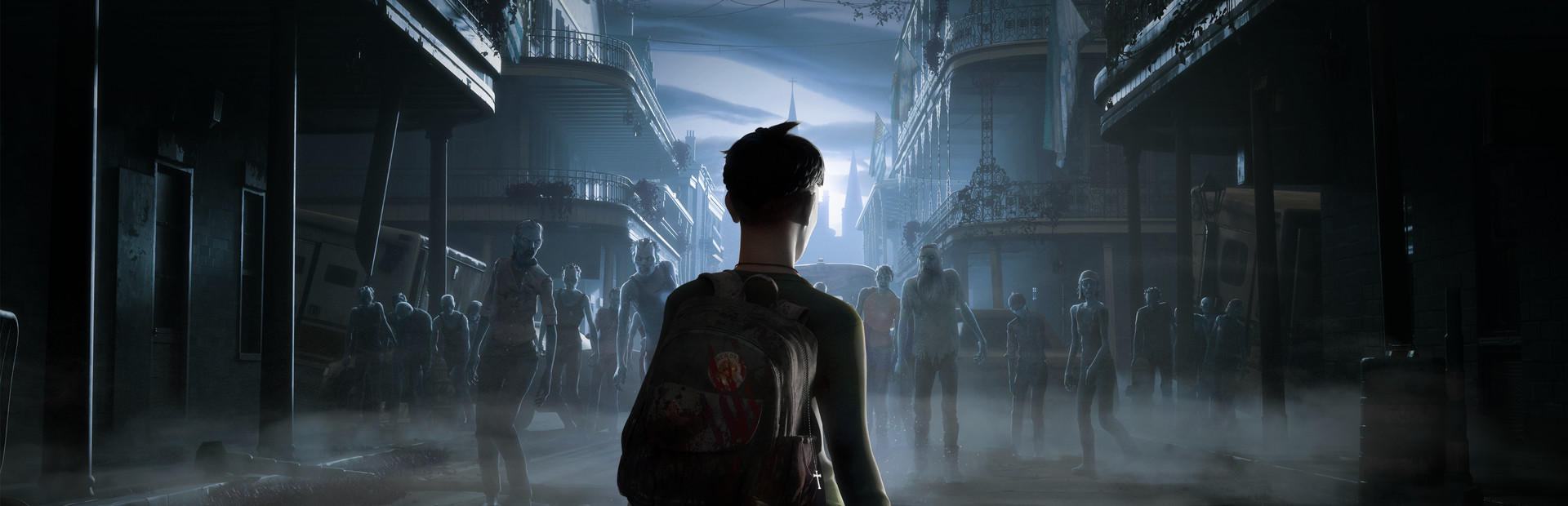

The Walking Dead: Saints & Sinners - Chapter 2: Retribution
Push through a genuinely graceless first hour and you get a scavenging sim with real risk maths underneath. Headset required, and the tension deflates once your supply chain stabilises.
GamerScout Verdict
For sim players who want every looted drawer to be a real decision, provided you own a headset and can stomach the first hour.
Compare Prices(5 stores)
Every store in this table quotes us in euros, so the EUR figure is the price the seller actually set, not our arithmetic — which is why EUR is also the currency we rank in. We only list an offer here when the store gives us its price in euros, so nothing in this table is a number we invented.
Pick USD, PLN, GBP, CAD or AUD in the header and we convert from EUR at the European Central Bank reference rate — converted amounts are prefixed with ~. Your bank or the store may apply a different rate at checkout. We never hide offers based on where you are: everyone sees this whole table.
We may earn a commission when you buy games through links on this page — at no extra cost to you. It never affects our rankings or verdicts.
Price History
Screenshots & Media
About The Walking Dead: Saints & Sinners - Chapter 2: Retribution
My first hour with Retribution was mostly fumbling, and I say that as someone who normally logs his mistakes in a spreadsheet. In VR your hands are the interface, and this one refuses to help: you reach over your shoulder for the pack, drive a blade into a walker's temple, then brace its collarbone with your free hand to pull the blade back out. I dropped a machete into a canal. I shot myself in the leg while holstering a pistol. The question every newcomer hits around minute forty is whether that clumsiness is bad design or the entire design. It is the entire design, and I would push through it, because underneath the flailing sits one of the tighter risk-management loops I have played in years. Strip away the licence and the zombies and what you have is a run-based scavenging sim on a clock. You pick a district, you go in, you loot, and a day timer runs the whole time. When the bell sounds, the map's population starts converging on the noise, and you are suddenly solving a live problem: how many more drawers is that half-full backpack worth. Slots are limited and non-negotiable, so every pickup is an opportunity cost against something you already carry. Weapon durability turns each swing into a withdrawal from a depreciating asset, which is why my best runs were the ones where I barely fought at all. Firearms exist, they work, and using them is almost always the wrong call, because sound is the real currency here. The bell is the best single design decision in the game and it does more work than most survival systems I can name. The loop above the loop is a build order, and that is where sim players will click with it. Components you drag home feed a crafting economy; what you can build decides how deep you can push the next outing; how deep you push decides what components you find. Three or four days in, you are planning two runs ahead, deciding whether to burn scrap on a repair now or bank it toward a recipe that pays out later. Layered on top are faction consequences, choices that quietly close doors and change who is willing to trade or talk. This is not a branching epic, but decisions stick, which is more than a lot of bigger RPGs manage. The tutorial teaches you verbs and then stops, so nobody explains the economy to you. Work it out yourself over two in-game days and it becomes the most legible part of the design. Where it disappoints is the back half of the curve. The AI is not opposition in any strategic sense: walkers are physics props with a threat radius and a grab animation, human enemies telegraph hard and fall to the same two answers every time, and nothing on the map is reading your behaviour and adapting to it. Once your recipes are unlocked and the supply line is stable, the timer stops threatening you and scavenging turns into chores, a familiar late-game deflation in survival sims that lands here right around the point most players are settling in. Environments repeat more than they should. There is no Workshop support and no mod scene to stretch the systems past where the developers stopped, which for a game this systems-forward is a genuine loss. And it is headset-only and physically demanding, so the roughly 86 percent positive rating across ten thousand reviews hides a chunk of people who bounced off VR discomfort rather than the design itself. So: worth pushing through the first hour, and worth it specifically if you like games where inventory space is the main antagonist. If you want a Walking Dead story, you will get a decent one and probably feel the padding. If you want a survival sim where a looted cabinet is a real calculation with a cost attached, this is one of the very few VR games building at that level. Budget around twenty hours before the systems stop surprising you, and plan to be bad at it for a while before you are not.

Strategy & simulation
Tags
System Requirements
Minimum
- OS
- Windows 10
- Processor
- Intel Core i5-4590+ / AMD Ryzen 5 1400+
- Memory
- 8 GB RAM
- Graphics
- NVIDIA GTX 1060+ / AMD RX 470/570+
- Storage
- 55 GB available space VR Support: SteamVR
Recommended
- OS
- Windows 10
- Processor
- Intel i7 8700k / AMD Ryzen 7 1800X
- Memory
- 16 GB RAM
- Graphics
- NVIDIA GTX 1070 / AMD Radeon Vega 56
- DirectX
- Version 11
- Storage
- 40 GB available space
Keep exploring
Community Discussion
Be the first to comment on The Walking Dead: Saints & Sinners - Chapter 2: Retribution.
Reviews & Ratings
Game Info
- Developer
- Skydance Interactive
- Publisher
- Skydance Interactive
- Release Date
- Jan 23, 2020