Teslagrad
A five-hour magnetism puzzler that explains nothing out loud and expects you to keep up. Gorgeous hand-drawn tower, mean boss spikes, and the rare good sense to stop early.
GamerScout Verdict
Worth it for puzzle-platformer fans who want art direction and brevity, and can stomach boss fights that spike out of nowhere.
Compare Prices(4 stores)
Every store in this table quotes us in euros, so the EUR figure is the price the seller actually set, not our arithmetic — which is why EUR is also the currency we rank in. We only list an offer here when the store gives us its price in euros, so nothing in this table is a number we invented.
Pick USD, PLN, GBP, CAD or AUD in the header and we convert from EUR at the European Central Bank reference rate — converted amounts are prefixed with ~. Your bank or the store may apply a different rate at checkout. We never hide offers based on where you are: everyone sees this whole table.
We may earn a commission when you buy games through links on this page — at no extra cost to you. It never affects our rankings or verdicts.
Price History
Screenshots & Media
About Teslagrad
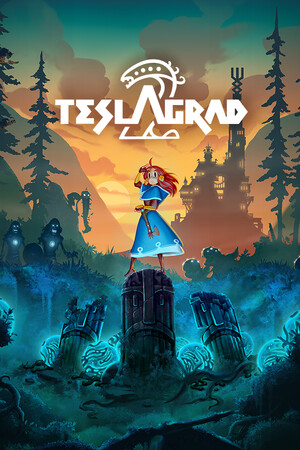
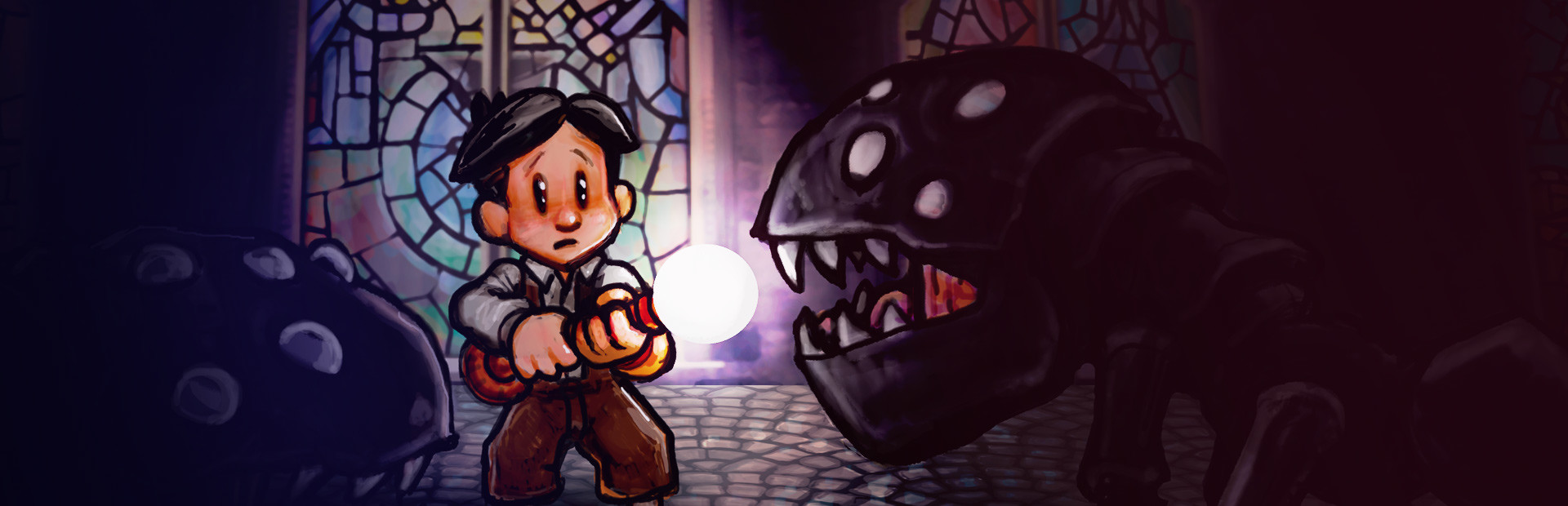
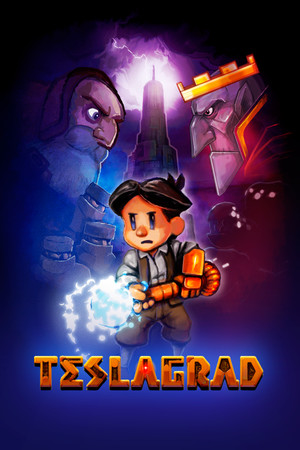
The first thing Teslagrad asked me for was patience, and it asked before it handed over anything at all. There is no tutorial text, no narrator, no quest log, not a single line of dialogue in the whole game. A kid runs through rain into a tower, and you are expected to work out the rest by watching. For the opening stretch you can barely do anything except run and jump through hand-drawn rooms while the game quietly teaches you its grammar through door placement and background detail. If you need a game to tell you what it wants in the first ninety seconds, this will feel like being ignored. Stay with it. The silence is the point, and it pays. Mechanically this is a 2D puzzle-platformer built almost entirely on one idea: magnetic polarity. You pick up a glove that lets you charge objects red or blue, and from there every room becomes a small physics argument about attraction and repulsion. Charge a block one way and it slams into a wall, charge it the other and it becomes a launcher that fires you across a gap. Later you gain boots that let you ride charged surfaces and a cloak that blinks you a short distance through the air, and the tower reopens itself around each new verb. Progression is loosely non-linear, closer to a compact metroidvania than a level list, so backtracking through Tesla Tower with a fresh power to reach a ledge you resented an hour earlier is a real and frequent pleasure. Rooms are self-contained puzzle boxes rather than sprawling zones, which keeps the failure loop tight. The craft is where this one genuinely earns its keep. The art is hand-drawn in a steampunk-inflected vision of old Europe, all copper machinery, rain-dark stone and warm lamplight, and the animation has that slightly loose, illustrated quality you only get when a small team draws every frame rather than filtering sprites through a plugin. The story arrives through a shadow-puppet theatre and through what you notice in the scenery, a coup that lands harder than most scripted indie narratives because you assemble it yourself. The score is restrained to the point of hush for long stretches, letting rain and electrical hum do the work, then swelling exactly when the tower opens up. And crucially, the game knows its own length. It is a short experience by design, and it ends while its central idea is still interesting instead of grinding the magnet gimmick into paste over twenty hours. I will always defend that choice. What disappoints is the difficulty curve, which does not curve so much as jolt. The puzzle rooms are fair and readable, but the boss fights arrive like a different game strapped on top, demanding pattern memorisation and precise inputs from a movement system that was tuned for thinking, not twitch. A couple of them will eat a solid chunk of your playtime through pure trial and error, and because the run-up to each attempt is quick you get the specific irritation of dying to the same third phase eleven times in a row. The collectible scrolls scattered around the tower, which flesh out the backstory, are often hidden behind precision platforming rather than clever deduction, so the completionist route is more about execution than insight. Controls are noticeably better on a pad than on keyboard. And if you are the kind of player who wants the plot spelled out, the wordless approach will read as vague rather than elegant. That is a legitimate mismatch, not a flaw you can patch around. This is for people who like being trusted. If you enjoy a game that puts a mechanic in your hands and then simply builds rooms until you understand it, if you value art direction and soundscape as much as systems, and if a compact, confident five or six hours sounds like a feature rather than a shortfall, Teslagrad has aged well and remains one of the more quietly beautiful things on the indie puzzle-platformer shelf. Go in with a controller, accept that two or three bosses will humble you, and let the tower do its talking.

Indie & narrative
Tags
System Requirements
Minimum
- OS
- WINDOWS® 7, 8, 8.1, 10 (64-BIT Required)
- Processor
- AMD FX-4350 / Intel® Core™ i3-3210
- Memory
- 4 GB RAM
- Graphics
- AMD Radeon™ R7 260X (2GB VRAM) / NVIDIA® GeForce® GT…
Recommended
- Processor
- Dual Core 4GHz
- Memory
- 4 GB RAM
- Graphics
- Hardware Accelerated Graphics with 1GB memory
- Storage
- 1 GB available space
Keep exploring
Community Discussion
Be the first to comment on Teslagrad.
Reviews & Ratings
Game Info
- Developer
- Rain Games
- Publisher
- Rain Games
- Release Date
- Dec 13, 2013