
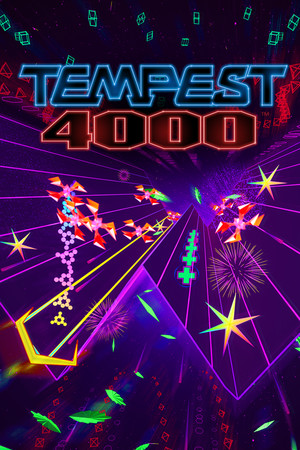
Tempest 4000
A 100-level neon score chase that asks one thing: stay on the rim and keep the multiplier alive. Thin on modes, ferocious on flow, and brutal on eyes that dislike strobe.
GamerScout Verdict
Get it if score-attack arcade shooters are comfort food; skip it if you need progression, story, or a screen you can read.
Compare Prices(6 stores)
Every store in this table quotes us in euros, so the EUR figure is the price the seller actually set, not our arithmetic — which is why EUR is also the currency we rank in. We only list an offer here when the store gives us its price in euros, so nothing in this table is a number we invented.
Pick USD, PLN, GBP, CAD or AUD in the header and we convert from EUR at the European Central Bank reference rate — converted amounts are prefixed with ~. Your bank or the store may apply a different rate at checkout. We never hide offers based on where you are: everyone sees this whole table.
We may earn a commission when you buy games through links on this page — at no extra cost to you. It never affects our rankings or verdicts.
Price History
Screenshots & Media
About Tempest 4000
The best thing about Tempest 4000 is how fast it stops being about survival and becomes about the number in the corner of the screen. Twenty minutes in I had stopped counting lives and started counting multipliers, and that shift is the entire point of the design. You ride the rim of a geometric tube, firing down into it while enemies claw their way up toward you, and each level hands you a fresh piece of architecture: circles, flat ribbons, folded squares, shapes that curl back into themselves so the far side of the playfield is somewhere you cannot see. Llamasoft has been iterating on this exact idea since the Jaguar era, and the 2018 version is the loudest and fastest one they have made. The enemy roster barely changed from the 1981 original, and that is a compliment rather than a shrug. Flippers tumble sideways along the lanes trying to reach the rim and grab you. Spikers grow spines up the lanes that will gut you during the drop into the next level if you do not shave them down first. Pulsars electrify a whole lane for a beat, fuseballs bounce along the edges with no readable pattern, tankers split into smaller problems when you kill them. Your answers are deliberately limited: a rapid shot, a Superzapper that clears the screen once per level, and drops that upgrade you into a particle laser, an AI droid that patrols a lane on your behalf, or a jump that lifts you off the web entirely. Bonus runs send you diving down the tube itself, which is pure line reading with no shooting to hide behind. Play it on a controller. Keyboard technically works, but the small analog corrections are what separate a decent run from a good one. Presentation is the reason people either love this or bounce off it in five minutes. Everything is vector-bright and layered over shifting backdrops, the soundtrack is relentless four-on-the-floor techno, and the whole screen pulses in time with your kills. When it clicks, it is genuinely hypnotic and the frame rate holds steady enough that you can trust your inputs. When it does not, the screen becomes soup. There are stretches in the later hundred where a pulsar charging in a lane and an incoming flipper are competing with three layers of bloom for your attention, and dying because you literally could not see the threat is a different flavor of frustration than dying because you were slow. Anyone with photosensitivity concerns should treat this as a hard warning rather than a stylistic note. The package around all this is thin. You get the main hundred-level run with warp jumps that let you skip ahead, plus a small set of alternate modes including a stripped-back pure variant and a survival option, and that is the whole offer. No campaign, no co-op, no online play, nothing that unfolds over time. Progress is a leaderboard position and your own memory of how far you got. That is a legitimate arcade design and it works on its own terms, but you should know going in that repeating the opening webs many times is the loop, not a phase you graduate out of. The onboarding is also basically nonexistent, which means the first hour is spent decoding what a power-up icon means by picking it up and seeing what happens. Calling this thing casual, as its store shelving does, is misleading in both directions: it is easy to start and unusually punishing to actually finish. Who should buy it? Anyone who already knows the feeling of chasing a score for its own sake, and anyone curious what forty years of refining one arcade idea looks like when the person doing the refining never lost interest. It is a fifteen-minutes-at-a-time game that will quietly eat a month if the hook lands. If you need narrative, unlockable progression, or a screen you can read while tired, this is the wrong purchase and no amount of neon will fix that. Everyone else gets one of the cleanest score-attack shooters available on PC, warts and strobe and all.

Catch-all
Tags
System Requirements
Minimum
- OS
- Windows 7 SP1 64bit, Windows 8.1 64bit, Windows 10 64bit
- Memory
- 4 GB RAM
- DirectX
- Version 10
- Storage
- 2 GB available space
- Graphics
- Intel HD Graphics 4600 or higher
- Processor
- Intel Core i3-2120 CPU 3.30Ghz
- Sound Card
- Windows Compatible Sound card
Keep exploring
Community Discussion
Be the first to comment on Tempest 4000.
Reviews & Ratings
Game Info
- Developer
- Llamasoft Ltd.
- Publisher
- Atari
- Release Date
- Jul 17, 2018