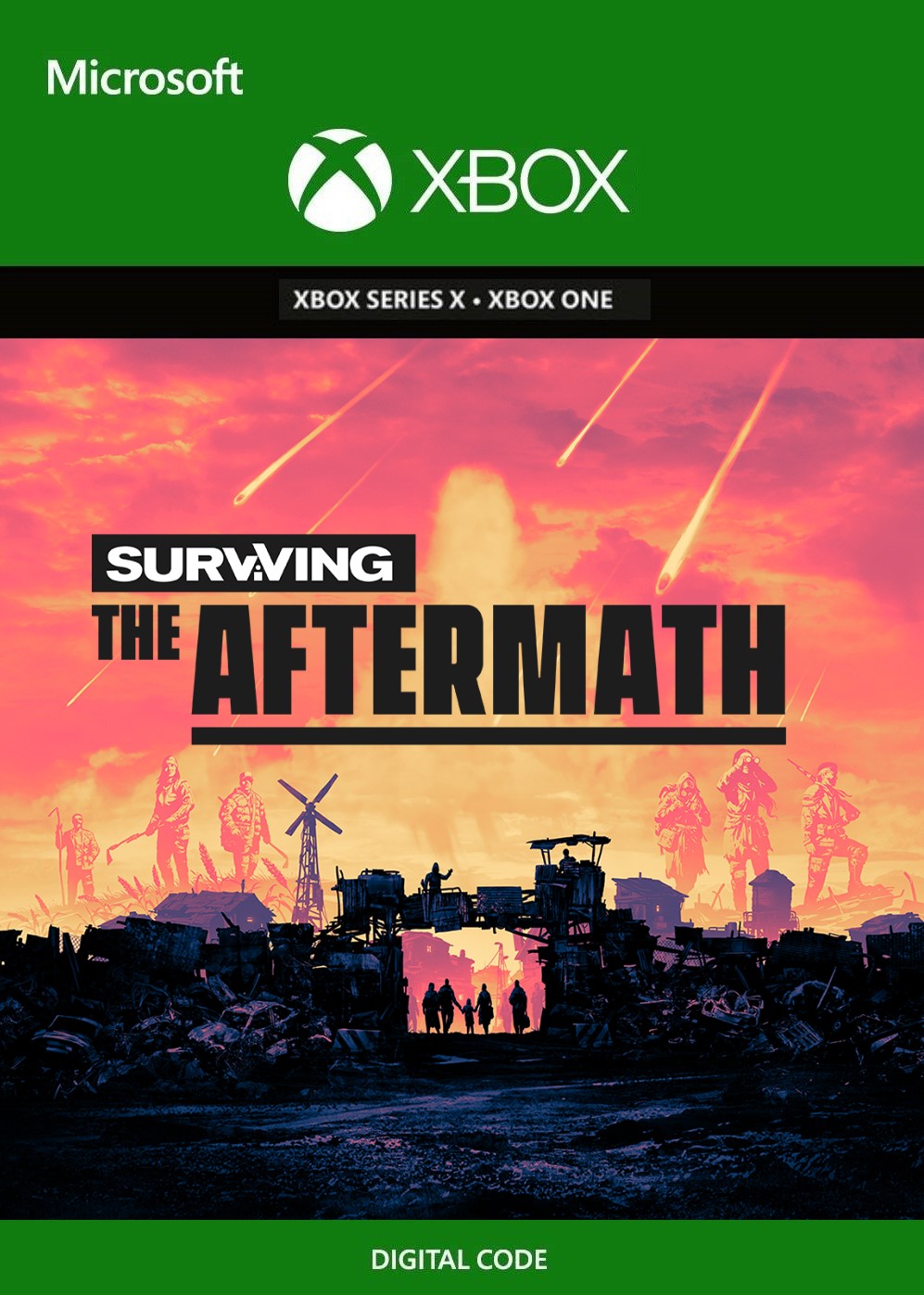
Surviving the Aftermath Ultimate Colony Edition
A grim colony sim where every heatwave quietly audits your logistics. Great if you enjoy rebuilding after failure, miserable if you wanted a cozy town to decorate.
GamerScout Verdict
Worth it if you want a colony builder that keeps punching back, less so if you wanted a calm post-apocalypse to decorate.
Compare Prices(4 stores)
Every store in this table quotes us in euros, so the EUR figure is the price the seller actually set, not our arithmetic — which is why EUR is also the currency we rank in. We only list an offer here when the store gives us its price in euros, so nothing in this table is a number we invented.
Pick USD, PLN, GBP, CAD or AUD in the header and we convert from EUR at the European Central Bank reference rate — converted amounts are prefixed with ~. Your bank or the store may apply a different rate at checkout. We never hide offers based on where you are: everyone sees this whole table.
We may earn a commission when you buy games through links on this page — at no extra cost to you. It never affects our rankings or verdicts.
Price History
About Surviving the Aftermath Ultimate Colony Edition
The first thing this game asked me for was patience, and the second was a tolerance for watching people I had personally named die of thirst. You do not get handed a functioning settlement here and left to decorate it. You get a handful of survivors, a patch of poisoned dirt, and a clock that starts running well before you have worked out where the water is coming from. My opening hours were pure triage: put someone on scrap hauling, notice the food stockpile is a rounding error, panic-build a hunting shack, then lose most of it to weather I could have seen coming if I had read the warning. If that sounds like a bad time rather than an interesting one, you can stop here. If it sounds like the actual appeal, keep going, because that loop is the whole pitch. Structurally this is a post-apocalyptic colony builder with a second game bolted onto it. At ground level you run the familiar routine: water collectors, farms, medical tents, workshops, a tech tree that slowly turns scavenged junk into concrete, electronics and something resembling infrastructure. Colonists are individuals with traits and job assignments, and the game is perfectly happy to let one missing skill set stall an entire production chain while everybody stands around. The second layer is the world map, where named specialists leave the gate to scout ruins, crack open supply caches, run into bandits and open trade with other outposts. The two halves feed each other. The colony cannot advance without what the specialists drag home, and the specialists cannot survive long trips without the gear and food the colony produces. What it does exceptionally well is disaster. Sandstorms, acid rain, meteor strikes, brutal cold snaps: these are not decorative weather effects, they are scheduled demolition of whatever you built last. The good version of a session is the one where a catastrophe rips through your outer district, you lose two buildings and a specialist, and then spend the next hour rewiring your supply chain around the damage. That is where the design sings. It is also unusually good at making small decisions feel heavy, because you rarely have enough labour to do two things at once, and choosing to fortify usually means choosing not to expand. The policy and society systems layer on top of that nicely, letting you set laws and lean your colony toward strict order or something looser, with consequences you actually feel in worker output and unrest. Where it sags is the middle stretch. Once your food and water are genuinely stable, the tension drains out faster than it should, and the back half turns into managing menus rather than managing a crisis. The world map events start repeating, expedition trips become a chore you click through, and colonist behaviour can be dense enough that you will find yourself micromanaging haulers who should know better. Performance and readability also get worse as the colony sprawls, and the palette is so committed to brown and grey that late-game bases blur together visually. The bundled edition throws every expansion at you at once, which is generous but also means new players get systems piled on before they have mastered the basics. My advice is to ignore the extra layers on run one and just learn to survive a full winter. So who is this actually for. Anyone who likes builders where the map fights back, and who reads a failed run as information rather than wasted time. If your favourite part of these games is the moment your plan collapses and you have to improvise a fix with half the resources, this delivers that repeatedly and cheaply on your attention. If you want a relaxed sandbox with pretty settlements and no real threat, this will feel like homework with weather. It is doing one thing very well, the survival squeeze, and it is noticeably weaker everywhere the squeeze lets up. Go in for the first thirty hours and set your expectations accordingly.

Catch-all
Tags
System Requirements
Keep exploring
Community Discussion
Be the first to comment on Surviving the Aftermath Ultimate Colony Edition.
Reviews & Ratings
No ratings available
Game Info
- Developer
- Unknown
- Publisher
- Unknown
- Release Date
- TBA