
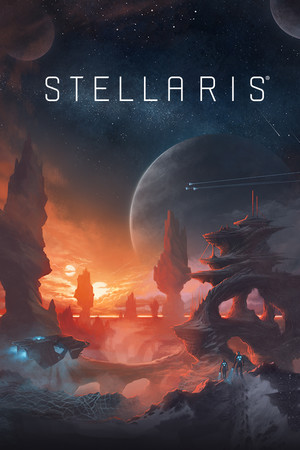
Stellaris Starter Edition
Grand strategy with a galaxy-sized ceiling: the Starter Edition bundles the base game with Utopia and Synthetic Dawn, which happen to be the two DLCs the community consistently calls non-negotiable.
GamerScout Verdict
Best entry point for grand-strategy newcomers who want Stellaris's two strongest expansions bundled before touching the larger DLC catalogue.
Compare Prices(3 stores)
Every store in this table quotes us in euros, so the EUR figure is the price the seller actually set, not our arithmetic — which is why EUR is also the currency we rank in. We only list an offer here when the store gives us its price in euros, so nothing in this table is a number we invented.
Pick USD, PLN, GBP, CAD or AUD in the header and we convert from EUR at the European Central Bank reference rate — converted amounts are prefixed with ~. Your bank or the store may apply a different rate at checkout. We never hide offers based on where you are: everyone sees this whole table.
We may earn a commission when you buy games through links on this page — at no extra cost to you. It never affects our rankings or verdicts.
Price History
Screenshots & Media
About Stellaris Starter Edition
I keep a running log of Paradox titles by hours-per-dollar, and Stellaris sits near the top of that spreadsheet in a way that still surprises me after all these years. The base loop is a 4X grand strategy set in a procedurally generated galaxy: you build a species, pick an origin, and then spend the next several hundred in-game years exploring star systems, managing planetary colonies, researching technologies, forging alliances or picking wars, and eventually confronting one of the late-game crisis events that can reshape the entire board. The real-time-with-pause format means you control the pace, which matters when you are juggling five different resource flows and a border dispute with three neighbors simultaneously. The Starter Edition bundles the base game with two expansions, Utopia and Synthetic Dawn, plus the Galaxy Edition cosmetic upgrade. That combination is not arbitrary. Utopia is the expansion the Stellaris community has consistently pointed to as the single most impactful addition to the game. It introduces the Ascension Perk system, which lets you commit your empire to a long-term evolutionary path, whether that means Biological Mastery to push organic life to its limits, Cybernetic Augmentation, Synthetic Evolution, or Psionic Awakening. It also unlocks Hive Mind civics and megastructure construction, the latter being the kind of late-game project that gives you a concrete goal to build toward across 150 turns of diplomacy and fleet management. Synthetic Dawn adds Machine Empire play, a mechanically distinct experience where population management, energy upkeep, and the AI uprising event chain all work differently from organic runs. Together, these two expansions cover the two most frequently recommended entry points in community DLC guides. For newcomers, the learning curve is real but not a wall. The tutorial covers the early exploration and colonization phases well enough, and the first 30 turns are forgiving. Where most players stall is the mid-game transition from expansion into consolidation, specifically when the economy starts demanding attention across multiple worlds and the diplomatic map gets crowded. My advice: play on the default galaxy size with fewer AI empires your first run, read the pop growth and stability tooltips early rather than late, and do not panic-expand. The systems reward players who understand what they are building toward, not those who blindly grab territory. The rough edges are real and worth naming. The AI empire behavior at the strategic level remains inconsistent, with the mid-game sometimes feeling like the other empires are running separate games rather than reacting coherently to your presence. Late-game performance can degrade on larger galaxy maps as the simulation gets heavier. The DLC catalogue beyond the Starter Edition is also extensive and genuinely expensive at full price, meaning this edition is a starting point, not a complete package, and you will eventually want more if the game clicks. The Steam Workshop mod ecosystem is deep enough to fill some of those gaps, with community patches, UI overhauls, and full total-conversion mods all available. If you are coming from RimWorld, Crusader Kings, or any other game where emergent storytelling through systems is the point, Stellaris is a reasonable next step up in scale. The Starter Edition gives you enough mechanical depth to genuinely understand whether this style of game works for you without committing to the full DLC pile.

Strategy & simulation
Tags
System Requirements
Minimum
- OS
- Windows® 10 Home 64 Bit
- Processor
- Intel® iCore™ i3-530 or AMD® FX-6350
- Memory
- 4 GB RAM
- Graphics
- Nvidia® GeForce™ GTX 460 or AMD® ATI Radeon™ HD 5870 (1GB VRAM), or AMD® Radeon™ RX Vega 11 or Intel®…
Recommended
- OS
- Windows® 10 Home 64 Bit
- Processor
- Intel® iCore™ i5-3570K or AMD® Ryzen™ 5 2400G
- Memory
- 4 GB RAM
- Graphics
- Nvidia® GeForce™ GTX 560 Ti (1GB VRAM) or AMD® Radeon™ R7 370 (2 GB VRAM)
- DirectX
- Versio…
Keep exploring
Community Discussion
Be the first to comment on Stellaris Starter Edition.
Reviews & Ratings
Game Info
- Developer
- Paradox Development Studio
- Publisher
- Paradox Interactive
- Release Date
- May 9, 2016