Rogue Legacy
Ninety-two percent of nearly nineteen thousand Steam reviewers can't be wrong: Cellar Door's genealogical roguelite hooked a generation on dying well and spending wisely.
GamerScout Verdict
Best for roguelite fans who want a tight, replayable castle-crawler with genuine mechanical depth and don't mind a grind in the late game.
Compare Prices(5 stores)
Every store in this table quotes us in euros, so the EUR figure is the price the seller actually set, not our arithmetic — which is why EUR is also the currency we rank in. We only list an offer here when the store gives us its price in euros, so nothing in this table is a number we invented.
Pick USD, PLN, GBP, CAD or AUD in the header and we convert from EUR at the European Central Bank reference rate — converted amounts are prefixed with ~. Your bank or the store may apply a different rate at checkout. We never hide offers based on where you are: everyone sees this whole table.
We may earn a commission when you buy games through links on this page — at no extra cost to you. It never affects our rankings or verdicts.
Price History
Screenshots & Media
About Rogue Legacy
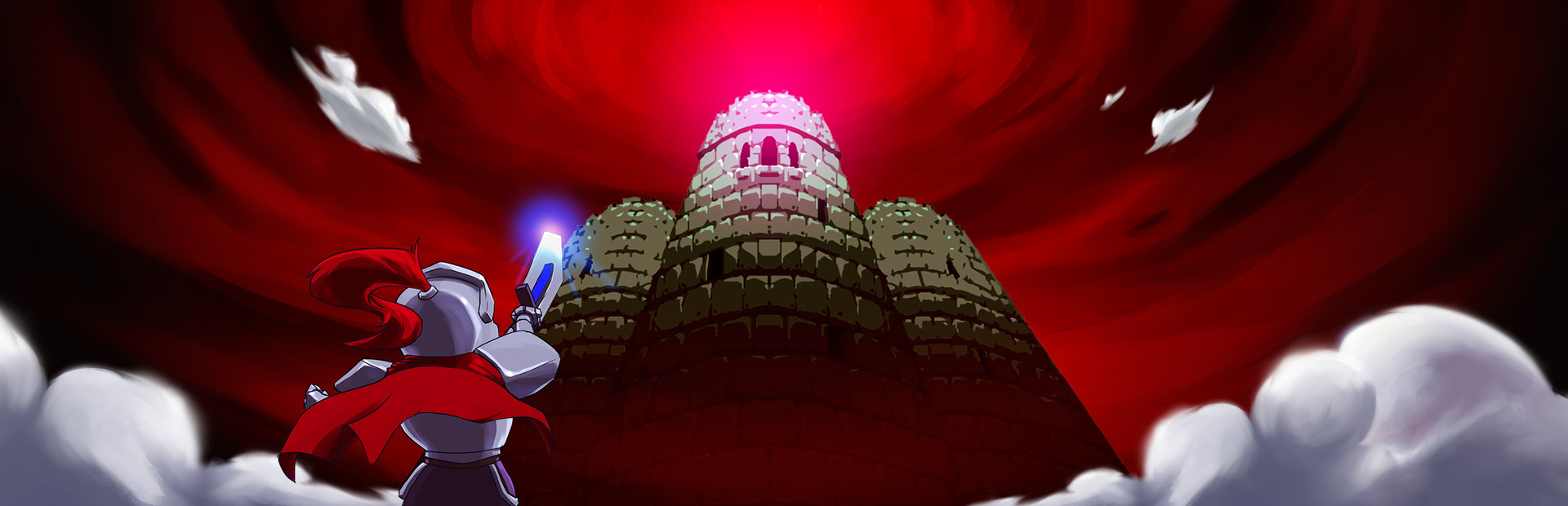
I've lost count of how many generations I've burned through Castle Hamson, and I mean that as a compliment. Rogue Legacy is the kind of game that turns a ten-minute session into a two-hour spiral, not because it tricks you, but because the loop is genuinely well-designed. You storm a procedurally generated castle as a knight, mage, paladin, ninja, or miner, among other classes, die (often embarrassingly fast), and then funnel every coin you scraped together into a persistent family manor that nudges your next heir a little closer to competence. That heir inherits a random trait - maybe vertigo that flips the screen, maybe colorblindness that drains the world of useful visual information, maybe IBS that is exactly what it sounds like. The trait system is where the game earns its personality, and the writing around it is genuinely funny rather than gimmicky. The combat is tight, faster-paced than it first appears, and clearly indebted to classic Castlevania in all the right ways. Each class plays differently enough to keep runs from blurring together: the paladin tanks, the mage leans on spells, the miner prioritizes gold accumulation that funds your family tree upgrade in ways no sword swing can. Every character also carries a secondary spell - mostly ranged options - that supplements the standard melee kit. The castle itself is split into distinct zones beyond the starting area, a forest, a tower, and a dungeon, each with its own enemy roster and visual style. The variety holds up for the first fifteen or so hours without much friction. The honest critique is that the late game leans on the upgrade treadmill harder than it should. The manor upgrade system is clever in structure: each purchase raises the cost of everything else, forcing you to prioritize and plan rather than mindlessly buy power. But that same design means progress can feel glacially slow when an underpowered class is all three of your heir options and the boss you need to reach is five rooms away. Some classes feel genuinely underpowered until you've sunk substantial family gold into their core stat. My mage runs in the early hours were close to useless in boss rooms. The castle's randomized nature also occasionally feels like it's working against you rather than with you, generating layouts that punish specific classes you simply weren't offered. There is a New Game Plus mode, and a New Game Plus Plus beyond that, for players who find the base run too short or want an excuse to restart the punishment cycle fresh. For an RPG-minded player, the narrative depth here is thin. The story is parcelled out through journal entries hidden in the castle, readable at your own pace or skippable entirely. It provides context rather than payoff. If you're coming from Disco Elysium expecting choice weight and consequence, adjust expectations sharply downward. This is a mechanical game with worldbuilding as seasoning, not the main course. What it does instead is give you mastery as the narrative arc, the feeling that generation forty-seven is the product of forty-six runs of accumulated knowledge, and that your eventual boss clear was earned by the whole bloodline rather than any single run. Rogue Legacy is the kind of well-tuned roguelite that defined what the genre could feel like in the indie boom of the early 2010s, and it still plays cleanly today. If you want branching dialogue and reactive worlds, look elsewhere. If you want to die repeatedly in a gothic castle and feel meaningfully better for it run by run, this is exactly that.

RPGs
Tags
System Requirements
Minimum
- Processor
- 1.6 Ghz
- Memory
- 1 GB RAM
- Graphics
- X1950 Pro, 7900 GT DirectX®:9.0c Hard Drive:400 MB HD space Additional:Only available in desktop mode for Windows 8.
Recommended
- Processor
- 2 Ghz
- Memory
- 2 GB RAM
- Graphics
- HD 4770, 8800 GTX DirectX®:9.0c Hard Drive:400 MB HD space Additional:Only available in desktop mode for Windows 8.
Keep exploring
Community Discussion
Be the first to comment on Rogue Legacy.
Reviews & Ratings
Game Info
- Developer
- Cellar Door Games
- Publisher
- Cellar Door Games
- Release Date
- Jun 27, 2013
