
Rogue Legacy 2
Roguelite platforming that gets its hooks in early and never quite lets go - six biomes, dozens of traits, and a family tree of wildly misfit heirs that somehow all feel worth playing.
GamerScout Verdict
Best for roguelite fans who want mechanical depth and class variety, and can stomach a grind that occasionally gets in its own way.
Compare Prices(7 stores)
Every store in this table quotes us in euros, so the EUR figure is the price the seller actually set, not our arithmetic — which is why EUR is also the currency we rank in. We only list an offer here when the store gives us its price in euros, so nothing in this table is a number we invented.
Pick USD, PLN, GBP, CAD or AUD in the header and we convert from EUR at the European Central Bank reference rate — converted amounts are prefixed with ~. Your bank or the store may apply a different rate at checkout. We never hide offers based on where you are: everyone sees this whole table.
We may earn a commission when you buy games through links on this page — at no extra cost to you. It never affects our rankings or verdicts.
Price History
Screenshots & Media
About Rogue Legacy 2
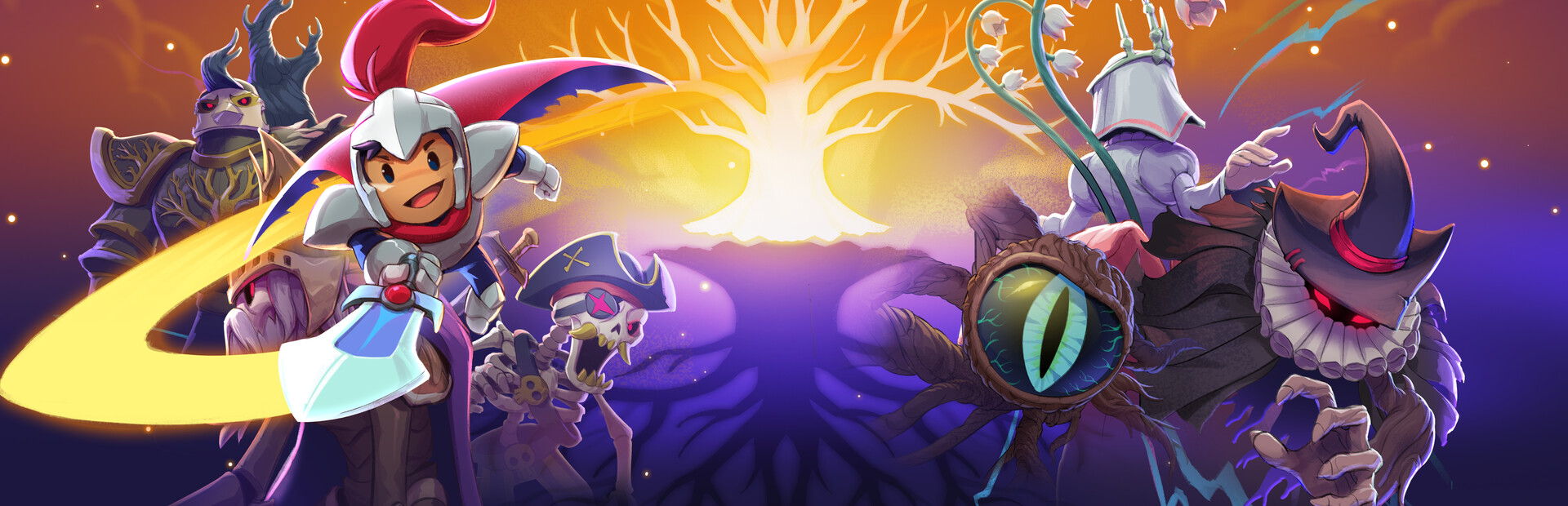
I went in skeptical that a genre as crowded as roguelite platformers had room for another marquee entry. Cellar Door Games answered that skepticism by making death genuinely interesting rather than merely punishing. Every time a run ends, you pick from a roster of heirs whose class, traits, and quirks are procedurally generated. That sounds familiar, but the execution here is several layers deeper than most contemporaries manage. The class system is where the game earns its reputation. Each class carries a weapon and moveset that fundamentally changes how you move through a room. The Boxer builds combo points and detonates them in a flurry, the Chef deflects projectiles with a frying pan and can self-heal mid-fight, the Bard generates musical notes that must be detonated with a spin-kick, and the Assassin chains rapid blade strikes that reward staying aggressive. On top of the class, each heir inherits biological traits - some mechanical shifts like gigantism that increases physical stature, some risk-reward gambits where taking a debilitating trait pays out in bonus gold for the run. The community has a genuinely lively tier-list discourse running, with the Valkyrie and Boxer frequently landing near the top for late-game survivability while certain ranged builds become harder to sustain as enemy density spikes. That balance is imperfect; some classes do feel noticeably weaker against the six Estuary bosses, and the RNG occasionally hands you a lineup of three underwhelming heirs in a row. It is a real friction point. Progression wraps around two systems that sit in productive tension. Between runs, gold flows into a castle upgrade tree where you spend on health, armor, strength, mana capacity, and unlocking new classes - all of it carrying over to every future heir regardless of what the RNG throws at you. Inside a run, Relics picked up in the world layer on temporary buffs and new abilities, but each one strains your Resolve meter, and they all vanish on death. The Architect mechanic lets you lock the world layout between attempts if you find a configuration you want to exploit. Heirlooms earned from challenge rooms grant permanent traversal upgrades - double-jump, extended dash - in a structure that borrows the Metroidvania habit of gating zones behind abilities, giving the sprawl some intentional shape. That shape across six biomes is genuinely distinct: underground tunnels, snow-covered zones where terrain conditions matter mechanically, a vertical area that plays against platforming instincts built up in earlier zones. The grind is real and some players will bounce off it. The upgrade tree's cost scaling means later unlocks require dedicating full runs to gold-farming rather than pushing forward. The House Rules accessibility menu - which lets you toggle contact damage, adjust global health and damage scaling, and even enable flight for tricky platform stretches - is a thoughtful inclusion that does not dilute the core challenge for those who leave it untouched. Scars missions, which award a secondary currency for optional challenge rooms, trend toward enemy gauntlets and feel thin compared to the rest of the game's design imagination. And the story is mostly set dressing: a lore-rich backdrop about a king and immortality that lives inside optional documents scattered through the world. If narrative is why you play games, Rogue Legacy 2 offers texture but not investment. For everyone else - the kind of player who finds a sixteen-hour session and calls it a Tuesday - this is the roguelite that argues most convincingly that the genre still has genuine room to move. The 2.5D art is vibrant and readable under pressure, the biomes carry distinct identities, and that death screen that maps your entire run path before handing you the next heir is a small masterstroke of game feel.

Indie & narrative
Tags
System Requirements
Minimum
- OS
- Windows 7
- Memory
- 8 GB RAM
- DirectX
- Version 11
- Storage
- 2 GB available space
- Graphics
- Nvidia GTX 680, AMD R9 280X
- Processor
- 2.0 Ghz
Recommended
- OS
- Windows 10
- Memory
- 8 GB RAM
- DirectX
- Version 11
- Storage
- 2 GB available space
- Graphics
- Nvidia GTX 680, AMD R9 280X
- Processor
- 3.0 Ghz
Keep exploring
Community Discussion
Be the first to comment on Rogue Legacy 2.
Reviews & Ratings
Game Info
- Developer
- Cellar Door Games
- Publisher
- Cellar Door Games
- Release Date
- Apr 28, 2022