Resonance: A Plague Tale Legacy
A compact Greek-myth detour from the Plague Tale team that leans hard on Asobo's lighting and dread. Great if you wanted more Requiem, thin if you wanted a real third game.
GamerScout Verdict
Best for Plague Tale fans who want more of Asobo's stealth and lighting and accept a short, linear side story.
Compare Prices(7 stores)
Every store in this table quotes us in euros, so the EUR figure is the price the seller actually set, not our arithmetic — which is why EUR is also the currency we rank in. We only list an offer here when the store gives us its price in euros, so nothing in this table is a number we invented.
Pick USD, PLN, GBP, CAD or AUD in the header and we convert from EUR at the European Central Bank reference rate — converted amounts are prefixed with ~. Your bank or the store may apply a different rate at checkout. We never hide offers based on where you are: everyone sees this whole table.
We may earn a commission when you buy games through links on this page — at no extra cost to you. It never affects our rankings or verdicts.
Price History
Screenshots & Media
About Resonance: A Plague Tale Legacy
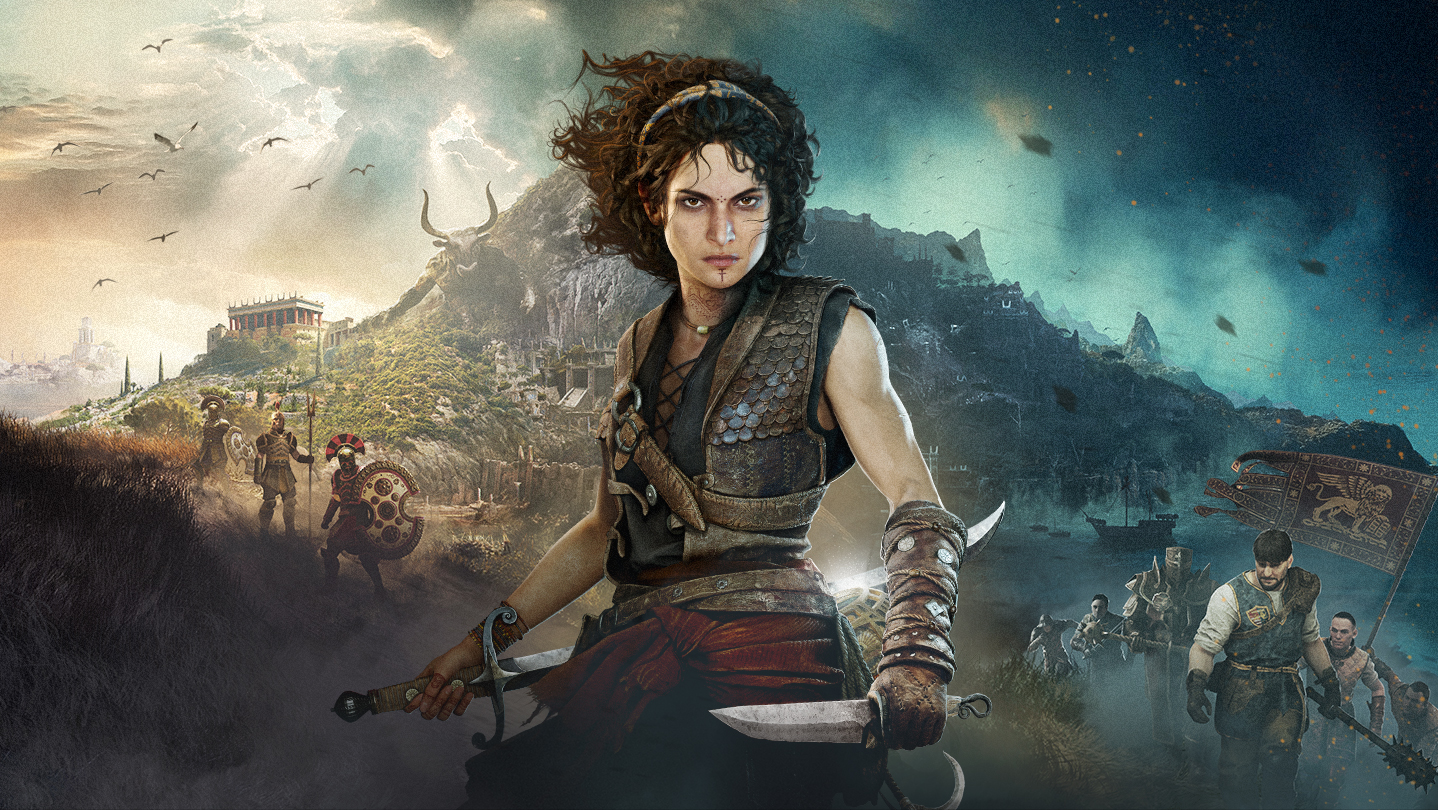
The store page makes three promises, and I would rank them by how much I trust each one: an original story, a prequel that stands on its own, and a monster sitting at the center of a curse. All three are technically accurate. The framing is also doing some quiet work, because this is Asobo coming back to the world of A Plague Tale through the side door rather than the front. Sophia leads instead of Amicia and Hugo, a sun-bleached island in the Minotaur's shadow stands in for plague-era France, and the whole thing is built around one location and one creature. If you read the word prequel and pictured a full third mainline entry, adjust now. Single-player only, PC at launch, tight premise. That is a focused side chapter, not a sprawling follow-up. Moment to moment, expect the series formula, which by now is a known quantity. Third-person, stealth first, with light and dark treated as an actual mechanic instead of a mood setting. Sophia already had the most interesting toolkit in Requiem, where she used a mirror to redirect sunlight into places you could not carry a torch into, and building a game around that idea makes more sense than building another one around a child clinging to your sleeve. Crouching through cover, throwing distractions, reading patrol routes, solving environmental puzzles that are really about routing a light source from one end of a room to the other, then the occasional burst of panic when a space turns hostile all at once. None of that will surprise a stealth veteran. It is well-machined rather than inventive, and that has been a fair trade in this series twice already. The reason to care is craft. Asobo's strongest muscle has always been atmosphere: lighting that carries the emotional weight, crowd and creature tech that makes a room feel genuinely unsafe, and sound design that knows exactly when to drop out to nothing. Moving that engine from muddy French villages to Aegean stone and glare is a smart change of palette, and the myth angle finally gives the team something the plague setting never allowed, which is a monster you are meant to look at directly. Greek myth is a structural gift too. Everyone already knows what a labyrinth means, so the game can skip the explaining and get straight to the pressure. HDR support and full DualSense implementation point at presentation being where the budget went, and on the evidence of the last two games, that is money well spent. The worries are the series' old ones, and I would not bet on this being the entry that solves them. Plague Tale combat has always been the weak link: stiff, over-reliant on instant-fail states, and quick to turn a tense stealth encounter into a memorized retry loop the second you get spotted. The chapter structure is linear to the point of being a corridor with very nice wallpaper, and if that shape annoyed you before, it will annoy you here. Prequels carry their own tax as well. You broadly know where these characters end up, so tension has to come from the situation rather than from any real doubt about survival. And a story built around confronting a single creature lives or dies on how that confrontation is designed, which is precisely the kind of set-piece boss encounter Asobo has historically handled with the least confidence. So, who is this for. If the island stretch of Requiem was your favorite part of that game, this is aimed straight at you. If you like slower, authored, one-and-done narrative adventures that you finish across a weekend and never touch again, that fits too. If you bounced off the stealth in the first two games, nothing about this suggests a change of heart is coming. And if you were hoping the series would open up, add systems, or hand you a reason to replay, this is not that game and does not appear to want to be. Go in expecting a beautifully lit, tightly scoped detour with good sound and a monster problem, and I think you will get exactly that.

Catch-all
Tags
System Requirements
Minimum
- OS
- Windows 10/11 64-bit
- Memory
- 16 GB RAM
- DirectX
- Version 12
- Storage
- 75 GB available space
- Graphics
- 6 GB VRAM, AMD Radeon RX 5500 XT / Nvidia GeForce GTX 1060
- Processor
- AMD Ryzen 3 3100 / Intel Core i3-12100
Recommended
- OS
- Windows 10/11 64-bit
- Memory
- 16 GB RAM
- DirectX
- Version 12
- Storage
- 75 GB available space
- Graphics
- 8GB VRAM, AMD Radeon RX 6700 XT / Nvidia GeForce RTX 3060 Ti
- Processor
- AMD Ryzen 5 5600X / Intel Core i5-12400F
Keep exploring
Community Discussion
Be the first to comment on Resonance: A Plague Tale Legacy.
Reviews & Ratings
Game Info
- Developer
- Asobo Studio
- Publisher
- Focus Entertainment
- Release Date
- Aug 27, 2026



![[1H = BADGE✅] Let's continue Resonance: A Plague Tale Legacy today! | Thank you for the 🔑| !holy](https://static-cdn.jtvnw.net/previews-ttv/live_user_lunateac-440x248.jpg)

