Railway Empire - The Great Lakes
Cash is easy, track is hard. A tycoon sim where the real boss fight is a four-way junction outside Chicago, not the rival railroad.
GamerScout Verdict
Buy it if junction design and signal timing sound like fun; skip it if you need rival AI that actually fights for the map.
Compare Prices(3 stores)
Every store in this table quotes us in euros, so the EUR figure is the price the seller actually set, not our arithmetic — which is why EUR is also the currency we rank in. We only list an offer here when the store gives us its price in euros, so nothing in this table is a number we invented.
Pick USD, PLN, GBP, CAD or AUD in the header and we convert from EUR at the European Central Bank reference rate — converted amounts are prefixed with ~. Your bank or the store may apply a different rate at checkout. We never hide offers based on where you are: everyone sees this whole table.
We may earn a commission when you buy games through links on this page — at no extra cost to you. It never affects our rankings or verdicts.
Price History
Screenshots & Media
About Railway Empire - The Great Lakes
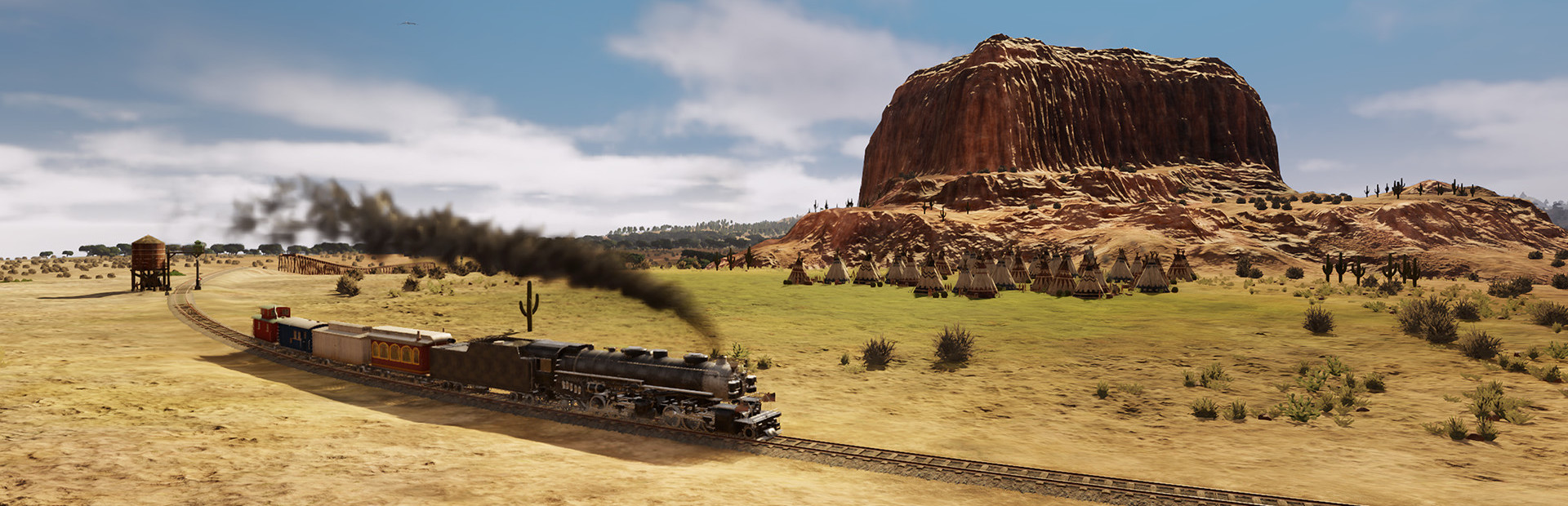
If your mental model of railway sims comes from OpenTTD or Transport Fever, recalibrate one number before you lay a single foot of track: cash. Railway Empire is absurdly generous with it. Loans are cheap, freight margins are fat, and you can bail yourself out of a bad decade without much drama. The constraint that actually kills runs here is throughput. Whether your junction outside Chicago can clear four trains an hour is the whole game, and the tutorial takes its sweet time telling you that. Mechanically you are hand-drawing track between 19th century American cities, dropping stations with a fixed number of platforms, and placing signals yourself. That last part is where the skill lives. A single line with one badly placed siding will deadlock two trains nose to nose and quietly stall an entire region while your balance sheet still looks healthy. Learn to double-track your mainline, keep block lengths honest, and give every terminus more platforms than you think you need, and the same map that felt broken starts humming. Terrain matters too: gradients cost you speed and tunnels cost you a fortune, so the cheap-looking route through the hills is often the one that strangles you three hours later. On top of the rails sits a supply chain layer. Farms feed breweries, cattle feed meatpacking, cities only grow when their demand for goods is actually met, and warehouses act as buffers so you are not routing every wagon point to point. There is also a research tree for locomotives and operational upgrades, plus a light business layer where you buy up rural producers and take stakes in rivals. Now the argument for buying this even if the phrase "200-hour sim" usually scares you off. The failure states are soft. You do not lose a 40-hour save to one bad decision the way you would in a Paradox campaign, you lose a few in-game years and some patience. The scenario campaign structures the learning, dropping you on a region with objectives and a clock so you are forced to absorb one system at a time. My actual recommendation for a first session is to ignore it. Start a free sandbox game on a small region, connect two cities with a proper double-track line, and watch the train frequency counter. Fifteen minutes of that teaches more than the scripted tutorial does. Controller support is full and genuinely usable, which is rare for a builder, so this plays fine from a couch. What it does not do is push back. The AI railroads are the weakest part of the design. They expand, they occasionally grab a city connection you wanted, and then they mostly sit there while you compound. If you came for a knife fight over the map, you will be disappointed by hour twenty. The late game drifts into maintenance mode, adding a station here, upgrading a locomotive there, with no real crisis to solve. Scenario objectives can also tip into busywork, chasing a specific delivery quota against a timer instead of building the network you actually want. Diagnostics are the other sore spot: when a network jams, the game will not point you at the offending block, so you find it by watching trains crawl and squinting at signal placement, and on a dense map that is genuinely tedious. The Workshop is here, but expect maps, locomotives and cosmetic work rather than rules overhauls, so do not buy this hoping mods will fix the opposition. Who should own it: anyone whose idea of a good evening is redesigning the same junction for the third time because the fourth train keeps losing seconds at a signal. Anyone who wants a logistics sim that respects a two-hour session and does not demand three wiki tabs. Anyone easing into strategy who wants depth without a punishment loop waiting at the end of it. Skip it if you need a competent opponent or a late game with teeth, because neither shows up. The player consensus lands roughly where I do: sturdy, slightly cozy, much better at teaching you throughput than at threatening you with anything.

Strategy & simulation
Tags
System Requirements
Minimum
- Processor
- Intel Core i5 750 @ 2.6 GHz or AMD Phenom II X4 @ 3.2 GHz
- Memory
- 4 GB RAM Graph…
Recommended
- Processor
- Intel Core i5 2400s @ 2.5 GHz or AMD FX 4100 @ 3.6
- Memory
- 8 GB RAM Graphics…
Keep exploring
Community Discussion
Be the first to comment on Railway Empire - The Great Lakes.
Reviews & Ratings
Game Info
- Developer
- Gaming Minds Studios
- Publisher
- Kalypso Media
- Release Date
- Jan 26, 2018