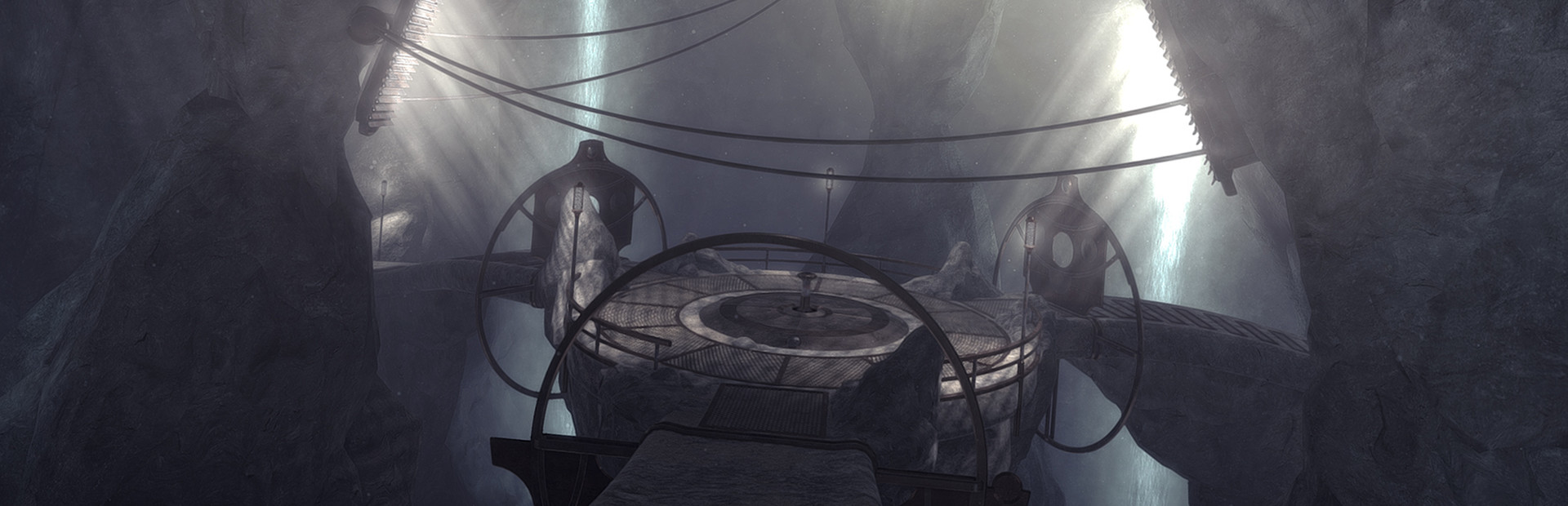

Quern: Undying Thoughts
Every gadget you unlock stays useful for the rest of the island, which turns backtracking into strategy rather than busywork. Bring a notepad and patience for long walks.
GamerScout Verdict
Best for patient Myst and Obduction fans who want tools that keep paying off instead of one-use keys.
Compare Prices(4 stores)
Every store in this table quotes us in euros, so the EUR figure is the price the seller actually set, not our arithmetic — which is why EUR is also the currency we rank in. We only list an offer here when the store gives us its price in euros, so nothing in this table is a number we invented.
Pick USD, PLN, GBP, CAD or AUD in the header and we convert from EUR at the European Central Bank reference rate — converted amounts are prefixed with ~. Your bank or the store may apply a different rate at checkout. We never hide offers based on where you are: everyone sees this whole table.
We may earn a commission when you buy games through links on this page — at no extra cost to you. It never affects our rankings or verdicts.
Price History
Screenshots & Media
About Quern: Undying Thoughts
The first real tool you pick up on Quern is not a key, and realising that changed how I played the rest of the island. Most first-person adventures hand you an object, point you at the one lock it fits, then quietly delete it from your inventory. Zadbox went the other way. Gadgets accumulate, they stay relevant, and later puzzles are designed assuming you own the whole kit. So instead of asking what a thing opens, you start asking what a thing does, and then you go hunting for places it might do it. That sounds like a small distinction on paper. In practice it rewires the entire loop, because a room you wrote off two hours ago becomes solvable the second you acquire something new, and the island keeps quietly reopening behind you. What you are signing up for is a Myst-like in the honest, unembarrassed sense. First person, no combat, no enemies, no way to die and no way to lock yourself out of a solution. You arrive with no explanation and no inventory, you poke at machinery, you read what previous occupants left behind, and you slowly assemble a picture of what went wrong here. The story is a slow burn told through environmental detail and documents rather than cutscenes, and it is far more interested in atmosphere than in explaining itself up front. The in-game notebook is the quality-of-life feature that carries the whole design: it logs symbols, diagrams and clues automatically, so you are not squinting at your monitor copying glyphs onto a napkin. You still might, on the nastier chains, but the game does most of the filing for you. The puzzle construction is why this has held a Very Positive Steam rating and low-80s critic scores for years now. Solutions are layered rather than arbitrary. A cryptic symbol you noticed in an outbuilding turns out to be the alphabet for a mechanism at the far end of the map, and the moment that connection lands it belongs entirely to you, not to a hint arrow. Difficulty escalates cleanly across the runtime, and there is a real authorial hand behind the sequencing, someone who paced the island so your competence grows at roughly the same rate as the challenge. Presentation punches above what a small studio should manage, too, with restrained ambient audio and lighting that makes the ruins read as abandoned rather than art-directed. Now the parts that will lose people. The walking is a lot. Because puzzles reference each other across the entire island, you will retread the same paths repeatedly, and there is no clever fix for that beyond patience and memorising the shortcuts. Late-game puzzles also lean harder on symbol interpretation than on mechanical logic, and if you bounce off that style of reasoning you will stall hard, because the notebook records information but never nudges you toward what to do with it. Controller support is partial and it shows; mouse and keyboard is the intended way to play. And the narrative, atmospheric as it is, stays sketchier than the puzzle work deserves. I came out of it caring more about the machines than the people who built them, which is not nothing, but it is not what the notes seem to be reaching for either. So who is this for? Anyone who finished Myst or Obduction and wants another island that respects a notebook. Anyone who plays puzzle games in long weekend sittings and enjoys watching a place slowly become legible. If you need combat, pacing spikes, or a story that hooks you in the first twenty minutes, look somewhere else, because this one asks for a couple of hours before it starts paying out. My one piece of practical advice: play it in big chunks rather than fifteen-minute bursts. The cross-map connections only click while the whole island is still loaded in your head, and the reusable-tool design punishes anyone who forgets what they are carrying.

Catch-all
Tags
System Requirements
Minimum
- Processor
- Intel Core i3-2100 or AMD equivalent
- Memory
- 3 GB RAM
- Graphics
- NVIDIA GTX 650 2GB or AMD HD7770 2GB
- Storage
- 9 GB available space
Recommended
- Processor
- Intel Core i7-3770K or AMD equivalent
- Memory
- 8 GB RAM
- Graphics
- NVIDIA GTX 950
- Storage
- 9 GB available space
Keep exploring
Community Discussion
Be the first to comment on Quern: Undying Thoughts.
Reviews & Ratings
Game Info
- Developer
- Zadbox Entertainment
- Publisher
- Blue Brain Games, Zadbox Entertainment
- Release Date
- Nov 28, 2016