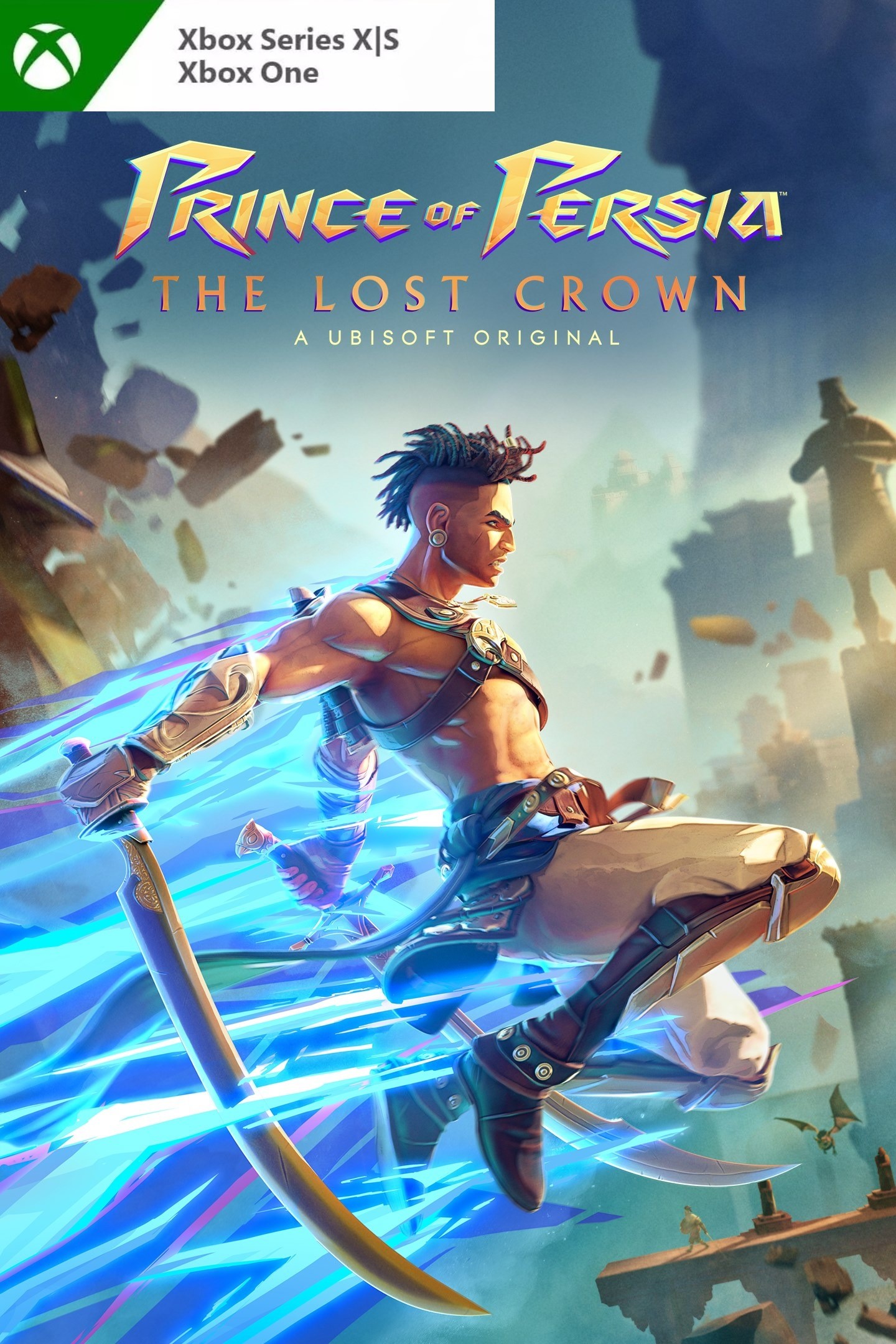
Compare Prince of Persia The Lost Crown prices across trusted key stores and find the best deal. Developed by UBISOFT. Published by UBISOFT MONTPELLIER. Released on 1/15/2024. Available on PC, Nintendo Switch, Xbox. Genres: Action, Adventure.

Demands frame-tight parries and a solid twenty hours on Mount Qaf before it gives much back, then pays out with the sharpest 2D boss fights and the smartest map screen in the genre.

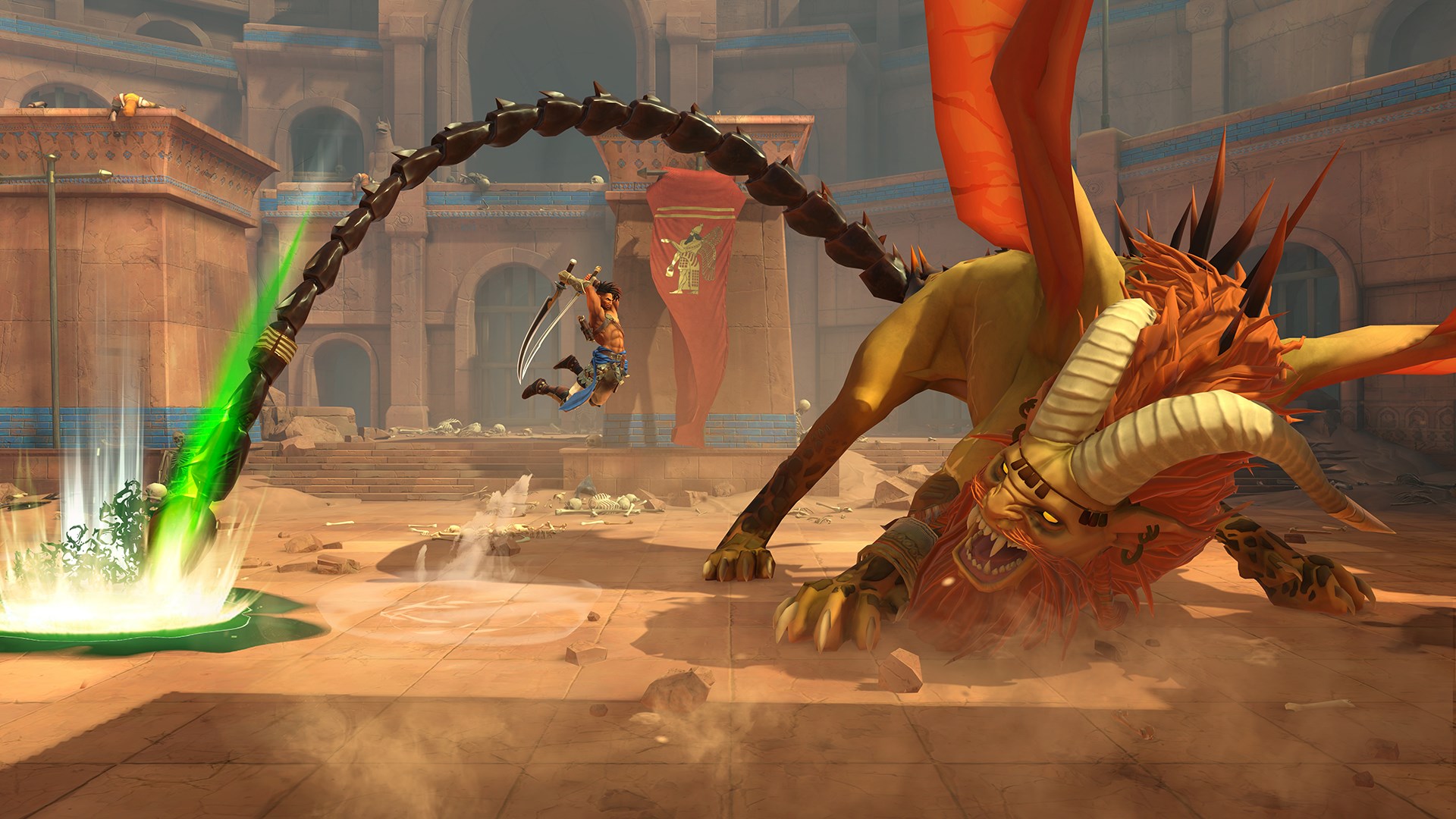
The first thing The Lost Crown asked me for was patience with my own hands. It wants clean parries on a window measured in frames, it wants you chaining an air dash into a wall jump into a bow shot without stopping to think, and it wants roughly twenty hours of that before it calls itself finished. Give it those things and it hands back one of the most precise 2D action games in recent memory. Refuse, and you will bounce off the second real boss, decide the game is unfair, and never see the half where it gets great. Mechanically this is a metroidvania built on a fighting game's spine. Sargon carries dual blades, a bow and a chakram, but the actual skill ceiling lives in the deflect. Enemy attacks flash white when they can be parried and glow yellow when they absolutely cannot, and learning to read that difference at speed is the entire curriculum. Land the parry and you get a slow-motion counter with real weight behind it. Build enough meter and you spend it on Athra Surges, the screen-clearing specials. Sitting under all of that is an amulet system: a limited grid of slots you fill with modifiers pushing you toward bleed damage, wider parry timing, faster meter generation or plain survivability. It is not a deep build system by RPG standards, but it shifts how fights feel far more than the slot count suggests. The traversal powers are where the game stops feeling like corporate output and starts feeling like it was made by people who genuinely love platformers. The Shadow of the Simurgh drops a marker and snaps you back to it, which turns big chunks of the late game into puzzles about where to leave a copy of yourself. Stack the air dash, the aerial hover and a claw that tears through amber barriers on top, and Mount Qaf becomes a playground you can cross in ways the opening hours never hinted at. The Memory Shard system deserves specific credit too: at any moment you can pin a screenshot of whatever is on screen straight onto the map, so the door you cannot open yet is an image rather than a note you scribbled and forgot. Every backtracking-heavy game released since should have stolen it. What it does poorly is nearly everything wrapped around the verbs. The story is a serviceable rescue plot with a couple of twists you will spot early, delivered in cutscenes with stiff dialogue and voice work that never quite lands. The art direction will split people; the environments are gorgeous and layered, while the character designs read generic next to them. Sargon's fellow Immortals are mostly names attached to boss health bars rather than people you care about. The optional platforming trials, meanwhile, are cruel in a way that feels bolted on, long unbroken chains of near-perfect inputs with checkpoints nowhere in sight. Some players love them. I mostly resented them. So who is this for? Anyone who liked Hollow Knight's bosses more than its melancholy, anyone who plays Ori for the movement rather than the sad bits, and anyone who has been waiting for a Prince of Persia that remembers the series began as a platformer. It is also unusually welcoming for something this demanding: you can tune parry windows, incoming damage and trap severity independently, and the map will either flag your objective or leave you to work it out from your own pins. A high skill ceiling with an adjustable floor is a rare combination and this game nails it. Ubisoft put it out, gave it very little runway and moved on, which stings, because on pure moment-to-moment feel it beats most of what the publisher has shipped this decade, and it is one of the few games I rolled credits on and then went straight back into for the post-launch content. Alex, Scout Team

Prince of Persia The Lost Crown

Prince of Persia The Lost Crown

Jan 15, 2024UBISOFTUBISOFT MONTPELLIER
GamerScout Says

Demands frame-tight parries and a solid twenty hours on Mount Qaf before it gives much back, then pays out with the sharpest 2D boss fights and the smartest map screen in the genre.

PCNintendo SwitchXbox
Best Price Available
€8.71
at Kinguin
Lowest tracked: €8.71
Track this price

GamerScout Verdict

For action-platformer players who want bosses that punch back; skip it if frame-tight parrying sounds like homework.

Compare Prices(6 stores)

KinguinBest price
StandardGlobalUbisoft ConnectKey
€8.71
Priced in EUR by the store
Buy
StandardGlobalUbisoft ConnectKey
€8.98
Priced in EUR by the store
Buy
StandardEurope (EU)Ubisoft ConnectKey
€9.82
Priced in EUR by the store
Buy
StandardUnited StatesSteam KeyKey
€10.99
Priced in EUR by the store
Buy
StandardGlobalSteam KeyKey
€11.10
Priced in EUR by the store
Buy

Every store in this table quotes us in euros, so the EUR figure is the price the seller actually set, not our arithmetic — which is why EUR is also the currency we rank in. We only list an offer here when the store gives us its price in euros, so nothing in this table is a number we invented.

Pick USD, PLN, GBP, CAD or AUD in the header and we convert from EUR at the European Central Bank reference rate — converted amounts are prefixed with ~. Your bank or the store may apply a different rate at checkout. We never hide offers based on where you are: everyone sees this whole table.

We may earn a commission when you buy games through links on this page — at no extra cost to you. It never affects our rankings or verdicts.

Price History

Lowest tracked
€8.7131 Aug 2026
Current best
€8.71
Lowest since we started tracking
Keyshops
€8.61€8.96€9.30€9.6524 Aug26 Aug28 Aug29 Aug31 Aug
Tracking prices since 24 Aug 2026
Create alert

Screenshots & Media

Screenshot

About Prince of Persia The Lost Crown

The first thing The Lost Crown asked me for was patience with my own hands. It wants clean parries on a window measured in frames, it wants you chaining an air dash into a wall jump into a bow shot without stopping to think, and it wants roughly twenty hours of that before it calls itself finished. Give it those things and it hands back one of the most precise 2D action games in recent memory. Refuse, and you will bounce off the second real boss, decide the game is unfair, and never see the half where it gets great. Mechanically this is a metroidvania built on a fighting game's spine. Sargon carries dual blades, a bow and a chakram, but the actual skill ceiling lives in the deflect. Enemy attacks flash white when they can be parried and glow yellow when they absolutely cannot, and learning to read that difference at speed is the entire curriculum. Land the parry and you get a slow-motion counter with real weight behind it. Build enough meter and you spend it on Athra Surges, the screen-clearing specials. Sitting under all of that is an amulet system: a limited grid of slots you fill with modifiers pushing you toward bleed damage, wider parry timing, faster meter generation or plain survivability. It is not a deep build system by RPG standards, but it shifts how fights feel far more than the slot count suggests. The traversal powers are where the game stops feeling like corporate output and starts feeling like it was made by people who genuinely love platformers. The Shadow of the Simurgh drops a marker and snaps you back to it, which turns big chunks of the late game into puzzles about where to leave a copy of yourself. Stack the air dash, the aerial hover and a claw that tears through amber barriers on top, and Mount Qaf becomes a playground you can cross in ways the opening hours never hinted at. The Memory Shard system deserves specific credit too: at any moment you can pin a screenshot of whatever is on screen straight onto the map, so the door you cannot open yet is an image rather than a note you scribbled and forgot. Every backtracking-heavy game released since should have stolen it. What it does poorly is nearly everything wrapped around the verbs. The story is a serviceable rescue plot with a couple of twists you will spot early, delivered in cutscenes with stiff dialogue and voice work that never quite lands. The art direction will split people; the environments are gorgeous and layered, while the character designs read generic next to them. Sargon's fellow Immortals are mostly names attached to boss health bars rather than people you care about. The optional platforming trials, meanwhile, are cruel in a way that feels bolted on, long unbroken chains of near-perfect inputs with checkpoints nowhere in sight. Some players love them. I mostly resented them. So who is this for? Anyone who liked Hollow Knight's bosses more than its melancholy, anyone who plays Ori for the movement rather than the sad bits, and anyone who has been waiting for a Prince of Persia that remembers the series began as a platformer. It is also unusually welcoming for something this demanding: you can tune parry windows, incoming damage and trap severity independently, and the map will either flag your objective or leave you to work it out from your own pins. A high skill ceiling with an adjustable floor is a rare combination and this game nails it. Ubisoft put it out, gave it very little runway and moved on, which stings, because on pure moment-to-moment feel it beats most of what the publisher has shipped this decade, and it is one of the few games I rolled credits on and then went straight back into for the post-launch content.
Alex
Alex · Scout Team

Catch-all

Tags

auto-admittedMetroidvaniaParry-Based CombatPrecision PlatformingTime ManipulationBoss GauntletPersian MythologyCustom Difficulty SlidersMap Screenshot PinsAmulet Builds

System Requirements

System requirements for Prince of Persia The Lost Crown aren't listed yet. Check the store page for the latest specs.

Keep exploring

Community Discussion

Be the first to comment on Prince of Persia The Lost Crown.

Reviews & Ratings

No ratings available

Game Info

Developer
UBISOFT
Publisher
UBISOFT MONTPELLIER
Release Date
Jan 15, 2024

Price Alert

Get notified when the price drops below your target!

Create Alert
Best price€8.71
See offer

Across the 23,983 games we track, a verified key was cheaper than the official store 90% of the time. See the method and the full numbers in our game price report.

No card? Pay another way

Top up your Steam Wallet or buy crypto with any card — instant delivery, no bank account needed.

Buy smarter: helpful guides

Frequently asked questions about Prince of Persia The Lost Crown

How much does Prince of Persia The Lost Crown cost?

As of 31 August 2026, the cheapest in-stock offer for Prince of Persia The Lost Crown is €8.71 at Kinguin, out of 51 live offers we track across verified key stores. Prices change daily — the table on this page is refreshed continuously.

Where can I buy Prince of Persia The Lost Crown cheapest?

The lowest in-stock price we track for Prince of Persia The Lost Crown is €8.71 at Kinguin (31 August 2026). We compare 51 live offers from verified key stores — the full table with every store and its trust score is on this page.

What platforms is Prince of Persia The Lost Crown available on?

Prince of Persia The Lost Crown is available on PC, Nintendo Switch, Xbox.

When was Prince of Persia The Lost Crown released?

Prince of Persia The Lost Crown was released on 15 January 2024.

Who developed Prince of Persia The Lost Crown?

Prince of Persia The Lost Crown was developed by UBISOFT and published by UBISOFT MONTPELLIER.