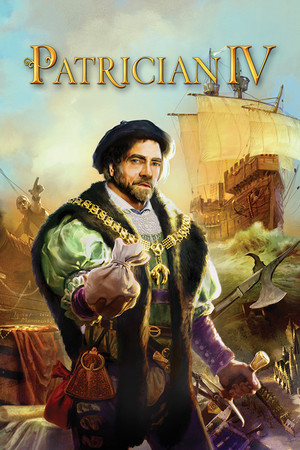
Patrician IV Special Edition
Four automated convoys and a good price table are all it takes to own the Baltic, which is both the appeal and the problem once the late game stops fighting back.
GamerScout Verdict
Best for economy-sim newcomers who want a readable medieval supply chain, not for anyone chasing a demanding late game.
Compare Prices(1 stores)
Every store in this table quotes us in euros, so the EUR figure is the price the seller actually set, not our arithmetic — which is why EUR is also the currency we rank in. We only list an offer here when the store gives us its price in euros, so nothing in this table is a number we invented.
Pick USD, PLN, GBP, CAD or AUD in the header and we convert from EUR at the European Central Bank reference rate — converted amounts are prefixed with ~. Your bank or the store may apply a different rate at checkout. We never hide offers based on where you are: everyone sees this whole table.
We may earn a commission when you buy games through links on this page — at no extra cost to you. It never affects our rankings or verdicts.
Price History
Screenshots & Media
About Patrician IV Special Edition
The automated trade route is the mechanic that defines this game, and it rewires how you play inside the first hour. You point a convoy at a handful of towns, set a buy ceiling for hemp in one port and a sell floor for cloth in another, and from that moment you stop being a merchant and start being the person who designs merchants. My first loop out of a home port was a sloppy four-town circuit that still turned a profit, because the medieval Baltic is generous to anyone willing to read a price column. My fourth route was a tuned machine with escorts, seasonal stock buffers and a deliberate detour to dump surplus salt. The gap between those two routes is where the actual game lives, and it is a genuinely satisfying place to spend a few dozen hours. Underneath the routing screen sits a supply chain sim with real structure. Towns consume goods based on population and satisfaction, prices move when you drain or flood a market, and the production side asks you to buy land, put up workshops, and feed them inputs you either produce yourself or ship in. Grain into beer, timber and pitch into hulls, hemp into rope and sail. Your fleet scales from cheap coastal runners up to the fat cargo haulers, and every upgrade is a math problem about hold space versus speed versus the pirate risk on that leg. Layered over the economy is a reputation ladder that moves you from freelance trader toward civic office in the Hanse, gated by missions, donations and how well you keep your home town fed. It is legible in a way most economy games are not. Nothing important is hidden behind a mystery formula. This is also the grand-strategy-adjacent purchase I recommend to people who bounce off the genre, and I will defend that. Nothing here is real time in the panic sense. You can pause, you can slow the clock, there is no ideology screen, no war exhaustion, no wiki tab required. The tutorial is dated but it is honest about the fundamentals, and the numbers you need are on screen rather than three menus deep. My advice for a first run: pick one home port, build exactly one route with two goods, and do not touch construction until that route is paying for itself. Learn why a price crashes before you own a production chain that depends on it. Do that and the first ten hours teach you more about supply chains than most modern sims manage in fifty. The trouble is what happens after those ten hours. The economy has no answer to a competent player. Once your capital compounds, the AI traders stop being rivals and become scenery, the market never punishes you hard enough to force a rethink, and the only real friction left is piracy, which escorts and convoy sizing solve permanently. The political layer that should carry the back half turns into a mission checklist rather than a system with teeth, and empire growth means more clicking, not harder decisions. That is what the mixed Steam standing and the middling critic scores are pointing at, and I think the complaint is fair. There is no meaningful mod scene to patch the ceiling either, and it is single-player only, so nobody is supplying the opposition the AI won't. The Special Edition packaging is the fuller version of the 2010 release and the one to play, but it does not change the shape of the curve. So buy it for the on-ramp, not the marathon. If you want a medieval economy you can actually read, where a well-planned convoy loop feels like solving something, this delivers that cleanly and it stays comfortable the whole way. If you want an economic sandbox that keeps escalating, that fights back at hour sixty, that punishes a lazy build order, look at something with sharper competitors. I keep coming back to it every couple of years for the same reason: the first evening of route planning is quietly excellent, and I have learned to stop playing around the point the silver becomes automatic.

Strategy & simulation
Tags
System Requirements
Minimum
- Processor
- 2 GHz
- Memory
- 1 GB Hard Disk Space:5 GB Video Card:256 MB DirectX 9.0c compatible PCIe (Geforce 6 Series/Radeon X1000 Series) Sound:DirectX compatible DirectX®:9.0c
Keep exploring
Community Discussion
Be the first to comment on Patrician IV Special Edition.
Reviews & Ratings
Game Info
- Developer
- Gaming Minds Studios
- Publisher
- Kalypso Media Digital
- Release Date
- Sep 17, 2010