No Place for Bravery
A father's grief encoded in pixel art and stamina bars - haunting story, uneven combat, made by two people who shipped anyway.
GamerScout Verdict
Buy for the story if you can tolerate uneven combat; skip if tight Souls mechanics are non-negotiable.
Compare Prices(5 stores)
Every store in this table quotes us in euros, so the EUR figure is the price the seller actually set, not our arithmetic — which is why EUR is also the currency we rank in. We only list an offer here when the store gives us its price in euros, so nothing in this table is a number we invented.
Pick USD, PLN, GBP, CAD or AUD in the header and we convert from EUR at the European Central Bank reference rate — converted amounts are prefixed with ~. Your bank or the store may apply a different rate at checkout. We never hide offers based on where you are: everyone sees this whole table.
We may earn a commission when you buy games through links on this page — at no extra cost to you. It never affects our rankings or verdicts.
Price History
Screenshots & Media
About No Place for Bravery
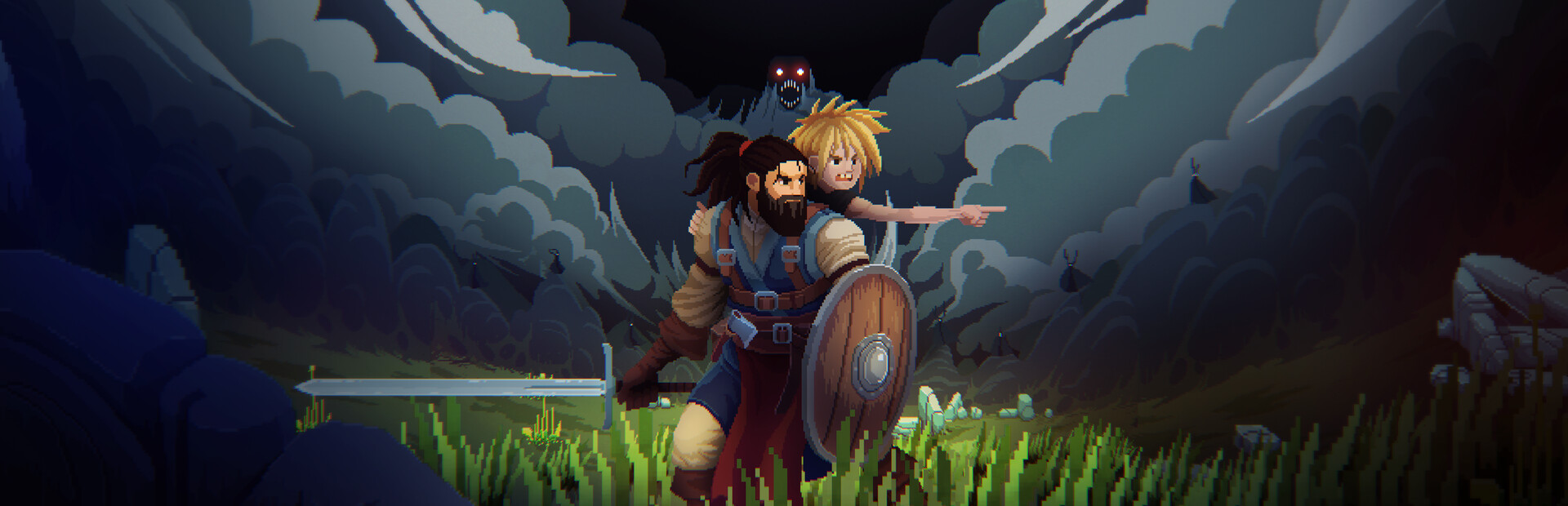
I went in expecting a serviceable Souls-lite with a thin emotional wrapper. What I found instead was a game that leads with its heart so completely that the combat's rough edges almost become part of the texture. Glitch Factory - reduced to just two developers after funding collapsed before launch - shipped No Place for Bravery anyway, and that context bleeds through every scene. The narrative follows Thorn, a broken former Guardian who carries his adopted son Phid on his back while hunting the warlock who took his daughter Leaf years earlier. The story draws on the developers' own experiences with toxic relationships and absent parents, and that real-world weight is palpable. Fake endings, genuine twists, and a central question about whether all the violence was ever worth it make this one of the more emotionally honest dark-fantasy narratives in the indie space. Combat sits in the Sekiro family tree: stamina management, a poise bar that staggers enemies when depleted through sustained blocking, color-coded attacks that signal whether to parry or dodge, and a brutal execution system that camera-zooms in when you finish a staggered foe. You start with sword and shield, unlock a hammer and a crossbow as you progress, and each weapon carries its own skill tree purchasable with dropped currency rather than a traditional level-up system. On paper that progression feels freeing - you are not locked into a stat build from hour one. In practice, reviewers have noted that the upgrade items gating certain skills reduce customization to a waiting game rather than genuine choice. The throwable items (poison pots, explosive pots) add some tactical texture in later areas, but the core moveset stays narrow throughout. Where the game gets contentious is combat feel. The parry window is tight and satisfying when it clicks, boss encounters demand real pattern study, and the execution animations are genuinely visceral in a way that reinforces Thorn's exhausted brutality. But input responsiveness has been a documented pain point - animations carry wind-up that can swallow a dodge input, and multi-enemy rooms where archers combine with platforming gaps punish players in ways that feel less designed and more accidental. Glitch Factory issued a substantial post-launch overhaul that added cancellation frames, separated stance damage from base health, and made the sidestep invulnerable during its active frames - meaningful fixes that moved the needle. The version you can play now is meaningfully better than what critics reviewed at launch, even if the Steam score still reflects that rougher first impression. The pixel art deserves a slower look than the screenshots suggest. Outdoor environments are dense with color and incidental life - a frozen mountain pass, a decaying village - and the camera occasionally pulls back to frame a full room before snapping tight for a cutscene. The soundtrack does what a good atmospheric score should: it underlines grief and dread without announcing itself. Running time lands around eight to ten hours, and the game earns most of that. Multiple endings give a reason to sit with the final choices rather than just roll credits and move on. The lore dump in the opening hours is its own obstacle - names and factions arrive faster than context - but it settles once Thorn's personal stakes lock into focus. This is a game for players who can forgive mechanical imprecision when the emotional payoff is genuine, and who appreciate that two people finishing something this ambitious at all is itself a form of stubbornness worth respecting. If polished combat is the only reason you show up to a Souls-like, look elsewhere. If you want a dark, short, handcrafted story about the cost of obsession wrapped in deliberate pixel artistry and a score that lingers, this quiet underdog has more to say than its mixed reception implies.

Indie & narrative
Tags
System Requirements
Minimum
- OS
- Windows 10
- Memory
- 4 GB RAM
- DirectX
- Version 11
- Storage
- 2 GB available space
- Graphics
- GeForce GTX 660, Radeon R7 370 or equivalent with 2 GB of video RAM
- Processor
- 2.8 GHz Dual Core CPU
Recommended
Requires a 64-bit processor and operating system
Keep exploring
Community Discussion
Be the first to comment on No Place for Bravery.
Reviews & Ratings
Game Info
- Developer
- Glitch Factory
- Publisher
- Ysbryd Games
- Release Date
- Sep 22, 2022