
Murders on the Yangtze River
Six murder cases set in late Qing dynasty China, with a soundtrack that earns its own appreciation post and a setting the genre has almost never touched before.
GamerScout Verdict
Ideal for Ace Attorney fans who want the formula grounded in a historically rich setting they have almost certainly never played before.
Compare Prices(5 stores)
Every store in this table quotes us in euros, so the EUR figure is the price the seller actually set, not our arithmetic — which is why EUR is also the currency we rank in. We only list an offer here when the store gives us its price in euros, so nothing in this table is a number we invented.
Pick USD, PLN, GBP, CAD or AUD in the header and we convert from EUR at the European Central Bank reference rate — converted amounts are prefixed with ~. Your bank or the store may apply a different rate at checkout. We never hide offers based on where you are: everyone sees this whole table.
We may earn a commission when you buy games through links on this page — at no extra cost to you. It never affects our rankings or verdicts.
Price History
Screenshots & Media
About Murders on the Yangtze River
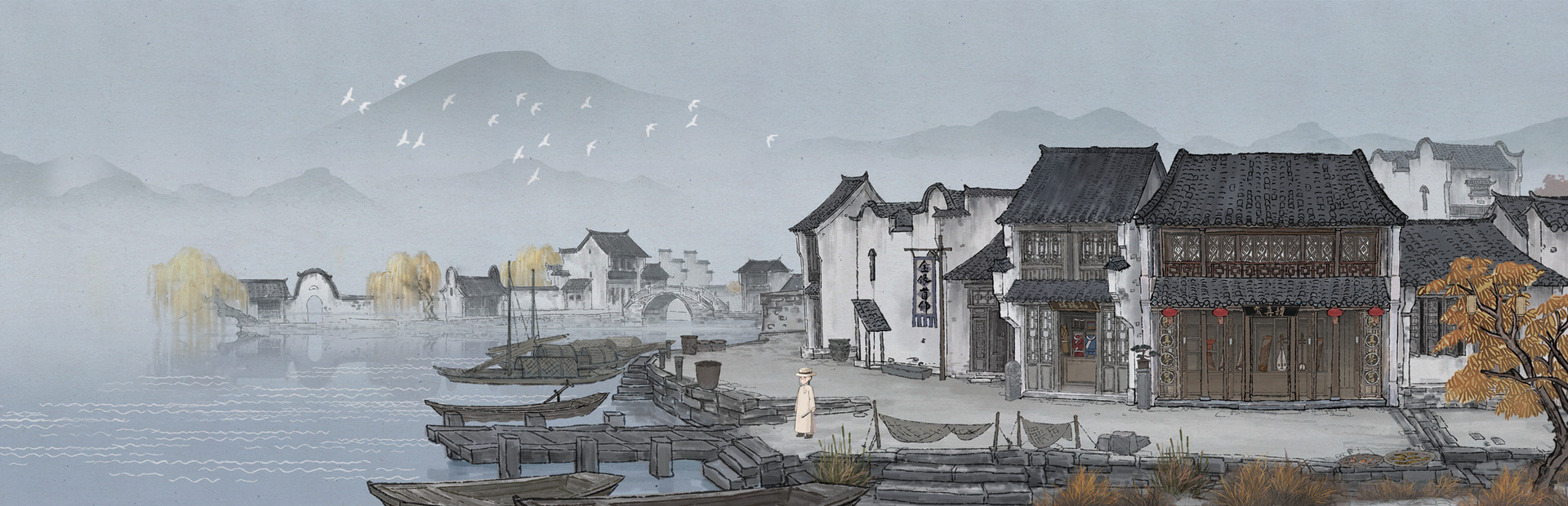
I went in expecting a competent Ace Attorney imitation and came out genuinely moved by the craftsmanship hiding inside this small Chinese indie. The setup is personal and precise: John Shen, a London-trained lawyer, returns to China after his brother's death is ruled a suicide but clearly isn't, and the investigation spills across six chapters of courtroom drama, 2D map exploration, and a Mind Palace deduction system that threads individual cases into a single overarching mystery. The setting is not decorative. Cases are rooted in opium trade politics, industrialization tensions, and the collision between Qing-era tradition and modernity, and the game regularly surfaces short historical notes that add genuine texture without stopping the pacing dead. The moment-to-moment structure will feel familiar to anyone who has spent time with the Ace Attorney series: you walk a 2D side-scrolling map, circle environmental details to log clues, interrogate witnesses by running down dialogue trees and flagging contradictions, then synthesize everything in the Mind Palace before a confrontation scene plays out to a dramatic musical swell. Shen even has a fan he snaps open when landing the killing blow of an argument, and yes, it is as satisfying as it sounds. The trial sequences, where evidence presentation drives the drama, are the clear high point. The earlier chapters lean accessible, sometimes to a fault: the Mind Palace occasionally solves itself with minimal input, and a handful of mini-puzzles introduce new mechanics without enough instruction. One late-game stealth segment in a police station is openly out of place and will frustrate players who came strictly for the deduction. Visually the game is split. Character portraits and cutscene art carry a gorgeous ink-wash quality that suits the period perfectly, but the chibi overworld sprites used for map navigation are a jarring contrast. That inconsistency is the one place the budget shows. The audio, though, more than compensates: the soundtrack combines traditional Chinese instrumentation with period-appropriate orchestration in a way that genuinely sets a mood, and the fully voiced courtroom scenes preserve the original Mandarin performances while exploration sections carry English subtitles only. A small cohort of players finds the lack of a full English voice track a dealbreaker, so that is worth knowing going in. The English localization, added a couple of months after the original Chinese release, is mostly clean with only occasional awkward phrasing. The game runs to around seven or eight hours for a focused playthrough, and chapter-select after credits lets you return for missed achievements and alternate endings, which are handled as consequence screens rather than full branching routes. The Steam community reception sits at overwhelmingly positive with a large review count, which for a translated Chinese indie is a meaningful signal. For players who want a detective game where the setting carries actual historical weight and the music is worth sitting still for, this one is quietly special.

Indie & narrative
Tags
System Requirements
Minimum
- OS
- Windows 7
- Memory
- 8 GB RAM
- DirectX
- Version 9.0
- Storage
- 8 GB available space
- Graphics
- Intel GMA 950
- Processor
- Intel(R) Core(TM) i5-4590 CPU @3.3GHz
Recommended
16 GB RAM
Keep exploring
Community Discussion
Be the first to comment on Murders on the Yangtze River.
Reviews & Ratings
No ratings available
Game Info
- Developer
- OMEGAMES STUDIO
- Publisher
- OMEGAMES STUDIO
- Release Date
- Jan 30, 2024