
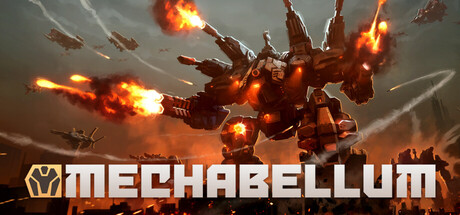
Mechabellum
An auto-battler where you never click during the fight and still lose entirely on merit. Brutal counter-math, zero APM, and a ranked ladder that will happily eat your week.
GamerScout Verdict
Buy it for chess-like army drafting with no clicking; skip it if you need a campaign or an AI worth practising against.
Compare Prices(6 stores)
Every store in this table quotes us in euros, so the EUR figure is the price the seller actually set, not our arithmetic — which is why EUR is also the currency we rank in. We only list an offer here when the store gives us its price in euros, so nothing in this table is a number we invented.
Pick USD, PLN, GBP, CAD or AUD in the header and we convert from EUR at the European Central Bank reference rate — converted amounts are prefixed with ~. Your bank or the store may apply a different rate at checkout. We never hide offers based on where you are: everyone sees this whole table.
We may earn a commission when you buy games through links on this page — at no extra cost to you. It never affects our rankings or verdicts.
Price History
Screenshots & Media
About Mechabellum
Round seven, I dumped my entire bank into a second Melting Point because my opponent had been stacking Fortresses for three rounds straight. He read it. He added a flight of Wasps, they drifted over my front line, and both of my beam units died before either one finished charging. The fight took under fifteen seconds, and I spent the rest of the evening rebuilding the round-five decision that actually lost it. Nothing gets clicked once the battle starts here. You draft, you place, you pick one upgrade out of a handful, you hit ready, and then you watch your reasoning get audited by physics. The loop is deployment phase, battle, reinforcement pick, repeat, with your supply income growing each round and both sides bleeding health when a fight goes badly enough. Units come from a pool you buy into: cheap Crawler swarms, Fang infantry, anti-air Marksmen, artillery like Stormcallers, and the big-ticket armour that only pays off if it lives long enough to matter. Each unit line carries its own upgrade options, so a Vulcan with the right tech stops being mid-round filler and becomes the thing that erases entire swarms in one pass. Placement is the other half of the game. The deployment grid decides engagement order, and shifting a squad two tiles left is frequently a bigger swing than the unit you just bought. What keeps me queueing is that the counter web is legible without being solvable. Anti-air exists, so pure air loses. Splash exists, so pure swarm loses. Armour exists, so pure chip damage loses. The interesting variable is timing. Commit to a counter too early and you have paid for an answer to a threat your opponent quietly abandoned; commit too late and you are already down two rounds of health. Strong players are running a rolling estimate of what the other side can afford next round, and the reinforcement cards offered between fights (extra income, a free tech, a one-off strike) turn that estimate into a gamble with real odds attached. The late rounds are where it earns the strategy genre tag, because by then both armies are wide enough that a single misplacement cascades down the whole line. Now the part I usually have to argue. This is a friendlier purchase for a newcomer than the mech art and the ranked ladder suggest. The tutorial covers the interface and little else, which is the genuine weakness, but the game does something most strategy titles refuse to do: it hides almost nothing. Unit stats, counters and upgrade costs are all readable from the deployment screen, so learning is inspection rather than memorisation of numbers buried in a wiki. My advice for the first ten hours is to ignore variety completely. Pick three units, learn precisely what kills them, and lose deliberately in Survival Mode until you can call the outcome of a fight before pressing ready. Twenty games in, you will be reading boards instead of guessing at them. That is a far shorter on-ramp than any grand-strategy campaign I have written about. Where it disappoints: the solo content is thin. Survival Mode is a decent practice range and a fun escalation puzzle, but the AI does not bluff, does not adapt its economy, and stops teaching you anything well before the human ladder does. If you came for a campaign, the singleplayer label is doing heavy lifting. Balance moves as well, and a patch that retunes one unit line can quietly invalidate the opening you spent a month drilling, which is either the appeal or the frustration depending on your temperament. 2v2 is chaotic in a good way, but only if your partner actually communicates, and free-for-all lands closer to a party mode than a real test of skill. If you were hoping a mod scene would keep extending the roster for you, temper that and judge it on the box it ships in. I still fire it up most nights, which is the only score I trust from myself.

Strategy & simulation
Tags
System Requirements
Minimum
- OS
- Windows 8 and above (64 bits)
- Memory
- 6 GB RAM
- Network
- Broadband Internet connection
- Storage
- 15 GB available space
- Graphics
- AMD Radeon™ HD 7730, NVIDIA GeForce® GT 640
- Processor
- Intel, AMD 2 cores CPU at 2Ghz
Recommended
- OS
- Windows 10 or higher
- Memory
- 16 GB RAM
- DirectX
- Version 12
- Network
- Broadband Internet connection
- Storage
- 20 GB available space
- Graphics
- NVIDIA GeForce RTX 2080 / AMD Radeon RX 6700 XT
- Processor
- Intel Core i7- 8 Gen / AMD Ryzen 5 5600X 6 cores 3.7 GHz
Keep exploring
Community Discussion
Be the first to comment on Mechabellum.
Reviews & Ratings
No ratings available
Game Info
- Developer
- Game River
- Publisher
- Dreamhaven
- Release Date
- Sep 26, 2024
