Logiart Grimoire
If you have ever stared at a Picross grid for an hour and called it relaxing, Jupiter finally made a PC debut worth losing a weekend to. Over 400 puzzles, a clever unlock system, and a tutorial that actually teaches advanced logic.
GamerScout Verdict
Best for nonogram fans ready for serious grid difficulty, and newcomers who want the most beginner-friendly entry point in the genre.
Compare Prices(4 stores)
Every store in this table quotes us in euros, so the EUR figure is the price the seller actually set, not our arithmetic — which is why EUR is also the currency we rank in. We only list an offer here when the store gives us its price in euros, so nothing in this table is a number we invented.
Pick USD, PLN, GBP, CAD or AUD in the header and we convert from EUR at the European Central Bank reference rate — converted amounts are prefixed with ~. Your bank or the store may apply a different rate at checkout. We never hide offers based on where you are: everyone sees this whole table.
We may earn a commission when you buy games through links on this page — at no extra cost to you. It never affects our rankings or verdicts.
Price History
Screenshots & Media
About Logiart Grimoire
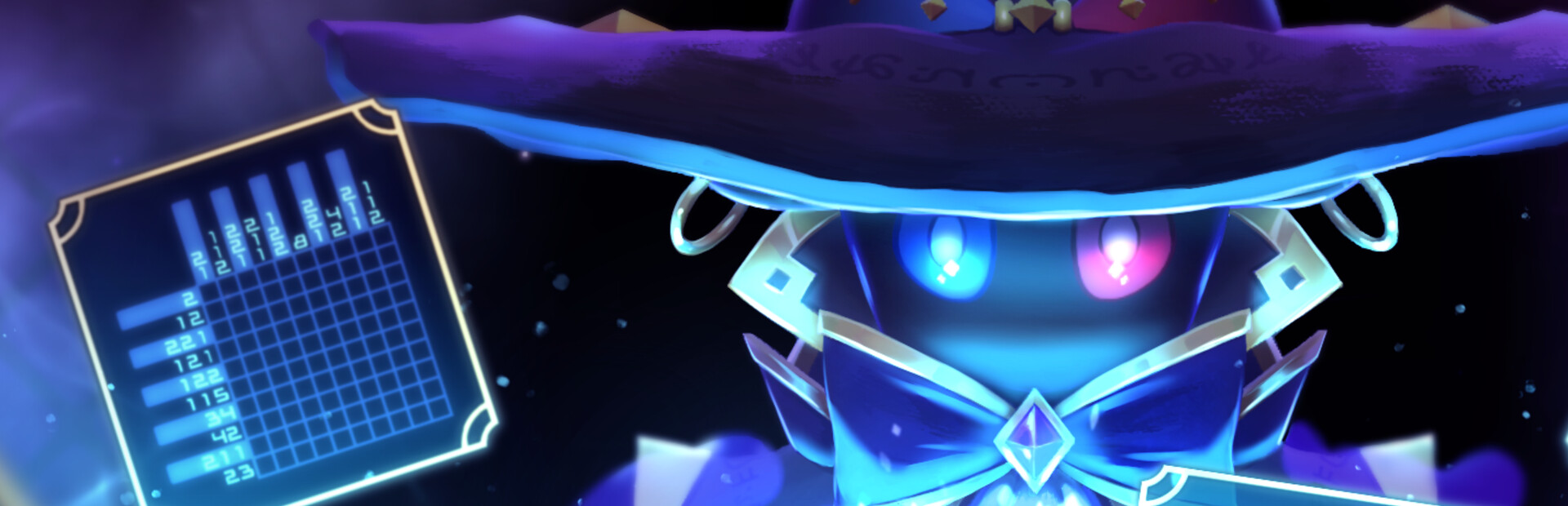
I went in expecting a competent but dry nonogram collection and came out genuinely impressed by how much structural thinking Jupiter packed into what looks, on the surface, like a cozy indie puzzler. Logiart Grimoire is the first PC release from a developer that has been refining nonogram design since the Super NES era, and that pedigree shows in every grid. The core loop works in two layers. First, you solve Logiart puzzles, which are nonograms (also known as Picross or Griddlers) where numerical clues on each row and column tell you which cells to fill. Grid sizes run from approachable 5x5 grids all the way to brutal 40x30 monsters that players in the community have reportedly spent hours grinding through. Second, every solved puzzle becomes a material for Fusion, a word-deduction system where you combine two or three completed puzzles using hint text to deduce what new puzzle they unlock. Think of it as a light Doodle God mechanic stapled to a serious logic puzzle engine. Fusion stops the experience from feeling like a straight playlist of grids and creates a meta-puzzle layer that keeps your brain engaged between nonogram sessions. Some veteran players find the Fusion side obvious and secondary, and that criticism is fair, but it does a real job of scattering puzzle sizes across your session so you are not grinding ten 20x15s back to back before you earn the larger grids. The onboarding is genuinely one of the strongest in the genre. Tutorials are skippable if you already know nonogram logic, but there is also an advanced tutorial that covers solving techniques most other games never document. The assist suite is generous: you can reveal whether a row or column is correct, enable autocorrect, or use Hint Roulette to pre-fill a single row and column at the start of a puzzle. A 100-step rewind function means a slip of the mouse does not cost you a long solve. Crucially, the assist options can all be turned off if you want clean no-aid medals on every puzzle. For newcomers to the genre, this is probably the single most accessible entry point available on PC right now. For veterans, disabling assists and targeting the late-game 30x30 and 40x30 grids provides a challenge that earns the hours you put in. The content volume is solid. The main grimoire contains 280 puzzles, and a Kickstarter campaign added 115 bonus puzzles contributed by backers and the development team, bringing the total past 400. Emil, the grimoire's mascot custodian, gains rank as you solve puzzles and gradually unlocks higher fusion tiers and new thematic categories such as Primordial and Fantasy, the latter of which reportedly contains some of the hardest grids in the game. A paid DLC pack called Emil's Magic Training adds further puzzles. The pixel-art illustrations that emerge from completed grids are charming, though the quality varies, and some text in the game is clearly machine-translated from Japanese, which can make hint reading slightly awkward. Steam Deck players should also note that grids larger than 20x15 get cramped on a small screen. These are real friction points, but they do not erode the core quality of the puzzle design. From a strategy-and-systems angle, what I appreciate most is that the non-linear unlock structure avoids the perfectly linear difficulty ramp that makes most nonogram collections feel exhausting in the back half. Harder and easier puzzles are deliberately mixed within each rank tier, so you get breathing room after a difficult solve. The Steam user score sits at 95% positive across over 300 reviews, and that reflects a community that skews toward serious puzzle fans who find the depth-to-price ratio very favorable.

Strategy & simulation
Tags
System Requirements
Minimum
- OS
- Windows 10
- Memory
- 4 GB RAM
- Storage
- 2 GB available space
- Graphics
- DX10,DX11,DX12
- Processor
- Intel Core i3
Keep exploring
Community Discussion
Be the first to comment on Logiart Grimoire.
Reviews & Ratings
No ratings available
Game Info
- Developer
- Jupiter Corporation
- Publisher
- Jupiter Corporation
- Release Date
- Mar 15, 2024