
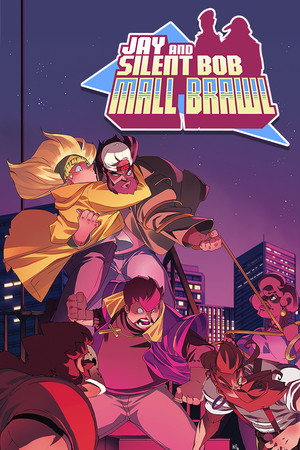
Jay and Silent Bob: Mall Brawl
A love letter to NES-era brawlers that lands squarely for Kevin Smith devotees and punishes everyone else with cheap AI and slippery hitboxes. Know what you're signing up for.
GamerScout Verdict
A faithful NES brawler that rewards View Askewniverse fans hard and tests everyone else's patience harder - best played with a friend on the couch.
Compare Prices(3 stores)
Every store in this table quotes us in euros, so the EUR figure is the price the seller actually set, not our arithmetic — which is why EUR is also the currency we rank in. We only list an offer here when the store gives us its price in euros, so nothing in this table is a number we invented.
Pick USD, PLN, GBP, CAD or AUD in the header and we convert from EUR at the European Central Bank reference rate — converted amounts are prefixed with ~. Your bank or the store may apply a different rate at checkout. We never hide offers based on where you are: everyone sees this whole table.
We may earn a commission when you buy games through links on this page — at no extra cost to you. It never affects our rankings or verdicts.
Price History
Screenshots & Media
About Jay and Silent Bob: Mall Brawl
I went in hoping Mall Brawl would be that quiet little licensed gem nobody talks about. What I found instead is something more complicated: a game with genuine handcraft behind it and a structural flaw baked into every screen. The setup pulls straight from Mallrats. Jay and Silent Bob have just torched a mall game show and need to punch their way back to the Quickstop through nine levels of escalating chaos. The setting does the work here. Levels rotate through a food court, a lingerie shop, an arcade, a bathroom, and even a roadway, and the enemy roster pulls from across the entire View Askewniverse: mall security, hockey hooligans, the Easter Bunny, a poop monster, and bosses that fans of Clerks, Chasing Amy, and Dogma will clock on sight. There is a Patrick Swayze boss. That is a real sentence. The references are dense enough that half the fun is recognizing them, and thin enough that newcomers will miss most of the joke. The dual-character mechanic is the one genuinely clever design choice. Playing solo, you swap between Jay and Silent Bob on the fly using a single button. The character sitting in reserve slowly regenerates health, but only while you keep moving and fighting. Park still and the recovery stops. It pushes you to stay aggressive and rotate intelligently, and in its best moments it creates a quiet rhythm that feels specific to this game and no other. Jay brings a propeller-leg combo, Silent Bob lands a whirlwind punch series, and building combos to trigger their specials has a low-fi satisfaction to it. Co-op hands each character to a separate player with a shared progress bar but no passive regen, which shifts the balance and makes the game feel more like the classics it models itself on. But the classics it models itself on were also kind of miserable in ways that have not aged well. Enemy hitboxes sit somewhere between suggestion and rumor. The dash move, activated by double-tapping the d-pad, fails often enough to feel actively hostile. Enemies read inputs in that old NES way, collapsing around you the moment you try to create space, pinching you into corners with a consistency that crosses the line from challenge into unfair. Weapons drop randomly, hit well for one encounter, then vanish when the screen scrolls. A save feature means you restart per-level rather than from the very beginning, which keeps frustration from becoming total, but the final stages pile on hard enough that even seasoned brawler fans have reportedly ground down on them. A post-launch patch removed a mandatory boss rush before the final fight, which was a meaningful quality-of-life fix and nudged the game from rough into merely uneven. The 8-bit presentation is earnest and charming. Sprites are clean, the chiptune soundtrack fits the tone, and the option to toggle CRT scanlines or swap between the original NES palette and a slightly warmer Arcade Mode color pass is a small touch that shows someone cared about the craft. It genuinely looks like something you might have rented in 1990 and not known was new. That authenticity is a double-edged thing: the game earns it honestly, and also inherits every limitation that came with the territory. Who is this for? Specifically: people who have watched Mallrats more than once, who remember Double Dragon II with fondness rather than horror, and who want something to share on a couch with another human. Solo players who are not deep Kevin Smith fans will likely bounce off around level six when the mall ninjas arrive and the novelty of the license has worn thin. The game clocks in around two to three hours depending on difficulty, which is about the right length for what it is. It knows when to end. I wish the controls had known when to cooperate.

Indie & narrative
Tags
System Requirements
Minimum
- OS
- Windows 10
- Memory
- 3 GB RAM
- Storage
- 200 MB available space
- Graphics
- Geforce 9600 GT or AMD HD 3870 512MB or higher
- Processor
- Intel Core2 Duo E8400, 3.0GHz or AMD Athlon 64 X2 6000+, 3.0GHz or higher
Keep exploring
Community Discussion
Be the first to comment on Jay and Silent Bob: Mall Brawl.
Reviews & Ratings
No ratings available
Game Info
- Developer
- Interabang Entertainment
- Publisher
- Interabang Entertainment
- Release Date
- May 7, 2020