
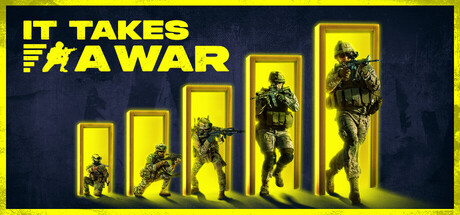
It Takes a War
Thomas Mackinnon hides a genuinely unsettling parasocial drama inside what looks, on the surface, like a bargain-bin Counter-Strike clone. One hour. Bring headphones.
GamerScout Verdict
Ideal for fans of The Stanley Parable or The Beginner's Guide willing to trust a slow opener for a genuinely affecting one-hour payoff.
Compare Prices(7 stores)
Every store in this table quotes us in euros, so the EUR figure is the price the seller actually set, not our arithmetic — which is why EUR is also the currency we rank in. We only list an offer here when the store gives us its price in euros, so nothing in this table is a number we invented.
Pick USD, PLN, GBP, CAD or AUD in the header and we convert from EUR at the European Central Bank reference rate — converted amounts are prefixed with ~. Your bank or the store may apply a different rate at checkout. We never hide offers based on where you are: everyone sees this whole table.
We may earn a commission when you buy games through links on this page — at no extra cost to you. It never affects our rankings or verdicts.
Price History
Screenshots & Media
About It Takes a War
I want to be honest with you: going in blind is the only right way to play this. The marketing is a deliberate lie, and a clever one. What looks like a low-budget tactical shooter from 2001 is actually a psychological narrative that uses the hollow shell of online multiplayer as its storytelling medium. Mackinnon did something similar with The Corridor, but here he goes darker, and the craft is noticeably sharper. You drop into a match alongside five teammates who are, apparently, already friends with each other. You're the odd one out, the silent newcomer whose voice chat is locked until the first match ends. That structural choice is doing a lot of work: it casts you as a passive observer of a friendship group in real time, listening to them chat about snacks and weekend plans between rounds. The three playable classes, Assault, Sniper, and Shotgun, are functionally there to give you something to do with your hands while the actual story builds around you. The gunplay is loose by design, the bot AI is deliberately shoddy, and the textures are intentionally lower resolution than the games they're parodying. None of that is an accident. The deliberate technical shoddiness is the point, a layer of stylistic distance that makes the moments when reality starts to crack feel genuinely vertiginous. Around the tenth round or so, doors start appearing that let you step into the real-world rooms of your teammates. Visual artifacts creep in. Voices say things the players insist they never said. The connection quality bar in the interface quietly degrades as the human connections in the story do the same. It is the kind of environmental storytelling that requires no tutorial, no cutscene, and no hand-holding: the game trusts you to feel the shift. Reviewers have drawn comparisons to The Stanley Parable and The Beginner's Guide, and those comparisons hold, though the emotional register here is less whimsical and closer to something you might describe as quiet dread. The sound design earns a special mention: there is essentially no music across the runtime, which means the voice acting carries all the atmospheric weight, and it carries it well. Headphones are not a suggestion. The honest criticism is that the early rounds drag. The repetitive loop of fighting the same map in the same shoebox arena does test your patience before the narrative screws start to turn. If you approach this expecting a conventional shooter, even a short one, the first fifteen minutes will feel like nothing. Sit with it. The pacing is intentional, and the payoff for the slow build is real. At around 45 to 60 minutes total, this is a game that knows exactly when to end, and the ending has earned genuine praise from players on itch.io and Steam alike.

Indie & narrative
Tags
System Requirements
Minimum
- OS
- Windows 10
- Memory
- 4 GB RAM
- Storage
- 15 GB available space
- Graphics
- Any at least semi-modern (non-integrated) graphics card should also be fine
- Processor
- Any at least semi-modern processor should work fine
- Sound Card
- Yes please
Recommended
- OS
- Windows 10
- Memory
- 4 GB RAM
- Storage
- 15 GB available space
Keep exploring
Community Discussion
Be the first to comment on It Takes a War.
Reviews & Ratings
No ratings available
Game Info
- Developer
- Thomas Mackinnon
- Publisher
- Pantaloon
- Release Date
- Nov 6, 2025