

Hacker Evolution: Duality
A command line puzzle campaign that scores you on efficiency, wrapped in a tutorial that teaches almost nothing. Optimizers will replay levels for weeks. Everyone else bounces inside twenty minutes.
GamerScout Verdict
Worth it only if you replay solved levels chasing a better score; anyone expecting a hacking sandbox should skip it.
Compare Prices(3 stores)
Every store in this table quotes us in euros, so the EUR figure is the price the seller actually set, not our arithmetic — which is why EUR is also the currency we rank in. We only list an offer here when the store gives us its price in euros, so nothing in this table is a number we invented.
Pick USD, PLN, GBP, CAD or AUD in the header and we convert from EUR at the European Central Bank reference rate — converted amounts are prefixed with ~. Your bank or the store may apply a different rate at checkout. We never hide offers based on where you are: everyone sees this whole table.
We may earn a commission when you buy games through links on this page — at no extra cost to you. It never affects our rankings or verdicts.
Price History
Screenshots & Media
About Hacker Evolution: Duality
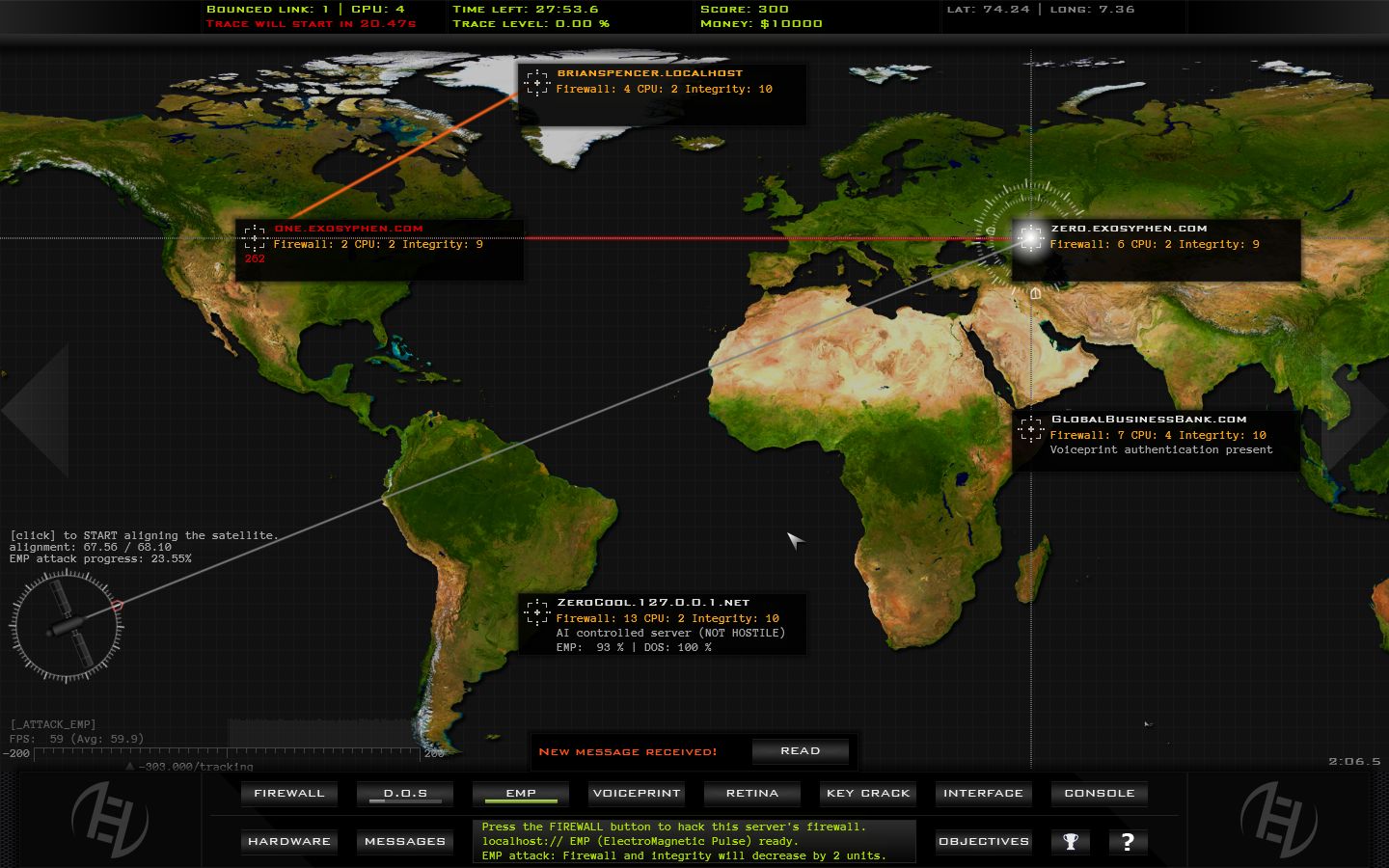
Buy this if you are the kind of player who reloads a cleared level to shave four seconds off a completion time, and walk away if you want a hacking sandbox where you improvise your way into a system. That one distinction decides everything about whether this 2011 release from exosyphen studios is worth your evening. The scoring, the Steam leaderboards and the achievement list all point the same direction: they reward the person who goes back to a mission they already beat and does it cleaner. If that loop does not appeal to you, nothing else in the package is going to change your mind. Structurally this is a level-based campaign, not an open network to wander. Each mission puts you at a retro terminal with a target, a set of machines to work through, and a trace meter that behaves exactly like a resource budget. Every action you take spends some of it, and when it empties, the run is over. So the actual decision space is ordering. Which machine do you touch first, which step can you skip entirely, where do you spend trace early to buy yourself a shortcut later. That is route planning, not simulation. The Uplink comparison people reach for is generous, because Uplink at least sold you the fiction that you were improvising. Here the solution path is largely fixed, and your job is to find it once and then execute it tighter every time after. For a specific type of player, that is genuinely good design. I like systems where the second run is more interesting than the first, and this one is built entirely around that idea. Levels are short enough that a failed attempt costs you two or three minutes rather than an evening, which is the correct shape for anything built on trial and error. The stat tracking means you can actually verify whether your new opening sequence beats your old one instead of guessing. Treat it as a compact collection of timed optimization puzzles with a scoreboard bolted on, and it holds up considerably better than its reputation implies. The problem is everything wrapped around that loop. The tutorial assumes you already speak the syntax it is about to test you on, which is the single biggest reason newcomers give up in the first half hour. Nothing here scaffolds a beginner. You are expected to memorize commands, and the game rarely explains why an approach failed, only that it did. That turns learning into guesswork, and guesswork against a strict trace budget is a miserable combination. There is no meaningful AI to outthink, no emergent behaviour that surprises you at hour thirty, and no mod scene to rebalance or extend any of it. It is single-player, it is finite, and it does not grow. The 34 percent positive rating across 553 Steam reviews is not a mystery to me. Most of those people arrived expecting a hacking power fantasy and got handed a syntax exam with a timer on it. So who should still pick this up. Players who read patch notes for fun and treat a leaderboard as a to-do list. If you go in accepting that the first hour is pure vocabulary work, keep a scratch file of the commands and sequences that worked, and approach each mission as a route to optimize rather than a story to experience, there is a spiky little puzzle game in here with real depth in a narrow band. That narrow band is the whole review. It does not widen, it does not soften, and the developers never patched in a friendlier on-ramp. Everyone else, and that means most people who click on this because the word hacker is in the title, will be frustrated fast and would not be wrong to move on. Go in as an optimizer or do not go in at all.

Strategy & simulation
Tags
System Requirements
Minimum
- OS
- Windows XP/Vista/7
- Processor
- 1Ghz CPU
- Memory
- 1Gb RAM Hard Disk Space: 100 Mb Video Card: OpenGL compliant video card DirectX®: 8.0 Sound: DirectX compliant sound card
Keep exploring
Community Discussion
Be the first to comment on Hacker Evolution: Duality.
Reviews & Ratings
Game Info
- Developer
- exosyphen studios
- Publisher
- exosyphen studios
- Release Date
- Aug 15, 2011

