
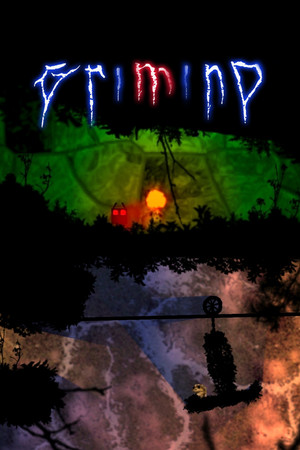
Grimind
A one-person horror platformer built almost entirely on atmosphere and friction - respect it on its own terms and it gets under your skin; fight it and you'll quit by chapter four.
GamerScout Verdict
Worth it for atmosphere-first players who can tolerate rough physics controls and an opaque save system across 15 short chapters.
Compare Prices(6 stores)
Every store in this table quotes us in euros, so the EUR figure is the price the seller actually set, not our arithmetic — which is why EUR is also the currency we rank in. We only list an offer here when the store gives us its price in euros, so nothing in this table is a number we invented.
Pick USD, PLN, GBP, CAD or AUD in the header and we convert from EUR at the European Central Bank reference rate — converted amounts are prefixed with ~. Your bank or the store may apply a different rate at checkout. We never hide offers based on where you are: everyone sees this whole table.
We may earn a commission when you buy games through links on this page — at no extra cost to you. It never affects our rankings or verdicts.
Price History
Screenshots & Media
About Grimind
I spent a couple of hours with Grimind in a dark room with headphones on, exactly as the opening screen requests, and I think that instruction is the single most honest piece of design documentation in the whole package. Developer Pawel Mogila built this game solo, and the seams show in specific, forgivable ways - but the mood it generates in those conditions is something larger studios rarely bother attempting at this scale. The game drops you into fifteen chapters of underground caves and ancient crypts as a small, species-ambiguous creature with no memory of who or what it is. Movement is WASD plus mouse, and almost everything interesting happens through physics interaction: dragging heavy objects across floors, carrying them to pressure plates, throwing them at switches, threading them through environmental machinery. The level design has real imagination here - hydraulic systems, powered elevators, levers that work against obvious logic. The caveat is that the physics fidelity is inconsistent. Object-grabbing has a finicky sweet spot; ropes can only be climbed upward, never down; and some puzzle solutions actively punish the assumption that color-coding means what color-coding usually means. The game enjoys wrong-footing you, which is either charming or maddening depending on your patience. What Grimind does well - genuinely, quietly well - is sound. The ambient score seeps into the back of the brain: gnawing noises, distant sobbing, crackling fire somewhere you can never locate. The character narrates his own confusion aloud in on-screen text, which divides players cleanly. Some find it immersive; others find it punctures the silence the game works so hard to build. The lighting is the visual equivalent of that soundscape: high-contrast particle effects against near-total darkness, with pools of coloured light that feel handcrafted rather than procedural. The developer built a custom particle system for it, and the subterranean glow is the game's most consistently beautiful quality. The friction comes from two sources. First, small red-eyed creatures chase you through sections, creating timed pressure that collides awkwardly with physics puzzles that genuinely need calm observation to solve. Second, the auto-save system is opaque - you know it saves at chapter starts, but mid-level checkpoints are unmarked, which turns hard deaths into something between a shrug and a controller-throw depending on how long you've been grinding a section. There is also a wisp-control segment that reviewers have singled out as the game's low point, and they are right to do so. For a patient player who values atmosphere over mechanical tightness, and who can treat repeated deaths as a texture rather than an insult, Grimind has a specific kind of handmade eeriness that bigger games rarely risk. It runs lean - fifteen chapters, modest file size, consistent performance even on older hardware. It is a solo developer's vision held together with conviction and uneven glue. That is, frankly, a combination I find more interesting than a polished product with nothing particular to say.

Indie & narrative
Tags
System Requirements
Minimum
- OS
- Win XP/Vista/7/8
- Memory
- 1 GB RAM
- Storage
- 200 MB available space
- Graphics
- integrated Intel HD Graphics 4000 or similar
- Processor
- 2.0 GHz
Recommended
- OS
- Win XP/Vista/7/8
- Memory
- 1 GB RAM
- Storage
- 200 MB available space
- Graphics
- dedicated graphics card
- Processor
- 2.0 GHz
Keep exploring
Community Discussion
Be the first to comment on Grimind.
Reviews & Ratings
No ratings available
Game Info
- Developer
- Paweł Mogiła
- Publisher
- Forever Entertainment S. A.
- Release Date
- Feb 13, 2014